
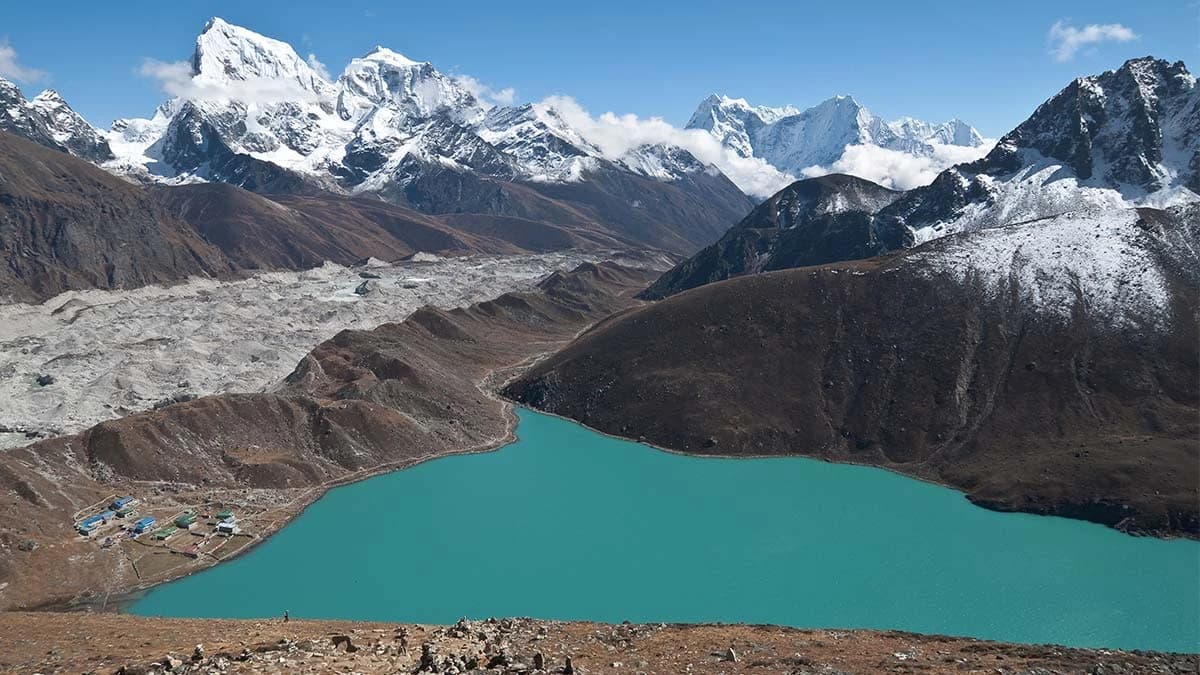
The Gokyo Lake with Renjo La Pass Trek is a 14-day Everest Region adventure that combines the stunning Gokyo Lakes, panoramic Gokyo Ri (5,357 m), and the spectacular Renjo La Pass (5,360 m) into one unforgettable trek. Starting with a flight to Lukla (2,860 m), the route passes through Namche Bazaar, Dole, Machhermo, Gokyo, Lungden, and Thame, offering breathtaking views of Mount Everest, Lhotse, Makalu, and Cho Oyu. Ideal for trekkers seeking a quieter alternative to Everest Base Camp, this trek features turquoise glacial lakes, Sherpa culture, high-altitude landscapes, and fewer crowds while delivering one of the best panoramic trekking experiences in Nepal.
Trip Photos
Gokyo Lake With Renjo La Pass Trek- 14 Days
52 reviews in Google Reviews
Duration14 Days
CountryNepal
Trip GradeModerate
Maximum Altitude5,483 m
Group Size1-10
StartsKathmandu
EndsKathmandu
Travel StyleTrekking
Best TimeSpring (March to May) and autumn (September to November)
Highlights of the Trek
- High-altitude trekking adventure in the Everest region that combines the pristine Gokyo Lakes with the iconic Renjo La Pass
- Panoramic 360° views of eastern Himalayan peaks like Everest, Lhotse, Makalu, Cho Oyu, Nuptse, Cholatse, Taboche, Thamserku and other countless Himalayan giants
- Exploration of the turquoise Gokyo Lakes, sacred to both Hindus and Buddhists
- A scenic and less-crowded alternative route to Everest Base Camp which still offers spectacular landscapes and authentic Sherpa culture
- Acclimatization and exploration days in Namche Bazaar and Gokyo Village, which provide an opportunity for cultural experience in traditional mountain settlements
- Trekking alongside the Dudh Koshi River Valley through pine and rhododendron forests, stone-paved trails and charming Sherpa villages
- Mesmerizing views of the Ngozumpa Glacier (36 km), the largest glacier in Nepal
- Opportunity to climb Gokyo Ri (5,357 m) for one of the finest sunrise viewpoints in the Everest region
- Cozy teahouse accommodations throughout the route, offering traditional Sherpa meals and genuine Himalayan hospitality
- A challenging yet rewarding trekking adventure perfect for trekkers looking to escape the crowds and experience a wilder side of the Khumbu region
Trip Overview
The Gokyo Lake with Renjo La Pass Trek is one of those rare Himalayan routes that perfectly balances challenge, solitude and breathtaking scenery. This journey takes you deep into the isolated segments of the Everest region, away from the buzzing trail of the classic Everest Base Camp Trek trails of the classic EBC route. The Gokyo Renjo La Trek rewards you with some of the most dramatic mountain views in Nepal and an opportunity to experience the Himalayas in their raw form.
This 14-day adventure winds through Sherpa villages, ancient mani walls and high alpine valleys before reaching the serene turquoise Gokyo Lakes. This adventure’s highlight comes with the crossing of Renjo La Pass (5,360m), one of the most iconic passes in the Himalayas. From the top of the pass, you will be able to relish an unmatchable 360° panorama of Everest, Lhotse, Makalu, Cho Oyu, and countless surrounding giants. Unlike many Everest treks, this route feels quieter and more authentic.
The climb to Gokyo Ri (5,483 m) is another high point, from where you can catch the magical views of the sunrise painting the peaks in gold and the entire Gokyo Valley glows beneath you. Although this high-altitude trek across one of the major Himalayan passes is not an easy walk, the Gokyo Renjo La Pass Trek is perfect for trekkers who want a bit more than the mainstream EBC trail, a touch more wilderness, fewer crowds and raw Himalayan character.
On the trail of the Gokyo Lakes Trek with Renjo La Pass, every day brings new perspectives, from the lush forests near Lukla to the rugged glacial terrain near Gokyo. This exhilarating trekking route tests your stamina but also rewards you tenfold with tranquility, grandeur and that feeling of truly being in the heart of the Himalayas.
Short Itinerary Plan
Day 01: Arrive in Kathmandu (1,400 m) and transfer to hotel
Day 02: Free day in Kathmandu for preparations and shopping
Day 03: Fly to Lukla (2,860 m) and trek to Phakding (2,640 m): 35 minutes (flight) and 3 to 4 hours trek
Day 04: Trek from Phakding to Namche Bazaar (3,440 m): 5 to 6 hours
Day 05: Acclimatization day in Namche Bazaar
Day 06: Trek from Namche Bazaar to Dole 4,038 m): 6 to 7 hours
Day 07: Trek from Dole to Machhermo (4,470 m): 5 to 6 hours
Day 08: Trek from Machhermo to Gokyo (4,700 m): 4 to 5 hours
Day 09: Acclimatization and exploration day in Gokyo (Gokyo Ri- 5,483 m and Fifth Lake): 6 to 7 hours
Day 10: Cross Renjo La Pass (5,360 m) and descend to Lungden (4,380 m): 7 hours
Day 11: Trek from Lungden to Thame (3,800 m): 5 hours
Day 12: Trek from Thame to Namche Bazaar (3,440 m): 5 to 6 hours
Day 13: Trek from Namche Bazaar to Lukla (2,800 m): 5 to 6 hrs
Day 14: Fly back from Lukla to Kathmandu (1,400 m): 35 minutes
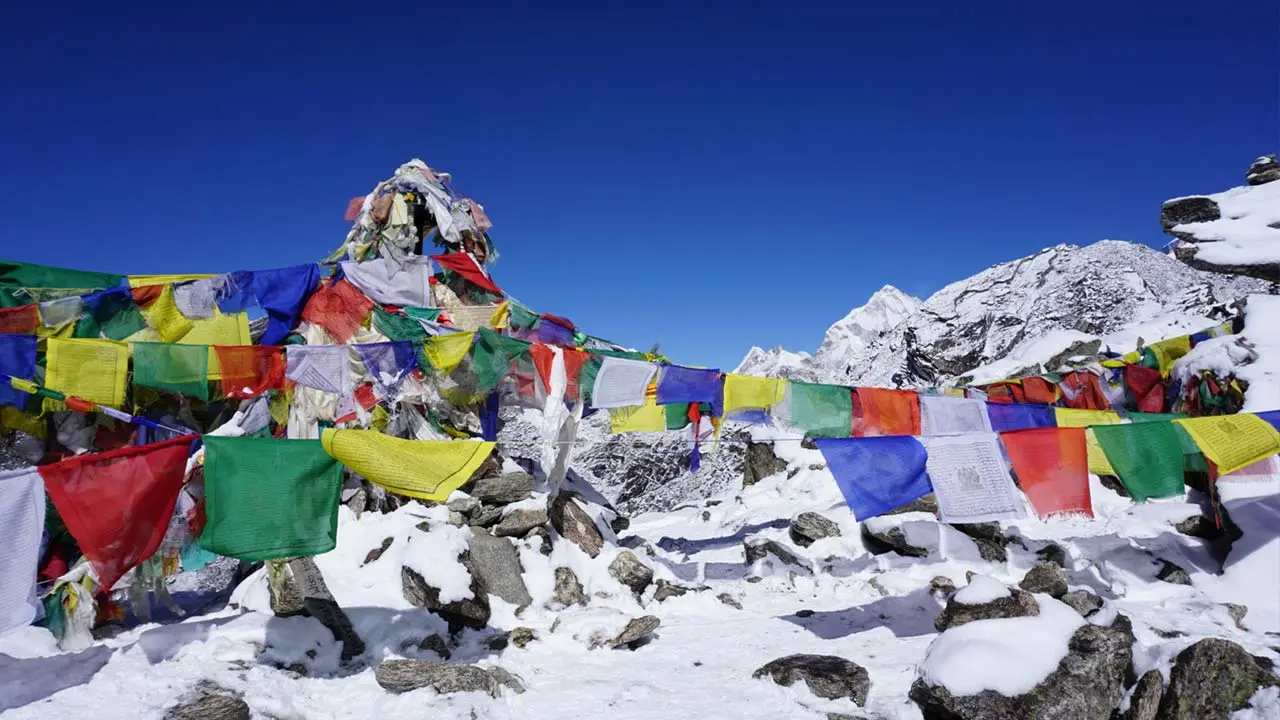
Gokyo Lake With Renjo La Pass Trek- 14 Days Itinerary
Expand All
Day01
Your Gokyo Lakes Trek via Renjo La adventure begins the moment you land at Tribhuvan International Airport in Kathmandu. From the very first glimpse of the surrounding hills and scattered temples, you will be able to understand the depth of this Himalayan country’s rich culture and scenic charm. The representative from the Recreation Holidays will greet you at the airport terminal and then transfer you to your designated hotel at the heart of the city.
After checking in at the hotel, you can take the rest of the day to relax and recover from your flight. In the evening, you can head out and stroll around the lively streets of Thamel. It is a hub for trekkers and you will find shops for gear, cozy cafes and authentic Nepali restaurants. The first day of your journey is all about unwinding and preparing mentally for the journey ahead.
Day02
This day of your Gokyo Lakes Trek with Renjo La Itinerary will be dedicated to prep time for your journey before you head into the mountains. Use this time to make sure everything is ready for your trek. You can sort out your gear, finish shopping for essentials and confirm your flight and trekking permits. Even if you have to complete your shopping, don’t panic, there are wide range of trekking shops in Thamel where you can buy or rent last-minute items.
If time allows, you can also do some sightseeing exploration around Kathmandu. Some of the popular cultural gems on this day’s sightseeing are Swayambhunath Stupa (Monkey Temple), Pashupatinath Temple, Bouddhnath Stupa and Kathmandu Durbar Square. Adventure. You will sleep early tonight to start your adventure early in the morning with fresh approach.
Day03
Today, you will take an early flight from Kathmandu to Lukla. As the plane lands on the sloped airstrip surrounded by mountain walls, you will officially set foot in the Khumbu region. After a brief stop in Lukla to gather your gear and meet your porter crew, you will commence the trekking part. From Lukla, the trail descends gently through Chheplung Village.
Then, the next stretch will take you across Thado Koshi where you will cross a suspension bridge over the milky Dudh Koshi River. You will continue following the path alongside the rive and gradually to Ghat Village. A short hike from here will then finally take you to Phakding Village. Resting here, with the sound of flowing water and crisp mountain air, marks the perfect end for your first day’s trek in Gokyo Renjo La Trek.
Day04
After breakfast in Phakding, you will continue walking on the trail to the north along the Dudh Koshi River. On this day’s trek, you will cross several suspension bridges draped with colorful prayer flags. The route passes through Toktok and Benkar Villages, where you witness the cascading waterfalls beside the trail and the first glimpses of Thamserku. Your arrival at Monjo Village will officially mark the thrilling adventure inside Sagarmatha National Park. Then, from Monjo, you will follow the descending route to Jorsalle Village.
This is the last village before the long ascent. During the final stretch, you will follow the river trail here before climbing steeply through pine forests. Although the climb is steep, it is extremely rewarding. In this climbing segment, you will catch the first glimpse of Mount Everest peeking above the Lhotse ridge. Finally, the path opens to the bustling amphitheater of Namche Bazaar, the Sherpa capital and heartbeat of Khumbu.
Day05
Before you proceeding further with the Gokyo Lakes Trek with Renjo La Itinerary, this day is set aside for acclimatization. Today’s stop will help your body to adjust to the altitude before heading to higher altitudes. However, you won’t stay idle on this day; you will hike to nearby vantage points for more effective acclimatization. One of the popular routes leads to Hotel Everest View (3,880 m). From here, you will be able to enjoy a stunning panorama of Everest, Lhotse, Nuptse, Ama Dablam and Thamserku.
On the way back, you can visit the Sherpa Museum or the Sagarmatha National Park Visitor Center to learn about the local culture and mountain ecology. The afternoon is all yours to explore Namche, walk its narrow lanes, enjoy a hot cup of coffee, or browse small local shops for trekking gear.
Day06
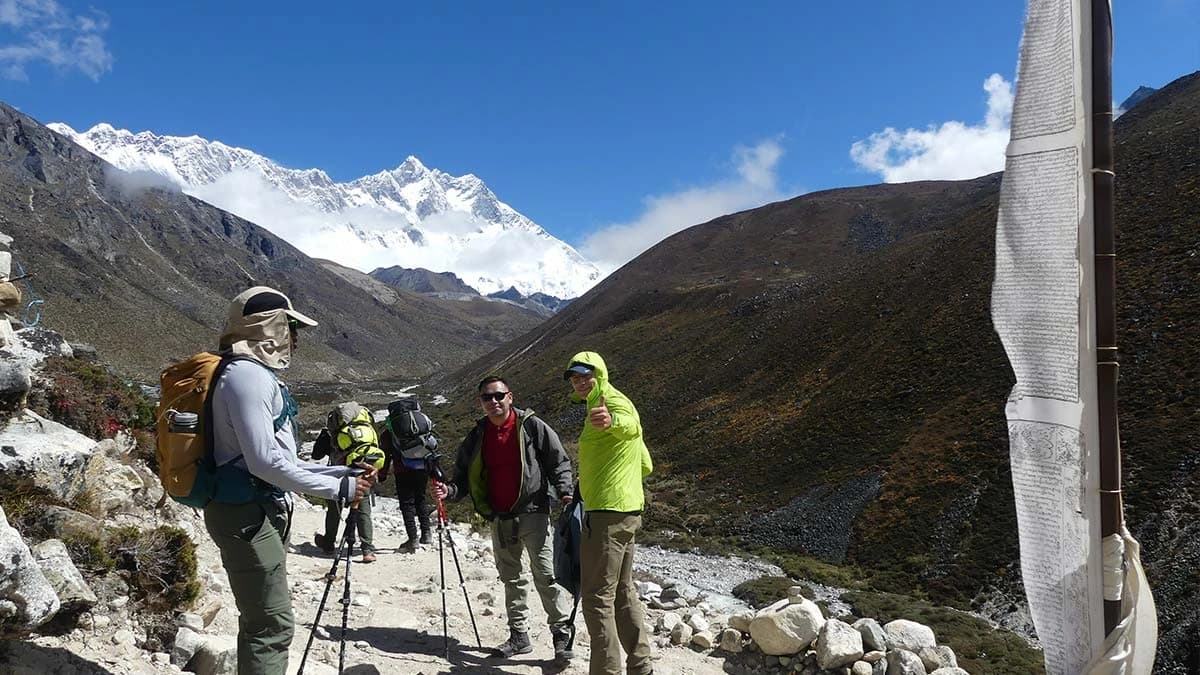
Leaving the vibrant buzz of Namche, you will follow the trail that climbs gradually above the village and offers sweeping views of Khumjung Valley and Ama Dablam. This day’s route toward Dole branches off from the classic Everest Base Camp trail near Sanasa Village. You will then follow the less-crowded Gokyo Valley that leads you deeper into an isolated part of the Himalayas.
As you walk further, you will make a steady ascent to Mong La , a small ridge-top village. Then, you will make your descent to Phortse Thenga, which is nestled in a forested gorge. As you climb higher, the forest starts to thin out and the landscape opens to the windy highlands, which will eventually lead you into Dole.
Day07
From Dole, enjoying the morning air that feels crisp and cool, you will begin your gradual ascent towards Machhermo. The trekking path climbs gently along the side of the valley and the Dudh Koshi River is far below on your left. Vegetation becomes sparse here and the lush forest gives way to open alpine meadows. Along the way, you will pass small seasonal herding settlements of Lhabarma and Luza.
You will continue walking along the contouring trail that gradually reveals more dramatic mountain views as you gain altitude. Then, a short final climb will bring you to Machhermo Village. This is a small but scenic settlement that is tucked beneath the ridge. After your arrival, you can walk up to a nearby ridge for mesmerizing views of Cho Oyu.
Day08
This day’s trail on your Gokyo Lakes Trek With Renjo La itinerary is shorter but stunningly beautiful. During the initial part, you will move along the path that climbs steadily up a ridge and offers incredible views down the Dudh Koshi Valley. Soon, you will arrive at Phangga Village, a small settlement surrounded by memorials honoring those who lost their lives during Himalayan expeditions.
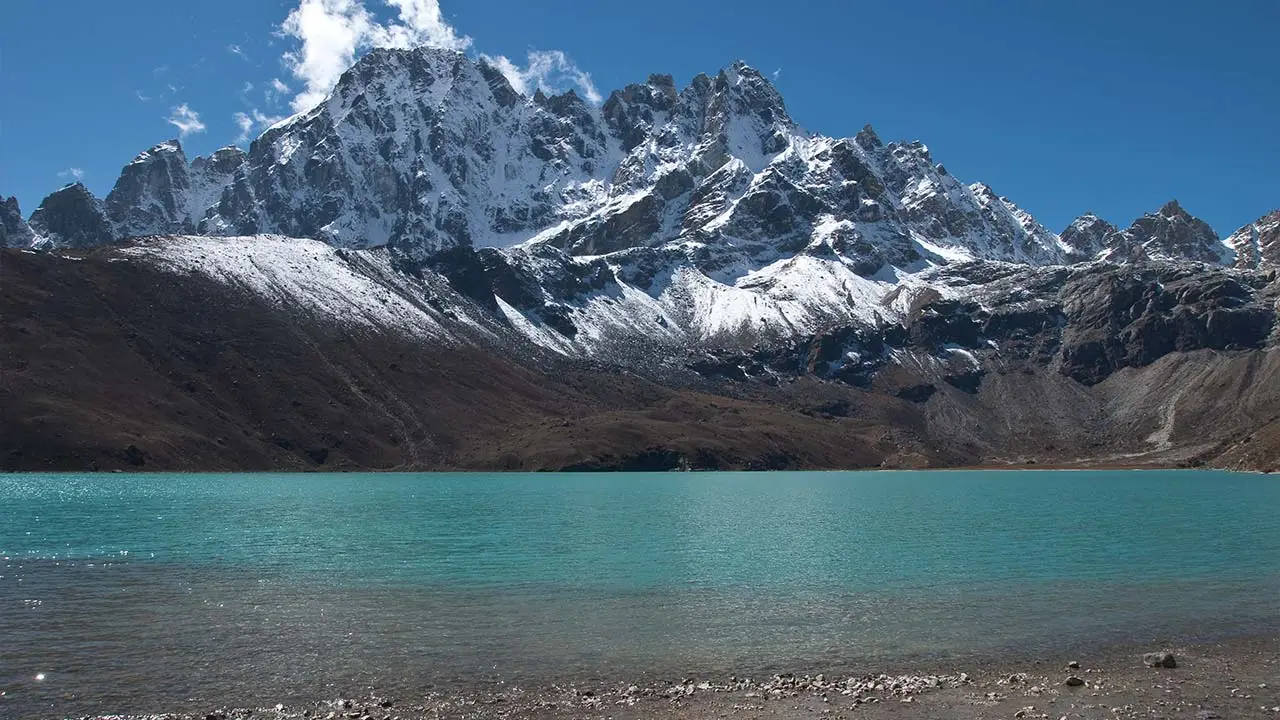
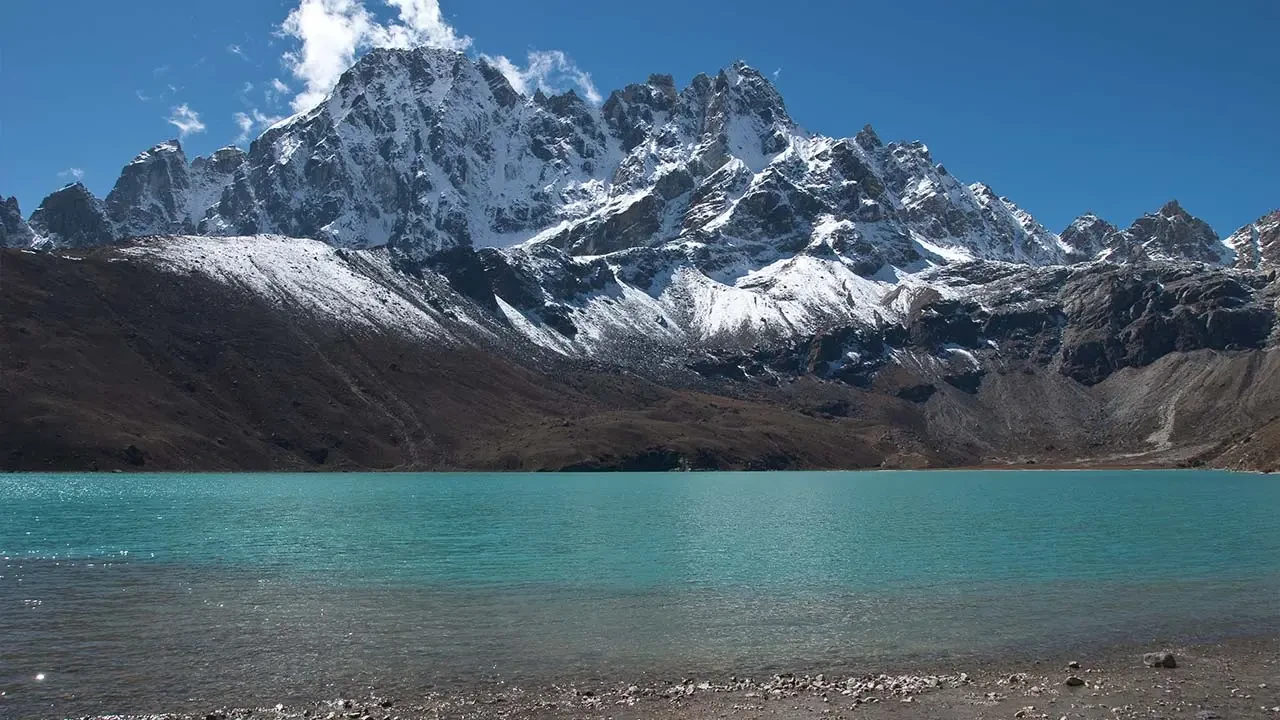
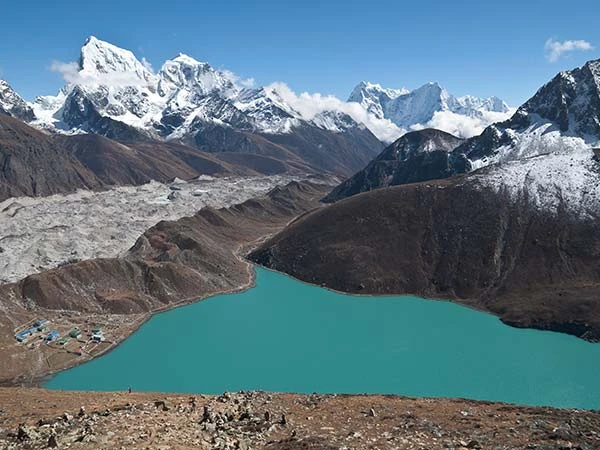
From here, the trail rises along moraines and leads you to toward the turquoise glacial lakes of Gokyo. As you get close to Gokyo, the first and second lakes appear; they are calm and feel surreal against the rugged terrain. Following the shore of the third lake brings you into Gokyo Village. This is a spectacular lakeside village nestled beneath the towering Cho Oyu. In the afternoon, you can stroll along the lake feeling the cold wind off the glaciers.
Day09
Today is all about exploration and altitude adjustment. Early in the morning, you will hike up to Gokyo Ri, which rewards you with one of the most breathtaking panoramas in the Khumbu region. From its summit, you can see Mount Everest, Lhotse, Makalu and Cho Oyu, a rare and stunning panorama that only few places on earth can match.
After enjoying the views and soaking in the atmosphere, you will descend back to the village for breakfast. If you have extra energy, you can continue your exploration toward the Fourth and Fifth Lakes. This high and scenic trail winds along the moraine. These remote glacial lakes sit closer to the base of Cho Oyu and offer incredible reflections of the surrounding peaks. By afternoon, you will be back in Gokyo for warm meals and a quiet evening besides the lake.
Day10
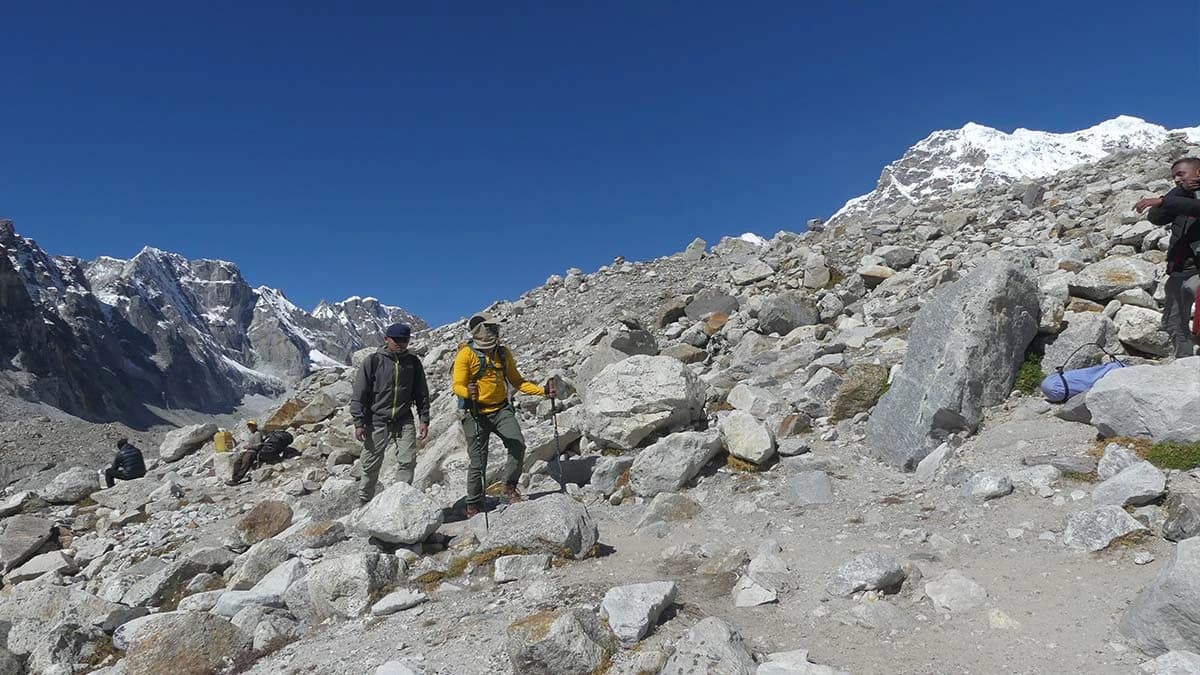
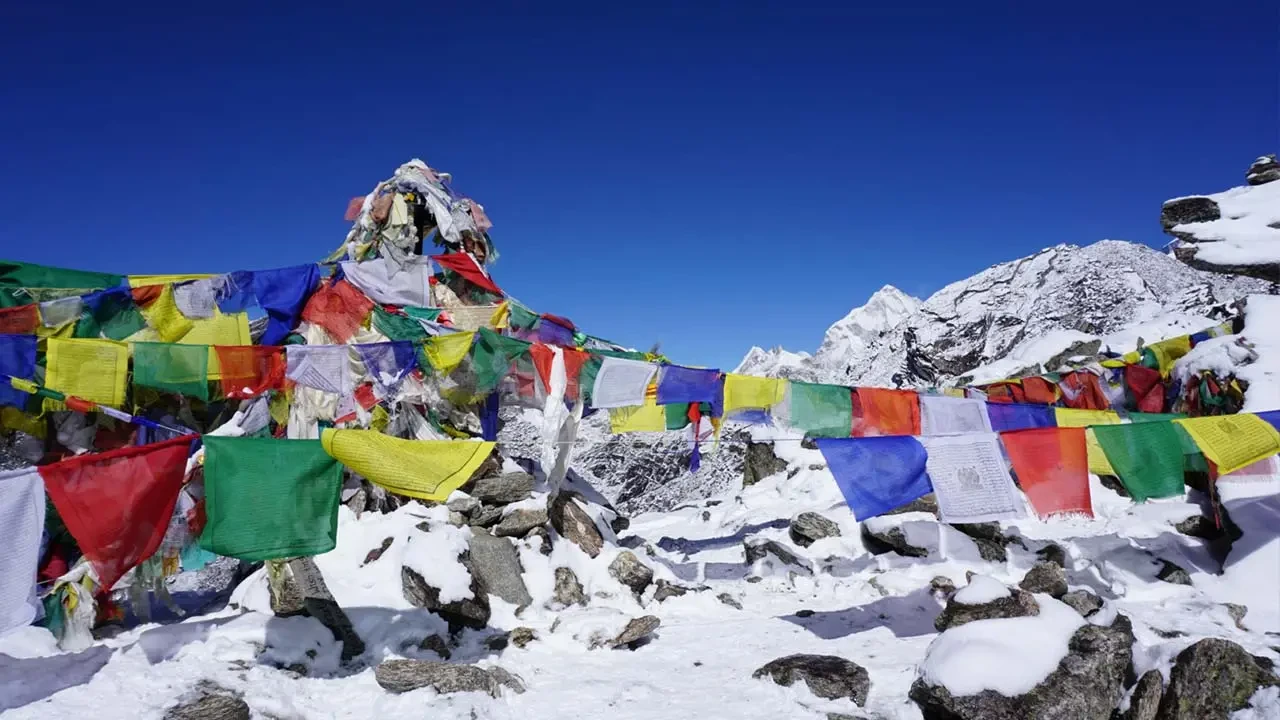
Today is one of the most challenging and rewarding days of your Gokyo Lake with Renjo La Pass Trek. You will get started on the trail early in the morning, following the western side of the Gokyo Lake before gradually ascending towards the base of the Renjo La Pass. The climb is steady and steep and you will wind through rocky terrain and scattered cairns. From the top of the pass, you will be able to enjoy the stunning views of the turquoise Gokyo Lakes and the towering peaks of Everest, Lhotse, Makalu and Cho Oyu lined across the horizon.
After soaking in the view, you will then begin your long descent. The path zigzags down the rocky slopes and later opens into yak pastures and alpine meadows. By afternoon, you will arrive at Lungden, a quiet Sherpa settlement tucked into the remote stretch of Upper Bhote Koshi Valley. After a long and fulfilling day of trekking across the iconic Himalayan pass, rest comes easy here.
Day11
After enjoying your breakfast, you will follow an easy descent from Lugnden alongside the Bhote Koshi River. Tracing the path that was once part of an ancient trade route with Tibet, you will pass the beautiful hamlet of Marulung. Here, you will get a chance to admire the mani walls and stone-built houses which stand as reminders of the Sherpa heritage rooted deeply in this valley.
Then, the trekking route continues across the open terrain that offers broad mountain views and gradually descends toward Thame. This is one of the oldest and most culturally significant villages in the Khumbu region. Thame is known for its Thame Monastery, which is perched high on a rocky hill overlooking the village. This high-altitude Sherpa village is also popular as the hometown of several renowned Sherpa climbers like Tenzing Norgay, Apa Sherpa and Kami Rita Sherpa.
Day12
Today’s adventure in your Gokyo Lake with Renj La Pass Trek leads you gently back towards Namche. You will follow a scenic path through forests of juniper and rhododendron and cross several suspension bridges over the Bhote Koshi. This day’s exciting trekking route will also take you across charming Sherpa villages like Thamo and PhurteVillages.
As you reach near Namche, the trail curves along a ridge and offers you one final wide view of Kongde Ri and the surrounding peaks before descending into the lively bowl of Namche Bazaar. Returning here after days in the high valleys feels almost like coming home. The cafes are buzzing, the teahouses are warm and you will be surrounded by a familiar mountain energy all around.
Day13
This is the final trekking day in your adventure and it begins with a steady descent from Namche Bazaar. Retracing your steps on the same mountain route, you will walk through pine forests and cross a series of suspension bridges, including the iconic Hillary Bridge.
In this return trek, you will pass the familiar villages like Jorsalle and Monjo and continue your walk toward Phakding for a short break by the Dudh Koshi River. The final stretch climbs gently back up to Lukla, where the trekking trail officially ends. By afternoon, you will find yourself surrounded by fellow trekkers celebrating their successful adventures. Tonight’s rest in Lukla feels well earned and it will mark the completion of your Gokyo adventure.
Day14
From Lukla, an early morning flight will take you out of the mountains and back to Kathmandu. As the plane lifts off, you will be able to catch one last glimpse of the towering peaks fading into the horizon. Upon landing, you will be transferred to your hotel in Kathmandu.
The rest of the day is free to relax; you can enjoy a warm shower or explore the city once more. Perhaps, you can enjoy a celebratory dinner in Thamel with your trek companions to wrap up your unforgettable trek through the Gokyo Valley and Renjo La Pass.
Is the proposed itinerary suitable for you?If you are looking for a custom itinerary, please feel free to reach out to our team of professionals at any time.
Customize TripTrip Service Details
Includes
- Airport Transfers: Upon arrival at Kathmandu International Airport, you will be warmly welcomed and escorted to your hotel.
- Accommodation: Enjoy a comfortable 2-night stay at a Kathmandu hotel with daily breakfast, based on twin sharing.
- Flights: Your round-trip flight between Kathmandu/Ramechhap and Lukla is included, along with all necessary airport transfers.
- Permits: All required permits, including National Park, TIMS, and local permits, are arranged for you.
- Trekking Accommodation: During the trek, you’ll stay in twin-sharing lodges.
- Meals: Three nutritious meals per day are provided throughout the trek
- Equipment: A duffel bag and sleeping bag will be supplied for the trek and should be returned at the end.
- Guide: An experienced English-speaking guide, trained in first aid and carrying a medical kit, will accompany you.
- Field Staff: Our field staff are fully insured and fairly compensated.
- Return Flight: After trekking, your return flight from Lukla to Kathmandu/Ramechhap, along with transportation, is arranged.
- Certificate: Upon request, you can receive a certificate recognizing your achievement.
- Farewell Dinner: Celebrate your journey with a special farewell dinner in Thamel, Kathmandu.
- Luggage Storage: Complimentary luggage storage is available while you’re trekking.
- Departure Transfer: On your final day, transportation to the airport is provided for your departure.
Excludes
- International Airfare: Round-trip flights to and from Nepal are not included.
- Visa and Insurance: Fees for the Nepal visa and travel insurance are the responsibility of the traveler.
- Kathmandu Meals and Accommodation: Meals in Kathmandu beyond breakfast, as well as any extra nights of accommodation, are not covered.
- Porter Service: Porter assistance is available at a cost of USD 300 per porter, each carrying up to 20-25 kg.
- Trek Expenses: Personal costs during the trek, such as hot showers, beverages, Wi-Fi or data usage, battery charging, and accommodation upgrades, are not included.
- Tips: Gratuities for trek staff are customary and expected but not included.
- Other: Any items or services not specifically mentioned in the "INCLUSION" section are excluded.
Additional Info
Best Time to Do Gokyo Lake With Renjo La Pass Trek
Picking the right season makes a huge difference in the route of Gokyo Lakes Trek With Renjo La Itinerary. As both Gokyo and Renjo La sit high in the Khumbu, where the weather can shift quickly, timing really matters in this journey. Most trekkers prefer either spring (March to May) or autumn (September to November), the two peak periods for high-altitude treks in Nepal. During these seasons, the trails are comfortable, the skies are clear and all conditions come together perfectly.
In spring, the valleys wake up from winter and the hillsides in the lower regions are full of blooming rhododendrons. The air also feels fresh without being too cold or too hot. It is warm enough to walk comfortably during the day and visibility is excellent, ideal for those hoping to photograph Everest, Cho Oyu and Ama Dablam under clear light. Autumn, on the other hand, brings crisp, stable mountain weather everyone dreams about.
As the monsoon has already cleared the dust from the air, every peak stands razor sharp against deep blue skies. The days are bright and dry and the nights are cool but manageable without the freezing temperatures. Autumn is also one of the most favorable times if you want to cross Renjo La Pass with steady footing and clear views.
Beyond the peak trekking seasons, Gokyo Lakes Trek via Renjo La can also be done in winter (December to February) if you don’t mind the cold and prefer quiet trails. But, as the heavy snow blocks the pass, you will need special gear and experience to cross the pass. As for the monsoon months (June to August), they are the least favorable, with rain, fog and slippery paths, even though the valleys turn lush and green.
So, in conclusion, if you are after the perfect blend of safety, scenery and mountain clarity, spring and autumn are unbeatable. These are the seasons when Gokyo’s lakes shine their brightest and the Renjo La panorama truly lives up to the adventurer’s dream.
Trek Difficulty
The Gokyo Lake trek via Renjo La Pass isn’t a walk in the park; you cannot just stroll through. Yes, it is not technical climbing, so you don’t need ropes or crampons for most of it. But your legs and lungs will definitely notice the demanding mountain trail and the thin air conditions. Some days are long, with steady uphill stretches that feel tougher because you are getting higher and the air is thinner. In overall the Gokyo Lake Trek via Renjo La Pass difficulty has been graded as a moderate to advanced level experience.
Altitude is the real challenge in this journey. Even with well-marked trails and plenty of tea houses along the way to support your trek, your body has to adjust to the thinner air. Some days, especially when crossing the Renjo La Pass, you will need to slow down, take breaks often and sip water constantly to avoid feeling sick from the altitude. Don’t worry, you will also get two acclimatization days before you tackle this pass (Namche and Dingboche).
Furthermore, the trail itself changes a lot. At the lower part of the trail, it is easy to walk along rivers and through terraced fields. At the higher regions, you will have to overcome the rocky and rugged terrain with glaciers and moraines in sight. During the colder months, snow can show up out of nowhere. So, good boots with a strong grip and trekking poles are highly essential for this Himalayan journey.
Overall, this trek is doable if you train a bit beforehand. If you have hiking or jogging experience and you do cardio regularly, your body will be able to handle the terrain and altitude demands of this journey. The real test on this Himalayan route is sticking it out day after day, keeping your pace and staying aware of how your body reacts at higher altitudes.
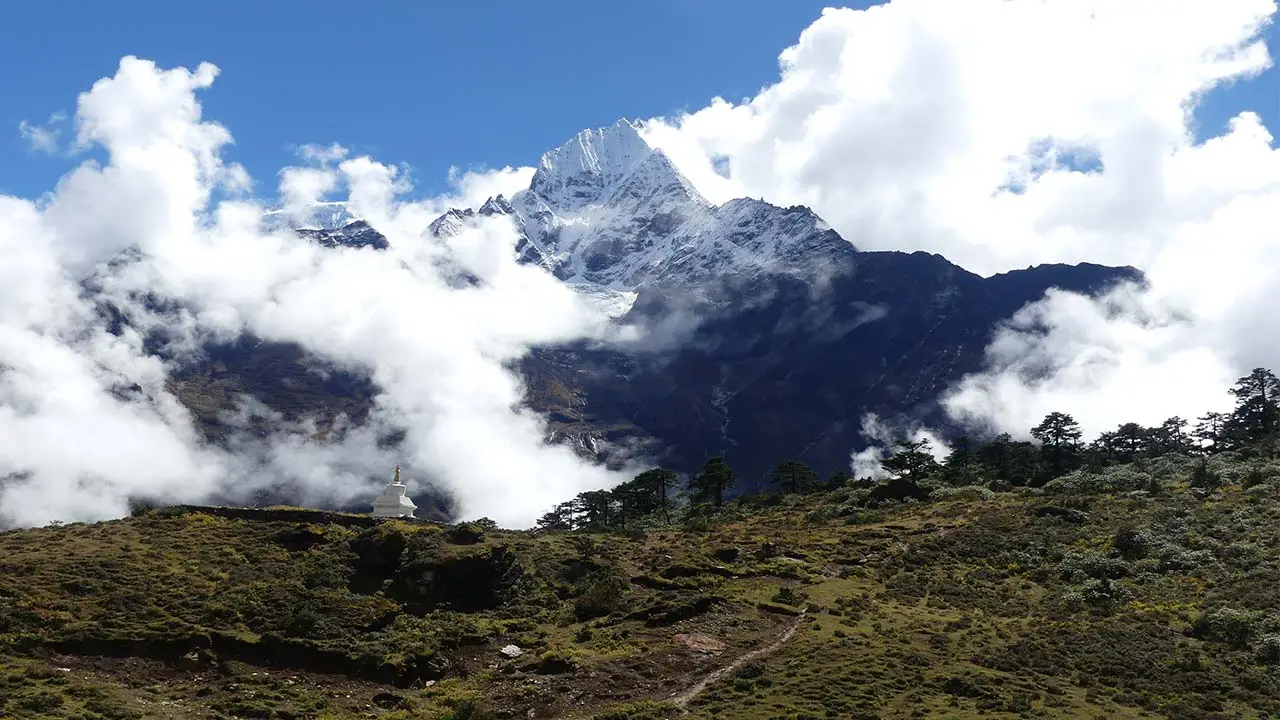
Accommodation & Food on Gokyo Renjo La Trek
During the Gokyo Lake With Renjo La Pass Trek, you will stay in teahouses that are simple lodges run by local families. The rooms are basic, usually with just a bed with blankets. However, they are cozy enough to rest after a long day on the trail. Higher up, especially around Gokyo and the Renjo La area, the teahouses get simpler and it’s colder at night. So, you need to bring a warm sleeping bag with you during the trek. As for the bathrooms, they are often shared and hot showers are a rare treat at altitude. You will need to pay extra to take a hot shower at the teahouses.
In case of food, it is surprisingly decent for considering the remoteness of the trail. At the teahouses along the trekking route, you will find the traditional Nepalese meals like dal bhat, noodles, momo dumplings, Thukpa, Tingmo, etc. Don’t worry, you can also enjoy several continental delicacies during the trek, like omelets, pasta, pizza, soup, fries, etc. You can also buy boiled and filtered water at the teahouses. Or, you can fill your bottles at the clean station and purify it before drinking.
A part of the Gokyo Renjo La Trek’s charm lies in the teahouse culture. You will often end the day swapping stories with other trekkers over a cup of hot tea or staring out at towering peaks while warming your hands by a small stove. Although the teahouses are simple, they will provide everything you need: rest, fuel and insights into life in the high Himalayas.
What to Pack for Gokyo Lakes Trek With Renjo La Pass?
The Gokyo Lakes with Renjo La Pass trek takes you deep into the high Khumbu, where altitudes soar above 5,000 meters. The weather can swing from bright warm sunshine to biting wind in a matter of hours. You will also be crossing glacial valleys, steep stone steps, and exposed ridges during this tour. So, having the right gear is what keeps the journey comfortable, safe, enjoyable and memorable. However, packing for this trek is not about stuffing your bag with everything you own.
To pack just right for this Himalayan journey, you will need to find the right balance between warmth, weight and practicality. Below is a thoughtfully curated packing list to help you prepare for your Gokyo Renjo La adventure.
Clothing
- Base layers (thermal tops and bottoms)
- Moisture-wicking trekking shirts and t-shirts
- Long-sleeve trekking shirt
- Fleece or light insulating jacket
- Down jacket (essential for high-altitude nights)
- Windproof and waterproof outer shell or rain jacket
- Trekking pants (convertible or stretchable)
- Comfortable casual pants
- Hiking shorts
- Warm innerwear and undergarments
- Neck gaiter or buff
- Sun hat or cap
- Woolen or insulated gloves (plus a light pair for daytime use)
- Warm trekking socks (mix of thin and thick pairs)
Footwear
- Well-broken-in trekking boots with ankle support
- Lightweight sneakers or trail shoes (for short walks or rest days)
- Camp sandals or slippers (for evenings)
- Trekking socks and optional sock liners (to prevent blisters)

Gear and Accessories
- Trekking backpack (30 to 40 L for daily use)
- Duffel bag (carried by porter or for gear storage)
- Refillable water bottle or hydration bladder
- Water purification tablets or filter
- Trekking poles
- Sunglasses with UV protection
- Headlamp or flashlight with spare batteries
- Power bank and universal adapter
- Lightweight towel and personal toiletry bag
- Map, GPS, or trekking app
Personal Essentials
- Toothbrush, toothpaste and biodegradable soap/shampoo
- Sunscreen and lip balm with high UV protection
- Hand sanitizer and wet wipes
- Toilet paper and tissue packets
- Small first aid kit with altitude medication and pain relief
- Personal prescriptions
- Insect repellent
- Snacks, energy gels or chocolate bars
- Reusable shopping or stuff sack
- Copy of important travel documents and insurance papers
- Cash in Nepali rupees (ATMs are unavailable after Namche Bazaar)
Permit Requirement
Before you start the Gokyo Lakes with Renjo La Pass trek, you need to be clear about the permits required to enter the Everest region. Trekking here without proper authorization is not allowed; however, the process itself is simple and hassle-free. For this off-beaten route in the Everest region, you will only need to collect two essential permits.
Most trekkers only need two permits, and they can be arranged in Kathmandu or even through a reliable trekking agency ,so you can focus on your journey rather than paperwork.
Necessary Permits for Gokyo Lakes Trek With Renjo La Itinerary
- Sagarmatha National Park Permit (SNP)
- Khumbu Pasang Lhamu Rural Municipality Permit
The national park permits allow you access to the national park area and help support conservation efforts as well as local communities. Similarly, the local permit issued by the local authorities ensures proper tracking of visitors in the villages and trails. To get these permits, you will need a valid passport, passport-sized photographs and trek details. Most reputable trekking agencies like Recreation Holidays handle the permit requirement for the journey.
After obtaining your permits, carrying them is mandatory throughout the trek. You may need to show them at several checkpoints along the route. We recommend you to keep a few extra copies and a digital copy as well to stay on the safer side.

Training and Preparation
Even though the Gokyo Lakes with Renjo La Pass trek is one of the most scenic routes in the Everest region, don’t take it as a hike in your backyard. During this trek, you will be walking for long hours on uneven trails, climbing steep sections and crossing an iconic high-altitude pass above 5,000 meters. So, proper training and preparation is not optional here if you want to enjoy your trek and make it memorable.
The minimum training period to overcome the challenging aspects of the Gokyo Lake Renjo La map is around 4 to 8 weeks, depending on your fitness level. You should start by building your endurance with regular cardio exercises such as brisk walking, jogging, cycling or stair climbing also work well. Strength training for your legs, core and back is equally important since you will be carrying a daypack and navigating rocky terrain. If possible, do a few multi-day hikes at nearby destinations with a loaded backpack to simulate real trekking conditions.
Likewise, acclimatization is another key part of preparation. You need to plan your itinerary with gradual altitude gains and consider shorter treks in Nepal or nearby hill regions to get your body used to higher elevations. Don’t forget to stay hydrated, eat well-balanced meals and get enough sleep during training; it improves your stamina and recovery on the trail.
Besides the physical aspects, mental preparation matters in this Gokyo Lakes Trek with Renjo La Pass. The trail can be challenging and weather conditions are unpredictable. So, being ready to adapt to cold winds, long days, variable trail conditions and limited services will help you enjoy the trek without stress. With proper training and preparation, every step of your Himalayan adventure becomes not just manageable but memorable.
Group Joining and Private Trek
When planning the Gokyo Lakes Trek with Renjo La Pass, one of the first decisions you need to make is whether to join a group trek or go on a private trek. Both options have their advantages and the choice depends on your travel style, budget and what kind of experience you are looking for in your high-altitude trekking.
Group Joining Trek
Joining a group trek is ideal if you like meeting like-minded people, sharing experiences and having much of the logistics handled for you. In a group trekking option, the accommodation, meals and permits are managed by the trekking agency. This makes your journey smoother and less stressful. It is also a safer option for first-time trekkers, as you have guides, porters and fellow companions to support you on challenging sections like the Renjo La Pass. Group treks are generally a more budget-friendly option as well since costs are shared among participants.
Private Trek
The private trekking option, on the other hand, offers flexibility and personalization. You will be able to set your own pace, choose your preferred lodges and spend more time exploring villages or lakes of your preference. You won’t have to follow a strict group schedule. That’s why private trekking options are perfect for families, couples or experienced trekkers looking for more intimate experience in the Khumbu region. Although the private treks are more expensive, the comfort, freedom and tailored support often outweigh the price tag.
Gokyo Lakes Trek With Renjo La Cost
Trekking to Gokyo Lakes with Renjo La Pass is one of the premium Himalayan adventures. However, it not overly complicated or expensive compared to other longer expeditions. On average, the Gokyo Lakes Trek With Renjo La cost is around US$ 1,100 and US$ 1,400 per person for a 14-day journey. Still, the exact cost depends on several factors like group or private trek, level of comfort, transport mode, choice of private guides, number of porters and extra services along the way.
This typical Gokyo Lakes Trek With Renjo La price usually covers all the general essentials like teahouse accommodation, three meals a day, trekking permits, the domestic flight from Kathmandu to Lukla and guidance from an experienced local guide. If you hire a porter or go fully private, the price will be a bit higher. But, you will also get more flexibility and comfort.
To make sure there are no surprises on the trail, it’s best to check exactly what’s included in your package before booking. Don’t just go for the face value without understanding what you are actually paying for. This way, you can focus on trekking the trail, enjoying the Gokyo Lakes and tackling the Renjo La Pass without stress.
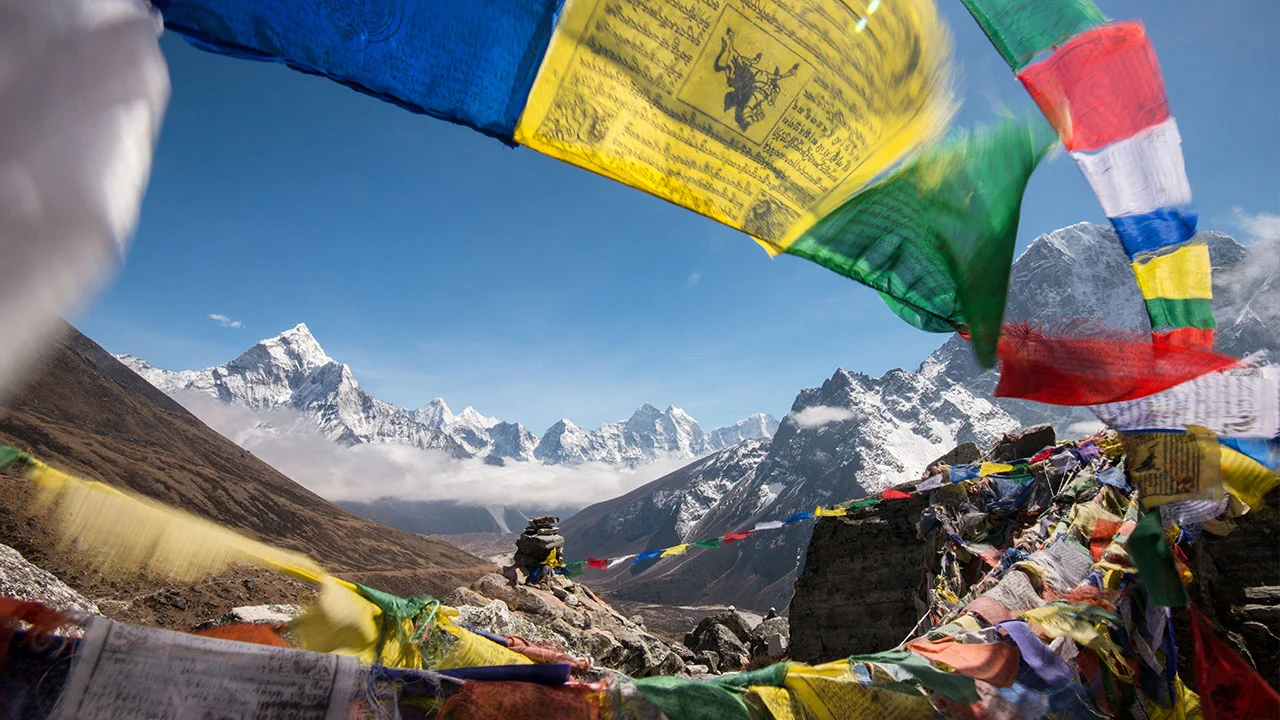
Altitude Sickness
One of the biggest challenges on this trek is handling the Renjo La Pass altitude. During the Gokyo Lake with Renjo La Pass Trek, you will be crossing the major Himalayan pass Renjo La, which is at an altitude of 5,360 meters (17,585 feet). To cross this high-altitude pass, your body needs time to adjust to thinner air. Altitude sickness, also called Acute Mountain Sickness (AMS), can affect anyone regardless of fitness. So, preparation and awareness are key to keeping its effects at bay.
Common symptoms include headaches, nausea, dizziness, loss of appetite and trouble sleeping. Most trekkers experience mild effects, especially when ascending too quickly without letting their bodies adapt properly to thinning air conditions. But don’t worry, in this Recreation Holiday’s 14-day Gokyo Lake with Renjo La Pass Trek itinerary, you will get enough time to acclimatize before heading higher and crossing the pass.
You will get rest day at Namche Bazaar (3,440 m) and Gokyo (4,700 m) along the trail. The walking pace is also well-managed, so overcoming the Renjo La Pass altitude won’t be an issue during your trek with us. Hydration is another critical factor to avoid altitude sickness. Drink plenty of water, avoid alcohol and eat light-balanced meals. You can also bring altitude sickness medications like Diamox, but you should only use them after consulting a doctor.
With proper pacing, rest and awareness, you will be able to manage altitude well without any hassle and enjoy the breathtaking once-in-a-lifetime experience.
Internet, Connectivity and Charging on the Trail
Connectivity on the Gokyo Lakes with Renjo La Pass trek is limited but manageable if you plan ahead. There is mobile network coverage in larger villages like Namche Bazaar, Phortse and Gokyo. Although it can be patchy and slow. Teahouses along the trekking trail also offer Wi-Fi, but you will need to pay extra to use this service. Mind that the internet bandwidth is not as fast as in urban settlements. However, you will be able to browse and message easily.
To charge your devices as well, you need to plan carefully. Most teahouses provide charging points for a small fee, often tied to the use of their common dining area. Bringing a portable power bank is essential, especially for longer stretches without electricity. Likewise, the solar chargers can be a lifesaver. So, in summary, even if you won’t have full connectivity like in Kathmandu, careful planning ensures you can stay in touch, charge your essentials and still fully immerse yourself in the remote Himalayan environment.
Porter and Guide
Hiring a guide or porter on the Gokyo Lakes with Renjo La Pass trek can make a huge difference, especially if this is your first high-altitude trek. Hiring these capable and reliable companions will ensure you can enjoy a comfortable and stress-free experience.
➔ Guide
Professional trekking guides will not only help you navigate the trail safely, but they will also share valuable insights about Sherpa culture, local villages, wildlife and mountain geography. They also take care of the logistics like permits, accommodation and route planning. So, you will be able to focus on your journey entirely without worry about a single thing. On average, hiring a local expert guide costs around US$ 30 to US$ 35 per day. Having a guide is especially helpful when crossing challenging sections like Renjo La Pass or when acclimatization planning is needed. They will take care of your health and keep an eye out for the symptoms of altitude sickness.
➔ Porter
Like guides, porters are other crucial members of the Himalayan adventures. If you hire a porter for your Gokyo Lakes Trek via Renjo La, you will only have to carry a small daypack as these strong companions will take care of your heavy luggage. This will allow you to walk more comfortably, conserve energy and reduce fatigue. You can only focus on the adventure ahead without draining your energy. Porters typically charge around US$ 20 to US$ 25 per day. As for the weight limit, they carry around 10 to 15 kg of luggage per trekker (one porter is shared among two trekkers).
Travel Visa
If you are coming from outside India, you will need a Nepal tourist visa to start your trek. Getting the Nepal Tourist Visa is fairly simple process and you can do it right at Tribhuvan International Airport in Kathmandu or at certain land border crossings. All you have to do is fill a short form, submit a couple of passport photos, pay the visa fee and then it will be issued within minutes.
Nepal offers a few options depending on how long you plan to stay:
- 15-Day Visa— US$ 30
- 30-Day Visa— US$ 50
- 90-Day Visa— US$ 125
For a 14-day trek like Gokyo Lakes with Renjo La Pass, most travelers choose the 30-day visa. This visa duration will give your extra buffer time for flight delays, acclimatization days, or even a quick visit to Kathmandu or nearby towns before or after the trek. A 15-day visa could technically work, but it will leave you with very little flexibility if your schedule changes.
Before applying, make sure your passport is valid for at least six months. Once that is sorted out, you can focus fully on packing, training, and the surreal high-altitude mountain scenery.
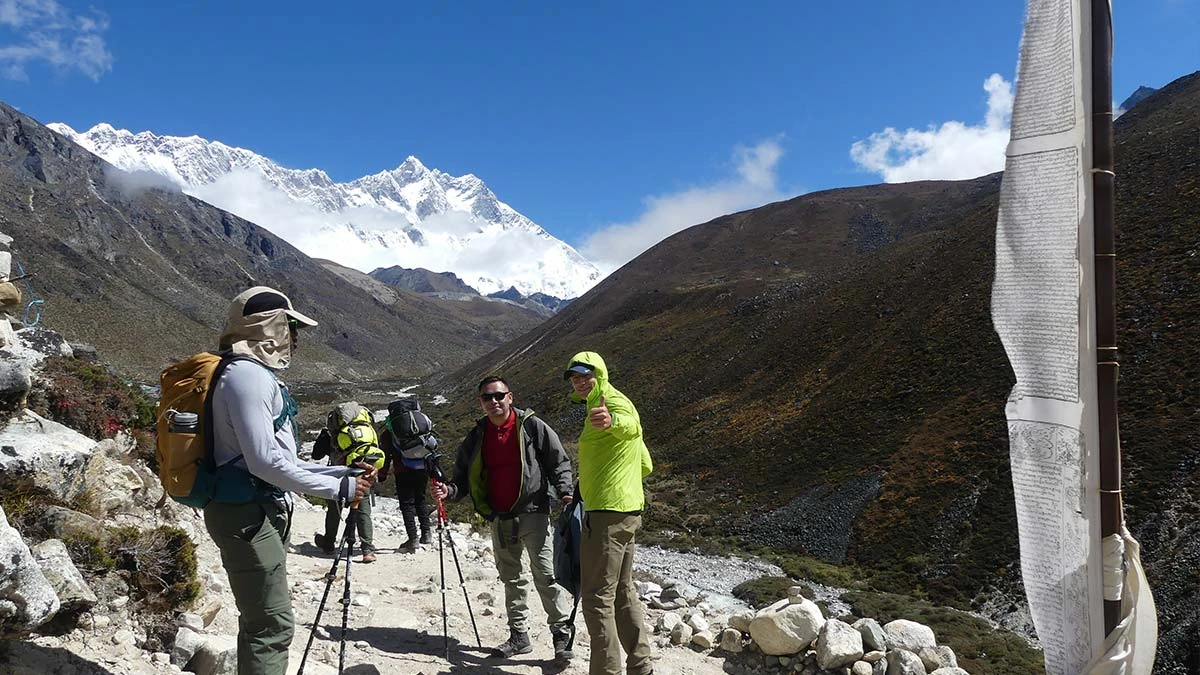
Gokyo Lake With Renjo La Pass Trek- 14 Days Gallery
Gokyo Lake With Renjo La Pass Trek- 14 Days FAQs
The Gokyo Renjo La Pass Trek is a moderate to advanced-level high-altitude adventure. Most of the trail is well-marked, but the climb to Renjo La Pass (5,360 m) can be demanding due to steep ascents and thinner air. Good fitness, mental endurance and proper acclimatization are essential to complete this trek successfully.
In comparison to the classic Everest Base Camp Trek, the Gokyo Renjo La Pass Trek is slightly tougher. The trails to Gokyo are quieter but steeper and the Renjo La Pass crossing adds an extra layer of challenge due to altitude and rugged terrain.
A standard Gokyo Lakes with Renjo La Pass Trek takes around 14 days from Kathmandu to Kathmandu. This duration includes your flights, acclimatization days in Namche and Gokyo and a steady ascent to cross Renjo La Pass safely.
The highest point of the trek is Renjo La Pass at 5,360 meters (17,585 feet) above sea level. Many trekkers also hike up to Gokyo Ri (5,483 m) for sunrise views of Everest, Lhotse, Makalu and Cho Oyu, making it the maximum altitude gain point in the trek.
While it’s possible to trek independently, hiring a licensed guide and porter makes a big difference in both safety and comfort. A professional guide will help you with navigation, permits, accommodation and emergencies. Meanwhile, a porter will carry up to 10 to 15 kg (total limit 25 to 30 kg) of your luggage, allowing you to enjoy the trail more freely.
The cost generally ranges between US$ 1,100 and US$ 1,400 per per person, depending on group size, service level and whether it’s a private or group trek. This cost range usually includes domestic flights, permits, accommodation, meals during the trek, guide and porter services and airport transfers.
Yes, solo trekking is allowed and possible, but joining a small group or hiring a guide is highly recommended for safety and support. Crossing the Renjo La section can get isolated and weather changes fast. So, a group or guided trek is a much more safer and comfortable option.
ATMs are only available in Namche Bazaar and even they can be unreliable. So, it's best to withdraw or exchange enough cash in Kathmandu or Lukla before starting the trek. Most teahouses and shops accept only cash (Nepali Rupees).
The Gokyo Renjo La trail is significantly less crowded than the classic Everest Base Camp route. While you will meet trekkers until Namche Bazaar, the number drops drastically after Dole and Machhermo. So, in overall, this is a more peaceful journey with quieter lodges and trails, making it ideal for those seeking solitude and raw Himalayan beauty
Yes, it is absolutely possible. Many trekkers combine the Gokyo Lakes and Renjo La Pass with the Everest Base Camp trek by crossing Cho La Pass, creating one of the most adventurous routes in the Khumbu region.
Travelers’ Review
Incredible Experience with Recreation Holidays in Gokyo Ri Renjo La Trek
I did the Gokyo Ri Renjo La Trek and a Kathmandu Cultural Tour with Recreation Holidays, and both were unforgettable. The cultural tour was informative and...
J
Jack Thompson - New ZealandOctober 03, 2025
Unforgettable Gokyo Lake Trek Experience with Recreation Holidays
I did the Gokyo Lake Trek with Recreation Holidays in January 2025, and the memories I created with Mr. Hari Kadariya were truly unforgettable. His kindness, friendship, and...
O
Oskar Bjarnason - IcelandSeptember 25, 2025
Exceptional Gokyo Lake with Renjo La Pass Trek Experience with Recreation Holidays
Last year, I completed the Everest Base Camp trek with another trekking agency, but I was not satisfied with their service. This time, I planned to visit Gokyo Lake with...
M
Mateusz Grzelak - PolandSeptember 22, 2025

Our Similar Trips
Need Help? Call Us.+977 9851001069