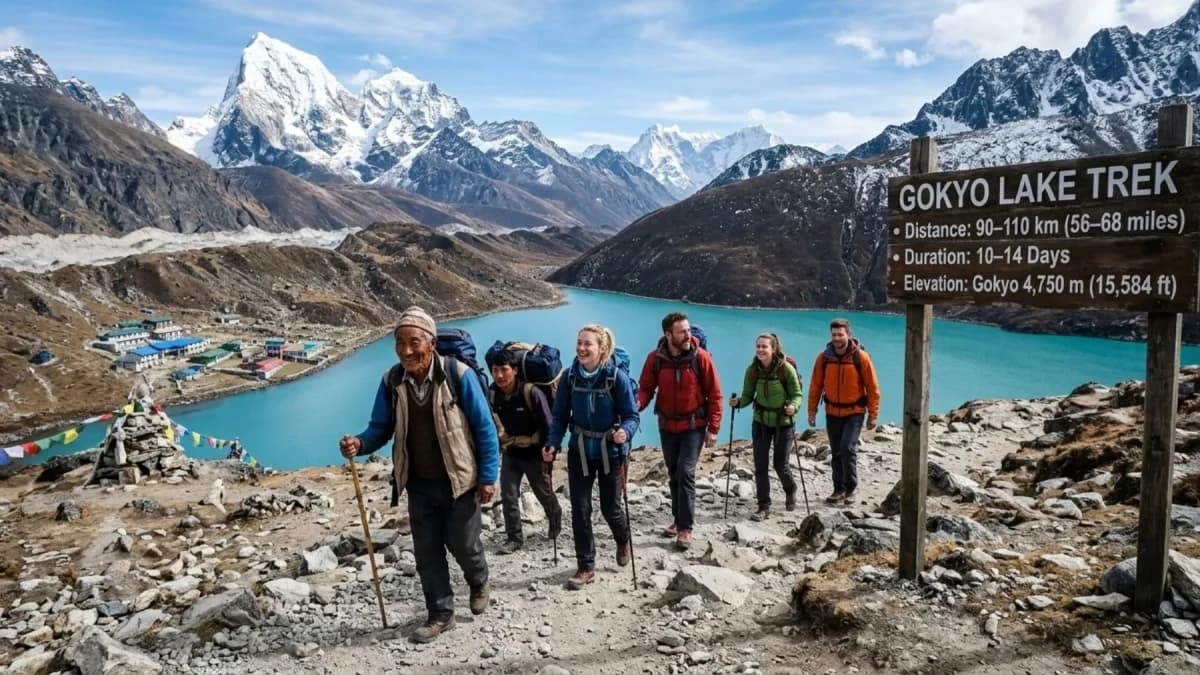
The Gokyo Lake Trek typically takes 12 to 14 days, with most trekkers walking 5 to 7 hours per day and covering roughly 95 to 105 kilometers in total. This timeframe reflects how the trek is most realistically completed in the Everest region, not an accelerated or stripped-down version. While shorter itineraries are sometimes advertised, the 12 to 14 day range represents the balance between safe altitude gain, manageable daily effort, and the opportunity to experience the Gokyo Lakes area properly rather than rushing through it.
Introduction: Why “How Long” Is Not a Simple Question
At first glance, asking how long the Gokyo Lake Trek takes sounds straightforward. However, the wide range of answers online often creates confusion instead of clarity. Some sources focus only on trekking days, others include travel time, and many mix distance, walking hours, and itinerary length without clearly explaining the differences.
High-altitude trekking in the Himalayas does not follow the same logic as lowland hiking. Time on the Gokyo route is shaped by elevation gain, mandatory acclimatization, trail conditions, and side hikes such as Gokyo Ri or the Fifth Lake. These factors interact with each other, meaning the trek does not have one fixed duration but a realistic range that accounts for safety, recovery, and experience quality.
This article explains how long the Gokyo Lake Trek actually takes by breaking the question into its core components: total trip days, trekking days, daily walking hours, and overall distance. Instead of focusing on itineraries or sales-driven claims, it provides a practical, time-based explanation that helps trekkers plan with confidence.
Gokyo Lake Trek Duration at a Glance
Before diving deeper into walking hours, distance, and planning logic, it helps to anchor expectations with a clear snapshot of what most trekkers experience on the Gokyo Lake Trek. The table below summarizes the standard timeframe based on commonly followed routes that prioritize safe acclimatization and a balanced pace.
Gokyo Lake Trek Duration Summary
| Aspect | Typical Answer |
|---|---|
| Total Trip Duration | 12–14 days |
| Trekking Days | 9–11 days |
| Daily Walking Time | 5–7 hours |
| Total Trek Distance | ~95–105 km |
| Maximum Altitude | 5,357 m (Gokyo Ri) |
This overview reflects the standard Gokyo Lake Trek, which includes internal flights to and from Lukla, planned acclimatization days, and at least one exploration day around the Gokyo Lakes area. Shorter versions usually reduce rest or exploration time, while longer itineraries add side trips or additional buffer days.
The purpose of this snapshot is not to oversimplify the trek, but to provide a realistic baseline. Each of these elements is explored in more detail in the sections that follow, where you’ll see how trekking days, walking hours, and distance interact to shape the overall duration.
What “How Long” Actually Means for the Gokyo Lake Trek?
When people ask how long the Gokyo Lake Trek takes, they are often referring to different things without realizing it. Some mean the number of days spent walking on the trail, others are thinking about the total time they need to take off from work, and some are simply comparing distances on a map. These interpretations are not the same, which is why answers online can feel inconsistent.
For the Gokyo Lake Trek, “how long” is best understood as a combination of trekking days, total trip days, and daily effort, rather than a single fixed number. Trekking days refer only to the days when you are walking between villages. Total trip days include flights, acclimatization, exploration hikes, and buffer days that protect against delays. Daily effort reflects how many hours you walk and how demanding the terrain and altitude are.
High altitude trekking adds another layer to this definition. Above 3,000 meters, the body naturally slows down, and time is intentionally added to allow for acclimatization. Even when distances are short, walking hours remain similar because of reduced oxygen levels, steeper gradients, and the need for regular breaks. This is why two itineraries with the same route can differ by several days without changing the destination.
Understanding “how long” in this broader sense helps set realistic expectations. The Gokyo Lake Trek is not designed to be rushed or measured only by kilometers. Its duration reflects the time needed to adapt to altitude, maintain steady progress, and experience the landscape safely and comfortably.
How Many Days Do You Actually Trek on the Gokyo Route?
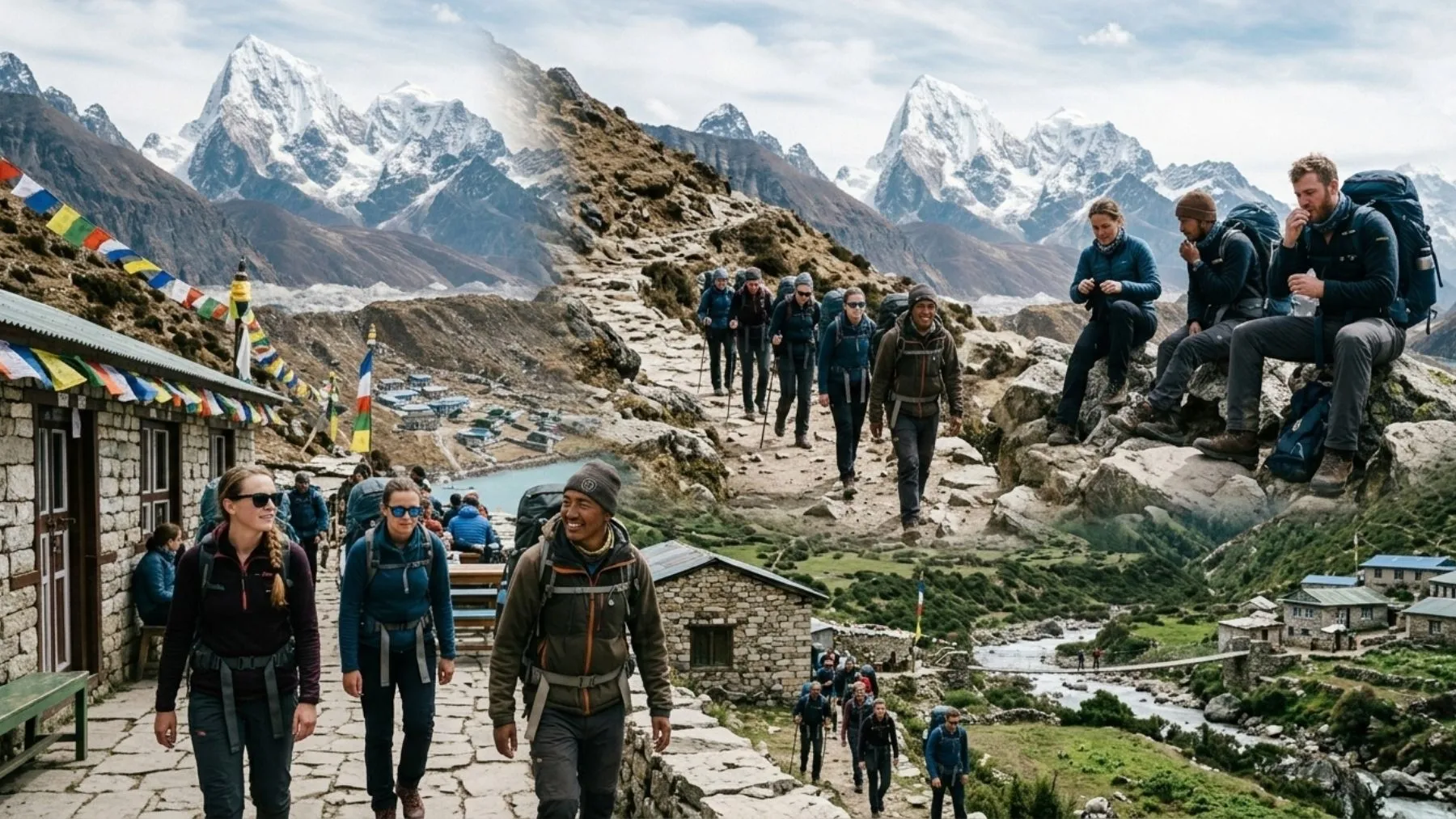
Another common source of confusion around the Gokyo Lake Trek is the assumption that all 12 to 14 days are spent walking. In reality, only a portion of the trip involves daily trekking between villages. The remaining days play a critical role in acclimatization, logistics, and overall safety.
On a standard Gokyo Lake Trek, most trekkers spend 9 to 11 days actively trekking. These are the days when you walk from one settlement to another along the trail. The remaining days are intentionally built into the itinerary to support altitude adaptation, internal flights, and flexibility in case of delays.
The distinction becomes clearer when the journey is broken down into its core components:
Trekking Days vs Total Trip Days
| Category | Typical Days |
|---|---|
| Trekking days (walking days) | 9–11 |
| Acclimatization days | 2 |
| Arrival and departure buffers | 1–2 |
| Total trip duration | 12–14 days |
Acclimatization days are not rest days in the traditional sense. They usually include short hikes to higher elevations followed by a return to sleep lower, helping the body adjust gradually to altitude. Skipping these days may shorten the calendar timeline, but it significantly increases the risk of altitude related illness and often leads to slower progress later.
Arrival and departure buffers are equally important. Flights to and from Lukla are highly dependent on weather conditions, and delays are common even in good seasons. Including buffer time ensures that the trek can continue smoothly without putting pressure on daily walking schedules.
Understanding how trekking days fit into the total trip helps explain why the Gokyo Lake Trek is best planned as a complete journey rather than a simple count of walking days. This structure allows trekkers to move steadily, adapt safely, and complete the route without unnecessary stress.
Also read: Manaslu Circuit Trek Map on Google Map
Day-by-Day Walking Distance on the Gokyo Lake Trek
Looking at day-by-day walking distances helps translate the overall timeline into something practical without turning the trek into a rigid itinerary. These distances are approximate, not promises. They reflect how a standard Gokyo Lake Trek unfolds when planned with proper acclimatization, steady pacing, and typical lodge stops.
The purpose of this overview is to show how distance and time are distributed across the trek, not to suggest that every trekker must follow the same daily pattern. Walking hours can vary depending on fitness, weather, and trail conditions, especially at higher elevations.
Day-by-Day Trekking Distance Overview
| Trekking Day | Walking Section | Approx. Distance | Typical Time |
|---|---|---|---|
| Day 1 | Lukla → Phakding | ~8 km | 3–4 hrs |
| Day 2 | Phakding → Namche Bazaar | ~6 km | 5–6 hrs |
| Day 3 | Acclimatization hikes (Namche area) | ~5–7 km | 3–4 hrs |
| Day 4 | Namche → Dole | ~11 km | 5–6 hrs |
| Day 5 | Dole → Machhermo | ~7 km | 4–5 hrs |
| Day 6 | Machhermo → Gokyo | ~6 km | 4–5 hrs |
| Day 7 | Side hikes (Gokyo Ri or Fifth Lake) | ~4–8 km | 3–5 hrs |
| Day 8 | Gokyo → Dole | ~12 km | 5–6 hrs |
| Day 9 | Dole → Namche Bazaar | ~11 km | 5–6 hrs |
| Day 10 | Namche Bazaar → Lukla | ~18 km | 6–7 hrs |
This table highlights two important realities of the Gokyo Lake Trek. First, shorter distances at higher altitudes still require similar walking time due to slower pace and frequent rests. Second, longer days typically occur during descents, where altitude decreases but trail length increases.
Understanding this daily distribution explains why the trek fits naturally into a 12 to 14 day timeframe. The distance is spread in a way that supports acclimatization, keeps walking hours manageable, and allows trekkers to maintain consistent energy levels throughout the journey.
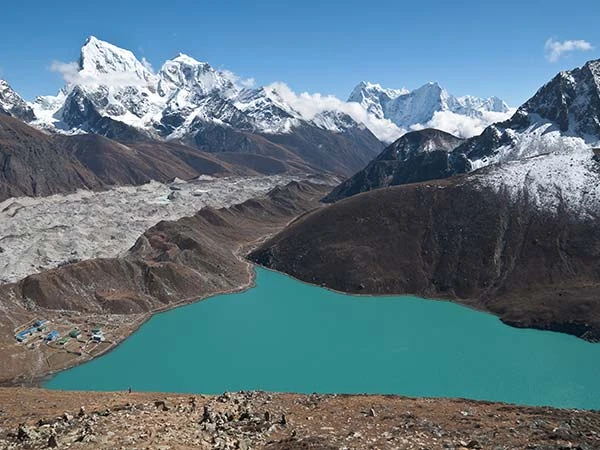
Daily Walking Time – How Long Do You Walk Each Day?
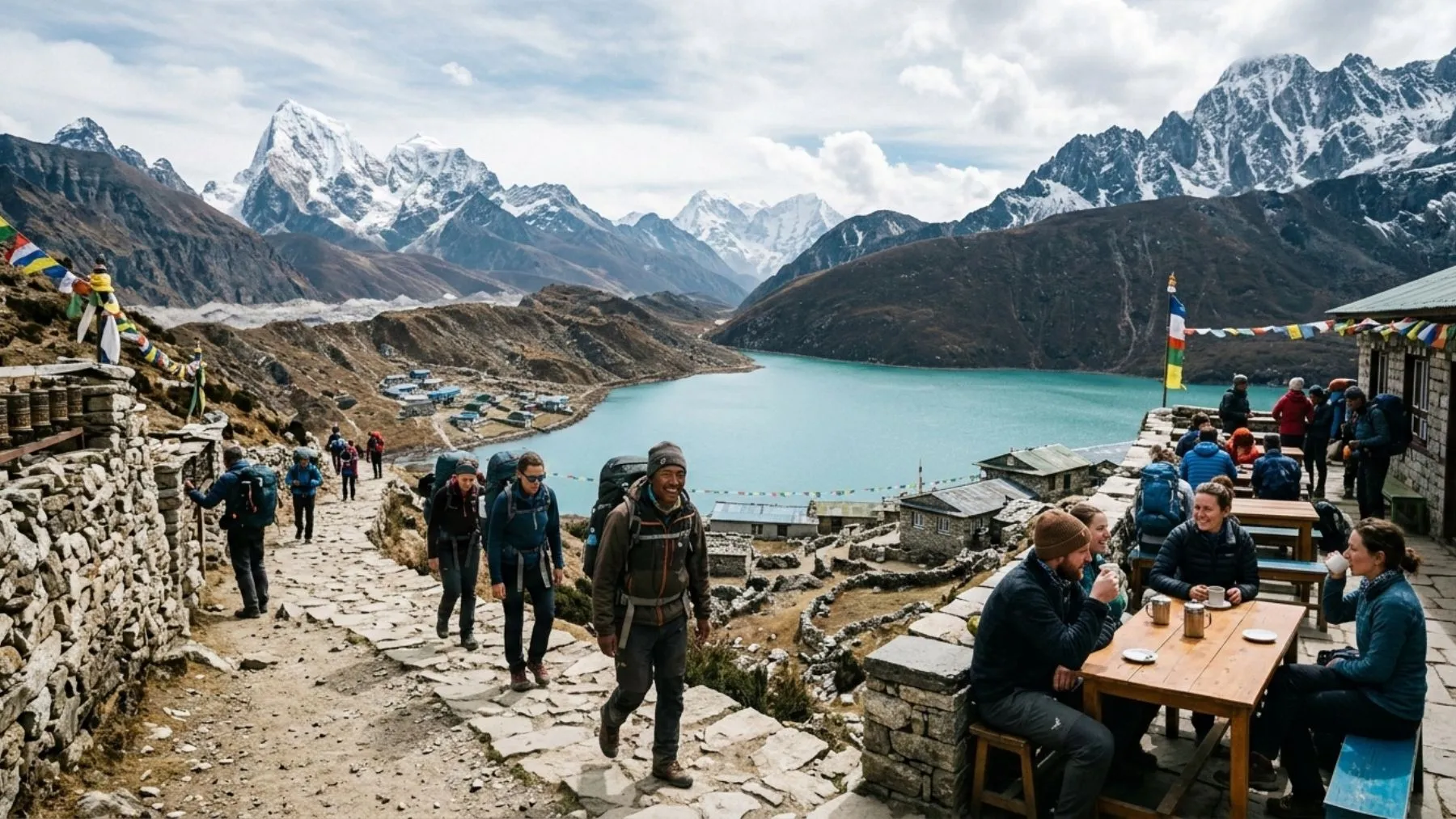
Daily walking time is one of the most overlooked factors when estimating how long the Gokyo Lake Trek takes. Many trekkers assume that fewer kilometers automatically mean shorter days, but in high altitude terrain, this is rarely the case.
On most days of the Gokyo Lake Trek, trekkers walk for approximately 5 to 7 hours. This does not mean continuous movement at a steady pace. Himalayan trekking follows a gradual rhythm that includes ascents, descents, short breaks, and pauses to adjust breathing at higher elevations. Even when distances are moderate, walking hours remain consistent because the trail becomes steeper and the air thinner as altitude increases.
At lower elevations near Lukla and Phakding, daily distances may be longer, but the pace feels easier. As the trek progresses beyond Namche Bazaar and climbs above 3,500 meters, daily distances often shorten, yet walking time stays similar due to slower movement and longer rest intervals. For example, a 6 or 7 kilometer stretch near Gokyo can still take five hours because of sustained uphill gradients and reduced oxygen levels.
Side hikes also contribute to daily effort without changing accommodation points. Acclimatization walks, the ascent of Gokyo Ri, or exploration toward the Fifth Lake all add walking hours to the day, even though they do not involve relocating to a new village. These efforts are essential for both safety and experience, but they increase the overall time spent on foot.
Understanding daily walking time helps explain why the Gokyo Lake Trek cannot be compressed simply by walking faster. A consistent pace with manageable hours each day is what allows trekkers to complete the journey comfortably within the standard 12 to 14 day timeframe, rather than feeling exhausted or pressured as the altitude increases.
Dreaming of exploring the stunning Gokyo Lakes? Plan your Himalayan adventure with Recreation Holidays and choose the perfect Everest region trekking package.
Total Distance – How Long Is the Gokyo Lake Trek in Kilometers?
Distance is one of the most searched aspects of the Gokyo Lake Trek, yet it is also one of the most misunderstood. While maps and itineraries often list daily distances, they rarely explain how those distances translate into real effort at high altitude. Understanding the total distance helps with planning, but only when viewed alongside elevation gain and daily walking time.
For a standard Gokyo Lake Trek that follows safe acclimatization practices and includes at least one exploration hike, trekkers usually cover approximately 95 to 105 kilometers in total. This range accounts for variations in acclimatization routes, side hikes such as Gokyo Ri or the Fifth Lake, and slight differences in return paths.
Distance Breakdown by Trek Section
| Trek Section | Approximate Distance |
|---|---|
| Lukla to Namche Bazaar | ~14 km |
| Namche Bazaar to Gokyo | ~32 km |
| Side hikes (Gokyo Ri, Fifth Lake, acclimatization walks) | ~4–12 km |
| Gokyo to Lukla (return) | ~45–50 km |
| Total Trek Distance | ~95–105 km |
How Gokyo Lake Trek Duration Compares With Other Everest Region Treks?
Many trekkers try to understand the length of the Gokyo Lake Trek by comparing it with other well known routes in the Everest region. This comparison is useful because it places the Gokyo trek in a familiar context and helps set realistic expectations about time commitment.
Although Gokyo Lake and Everest Base Camp share the same starting point at Lukla and overlap until Namche Bazaar, their timelines begin to differ after that. The Gokyo route moves away from the main Everest trail, climbing gradually into the Gokyo Valley, while the Everest Base Camp trek continues deeper into the Khumbu Glacier corridor.
Duration Comparison: Gokyo Lake vs Other Popular Everest Treks
| Trek Route | Typical Total Days | Trekking Days | Daily Walking Time |
|---|---|---|---|
| Gokyo Lake Trek | 12–14 days | 9–10 days | 4–7 hours |
| Everest Base Camp Trek | 12–14 days | 9–10 days | 5–7 hours |
| Short Everest Base Camp Trek | 9–11 days | 7–8 days | 6–8 hours |
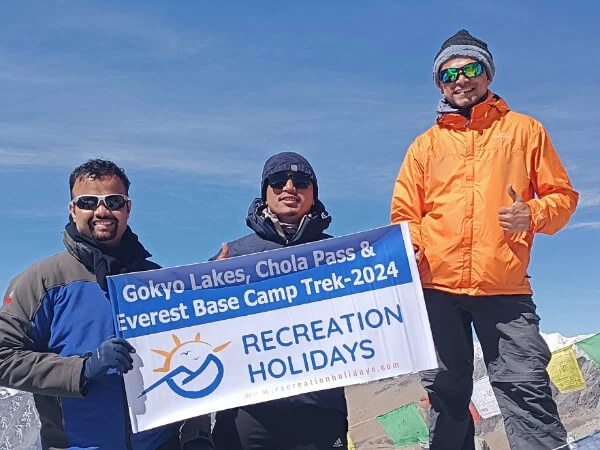
| Gokyo + Everest Base Camp (via Cho La) | 16–18 days | 12–14 days | 5–8 hours |
From a time perspective, the standard Gokyo Lake Trek and the standard Everest Base Camp Trek are very similar. Both usually fall within the same 12 to 14 day range when acclimatization and travel buffers are included. The difference lies more in terrain, crowd levels, and daily elevation profiles than in total duration.
Shorter versions of Everest Base Camp reduce total days by increasing daily walking hours and limiting buffer time. While this approach works for experienced trekkers, it is less common for Gokyo Lake because the route naturally encourages exploration hikes such as Gokyo Ri and the Fifth Lake.
When extended routes are considered, such as combining Gokyo Lake with Everest Base Camp via Cho La Pass, the total duration increases significantly. These itineraries require additional acclimatization and are planned as longer high altitude journeys rather than time efficient treks.
This comparison shows that the Gokyo Lake Trek fits squarely into the classic Himalayan trek duration category. It is neither a short trek nor an expedition length journey, making it an ideal choice for trekkers who want a complete high altitude experience without committing to an extended multi week itinerary.
Conclusion
The Gokyo Lake Trek does not have a single fixed duration, but most trekkers complete it within 12 to 14 days, including acclimatization and travel to and from Lukla. The total time depends on walking pace, fitness level, acclimatization needs, and whether side hikes or route extensions are included. Rather than focusing on speed, successful treks are planned around steady progress and proper altitude adjustment. Understanding how distance, terrain, and altitude affect daily walking time allows trekkers to plan realistically and enjoy the journey without unnecessary pressure.
Other Related logs You May Missed
Francys Arsentiev– The Tragic Story of Everest's Sleeping Beauty