
The Manaslu Circuit Trek usually takes between 11 and 16 days in total, depending on pacing, acclimatization days, and whether side valleys or added comfort days are included.
| Trek Approach | Approximate Days | General Pace |
|---|---|---|
| Short Manaslu Circuit | 11 days | Fast paced, limited buffer |
| Standard Manaslu Circuit | 14–16 days | Balanced and recommended |
| Manaslu with Tsum Valley | 18–19 days | Extended and exploratory |
This range often feels confusing to trekkers researching the route for the first time. Some sources mention shorter timelines, while others suggest much longer durations. The difference is not due to misinformation, but to the flexible nature of the Manaslu Circuit and the way trekking days are structured in the high Himalaya.
Unlike fixed-route treks, the Manaslu Circuit can be completed at different speeds and comfort levels. Some itineraries are designed for experienced trekkers who prefer fewer rest days and a tighter schedule, while others allow additional time for acclimatization, recovery, and weather flexibility. These choices directly affect how long the trek takes overall.
Another common source of confusion is the distinction between trekking days and total trip days. Trekking days refer only to the days spent walking on the trail, whereas total trip days include long road transfers to and from the trailhead, arrival and departure days, and any built-in buffer days. When this difference is not clearly explained, the duration of the Manaslu Circuit Trek can appear inconsistent across different websites.
This article breaks down trekking days versus total travel days, explains why Manaslu does not have a single fixed duration, and helps you understand how much time you should realistically plan based on fitness, comfort expectations, and overall travel goals.
Trekking Days vs Total Trip Days - Understanding the Difference
Manaslu Circuit Duration at a Glance
| Duration Type | What It Includes | Typical Range |
|---|---|---|
| Trekking days only | Walking days on the trail | 9–12 days |
| Travel days | Road transfers to and from the trail | 2–3 days |
| Buffer and acclimatization days | Rest, altitude adjustment, flexibility | 1–2 days |
| Total trip duration | All of the above combined | 11–16 days |
When people ask how long the Manaslu Circuit Trek is, they often mix up trekking days with total trip days, which leads to much of the confusion seen online. Understanding this distinction is essential for realistic planning. Trekking days refer only to the days you are actually walking on the trail. These are the days spent moving between villages, gaining altitude gradually, acclimatizing, and eventually crossing Larkya La Pass. On the Manaslu Circuit, trekking days usually make up the majority of the journey, but they are not the whole trip.
Total trip days, on the other hand, include everything from arrival to departure. This means long overland transfers to reach the trailhead, the return journey after finishing the trek, and any built-in buffer or acclimatization days. Because Manaslu is a remote circuit with limited road access, travel days are longer and more time-consuming than on many other treks in Nepal.
For example, even a well-paced itinerary with efficient trekking still requires multiple full days of driving to reach the starting point and return to Kathmandu at the end. These transfers alone can add two to three days to the overall trip without involving any trekking at all. When these are not clearly explained, one itinerary may appear much shorter than another even though the actual trekking portion is similar.
Another factor is safety and acclimatization. Standard Manaslu itineraries include extra days not because the trail is longer, but because time is deliberately added to allow the body to adjust to altitude and to provide flexibility in case of weather changes around high mountain sections. These days are part of responsible planning and should be counted when considering the total time commitment.
Seen this way, the differing timelines make sense. Shorter versions of the Manaslu Circuit reduce buffer days and maintain a faster daily pace, while longer versions spread the effort more comfortably and account for acclimatization and recovery. Neither approach changes the route itself; they simply change how time is allocated. Understanding the difference between trekking days and total trip days allows you to compare itineraries accurately and plan your schedule with confidence, rather than relying on a single number that rarely tells the full story.
Why the Manaslu Circuit Trek Does Not Have One Fixed Duration?
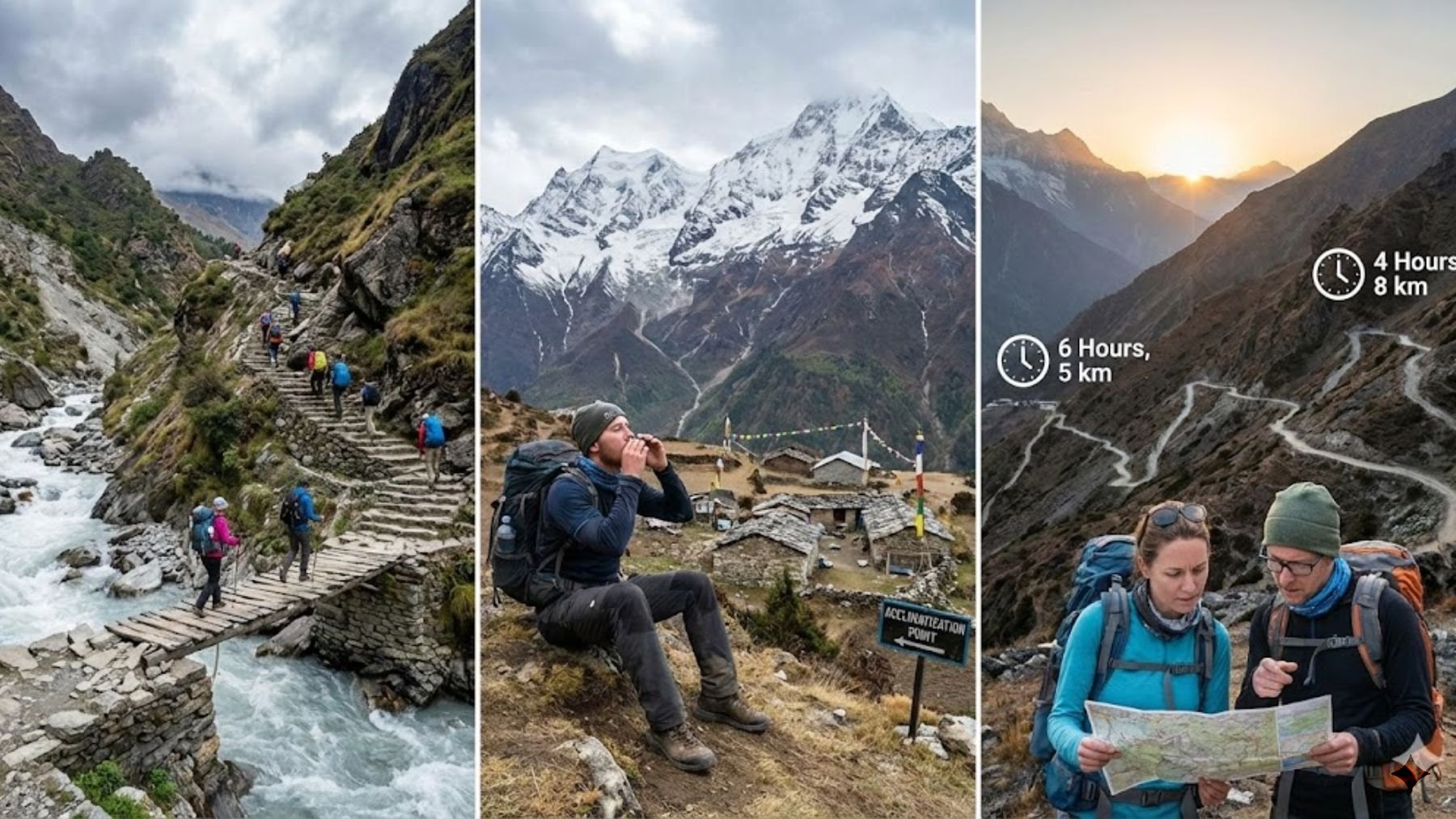
Unlike many well-developed trekking routes, the Manaslu Circuit Trek does not follow a single, fixed timeline. The length of the trek is shaped by a combination of terrain, altitude, remoteness, and responsible pacing rather than by distance alone. This is why two itineraries can follow the same route yet differ by several days. One of the main reasons is the design of Himalayan terrain. The Manaslu Circuit involves continuous elevation gain and loss rather than a steady ascent. A day with fewer kilometers can still require many hours of walking because of steep gradients, stone staircases, river crossings, and narrow mountain paths. Time on the trail is determined by effort and conditions, not by how far you travel on a map.
Altitude also plays a major role in shaping the timeline. As the trek climbs higher, especially above 3,500 meters, walking naturally becomes slower. Breathing requires more effort, recovery takes longer, and daily distances are intentionally reduced. Adding days at this stage is not about extending the route, but about allowing the body to adapt safely before tackling the most demanding sections. Remoteness further affects how time is planned. The Manaslu Circuit passes through areas with limited infrastructure, basic teahouses, and fewer alternative routes. Weather changes, trail conditions, or local circumstances can slow progress, especially near the Larkya La Pass. Because flexibility is essential in these environments, itineraries are designed with extra days to absorb delays without increasing risk.
Finally, the trek’s duration varies because it is approached with different priorities. Some trekkers value efficiency and complete the circuit with minimal buffer days, while others prefer a more comfortable pace that includes acclimatization, rest, and contingency time. Both approaches follow the same trail but unfold at different rhythms. For these reasons, the Manaslu Circuit Trek cannot be reduced to a single number of days. Its duration reflects how Himalayan trekking actually works, where time is guided by terrain, altitude, and safety rather than by distance alone.
Don't miss: Manaslu Circuit Trek For Seniors
Short, Standard, and Extended Timelines - How the Same Trek Unfolds Differently
How Different Manaslu Timelines Compare?
| Timeline Type | Total Days | Best For | Trade-offs |
|---|---|---|---|
| Short | 11 days | Very fit, time-limited trekkers | Less flexibility |
| Standard | 14–16 days | Most trekkers | Balanced pacing |
| Extended | 18–19 days | Comfort-focused explorers | More time required |
Because the Manaslu Circuit Trek does not have a fixed duration, it is best understood through timeframes rather than a single number. The route itself remains the same, but how long it takes depends on pacing, acclimatization priorities, and overall comfort expectations. This is why Manaslu is commonly completed in short, standard, or extended formats. A short or optimized Manaslu Circuit is designed for trekkers with strong fitness and limited time. These itineraries reduce buffer days and maintain a consistent daily pace. Walking days are longer, rest days are minimal, and recovery happens mostly overnight. While this approach still follows safe acclimatization principles, it allows less flexibility for weather delays or fatigue. Short timelines appeal to experienced trekkers who already understand how their bodies respond at altitude.
The standard Manaslu Circuit Trek represents the most balanced and widely recommended timeframe. It spreads physical effort more evenly, includes planned acclimatization days, and allows time for gradual adjustment before crossing Larkya La Pass. This approach reduces cumulative fatigue and lowers stress on the body at higher elevations. For most trekkers, this timeline offers the best balance between safety, comfort, and enjoyment without feeling rushed.
An extended or comfort focused Manaslu Circuit adds additional buffer and acclimatization days. These itineraries are often chosen by trekkers who prefer a slower pace, want extra recovery time, or value flexibility in case of weather changes. Extended timelines do not make the trek easier in terms of terrain or altitude, but they significantly reduce daily strain and mental pressure, especially during the later stages of the trek. It is also important to distinguish extended Manaslu itineraries from Manaslu combined with Tsum Valley. While these longer trips can reach eighteen to nineteen days, the added duration comes from exploring side valleys rather than from the Manaslu Circuit itself. Mixing these timelines without explanation is one of the main reasons duration information online appears inconsistent.
Understanding these different timeframes makes it clear that the Manaslu Circuit Trek does not change in distance or difficulty. What changes is how time is allocated. Choosing the right timeline depends less on ambition and more on how much time you want to give your body to adapt, recover, and experience the trek comfortably.
Also read: Francys Arsentiev– The Tragic Story of Everest's Sleeping Beauty
Daily Walking Hours, Distance, and What the Pace Really Feels Like
Typical Daily Effort on the Manaslu Circuit
| Factor | Typical Range |
|---|---|
| Daily walking hours | 5–7 hours |
| Maximum walking days | Up to 8 hours |
| Daily distance | 12–18 km |
| Highest point | Larkya La Pass (5,160 m) |
Beyond total days, many trekkers want to know what a typical day on the Manaslu Circuit Trek actually looks like. Understanding daily walking hours, distance covered, and how pace changes along the route gives a much clearer picture of why the trek takes as long as it does. On most days, trekkers walk for 5 to 7 hours, with some days extending to 8 hours or more, especially as the trail gains altitude. These hours are spread across gradual climbs, descents into river valleys, village crossings, and rest breaks rather than continuous movement. Unlike flat hiking, Himalayan trekking involves frequent stops to manage breathing, hydrate, and adjust layers as conditions change.
In terms of distance, trekkers usually cover around 12 to 18 kilometers per day. However, distance alone is not a reliable indicator of effort. A shorter day with steep ascents and rough terrain can take longer and feel more demanding than a longer day on gentler paths. Stone staircases, uneven trails, suspension bridges, and narrow mountain tracks all slow pace naturally. Pace changes noticeably as altitude increases. Below 3,000 meters, walking often feels steady and comfortable. Above 3,500 meters, the same pace requires more effort, and daily distances are intentionally reduced. Near the high point of the trek, particularly around Larkya La Pass, walking becomes slower and more deliberate, with greater emphasis on rhythm and breathing rather than speed.
Breaks are a built-in part of the trekking day. Lunch stops, tea breaks, and short rests are not signs of inefficiency but essential for maintaining energy over many days. When these pauses are included, a day that involves 6 hours of walking can easily stretch into a full day on the trail. This is why Manaslu cannot be rushed without consequences. The trek’s duration reflects the reality of sustained daily effort in high altitude terrain, not inefficiency or unnecessary padding. When planned realistically, the daily pace allows trekkers to move consistently, adapt to altitude, and reach the end of the circuit safely and enjoyably.
Altitude, Acclimatization, and Buffer Days (Why Extra Time Is Built In)
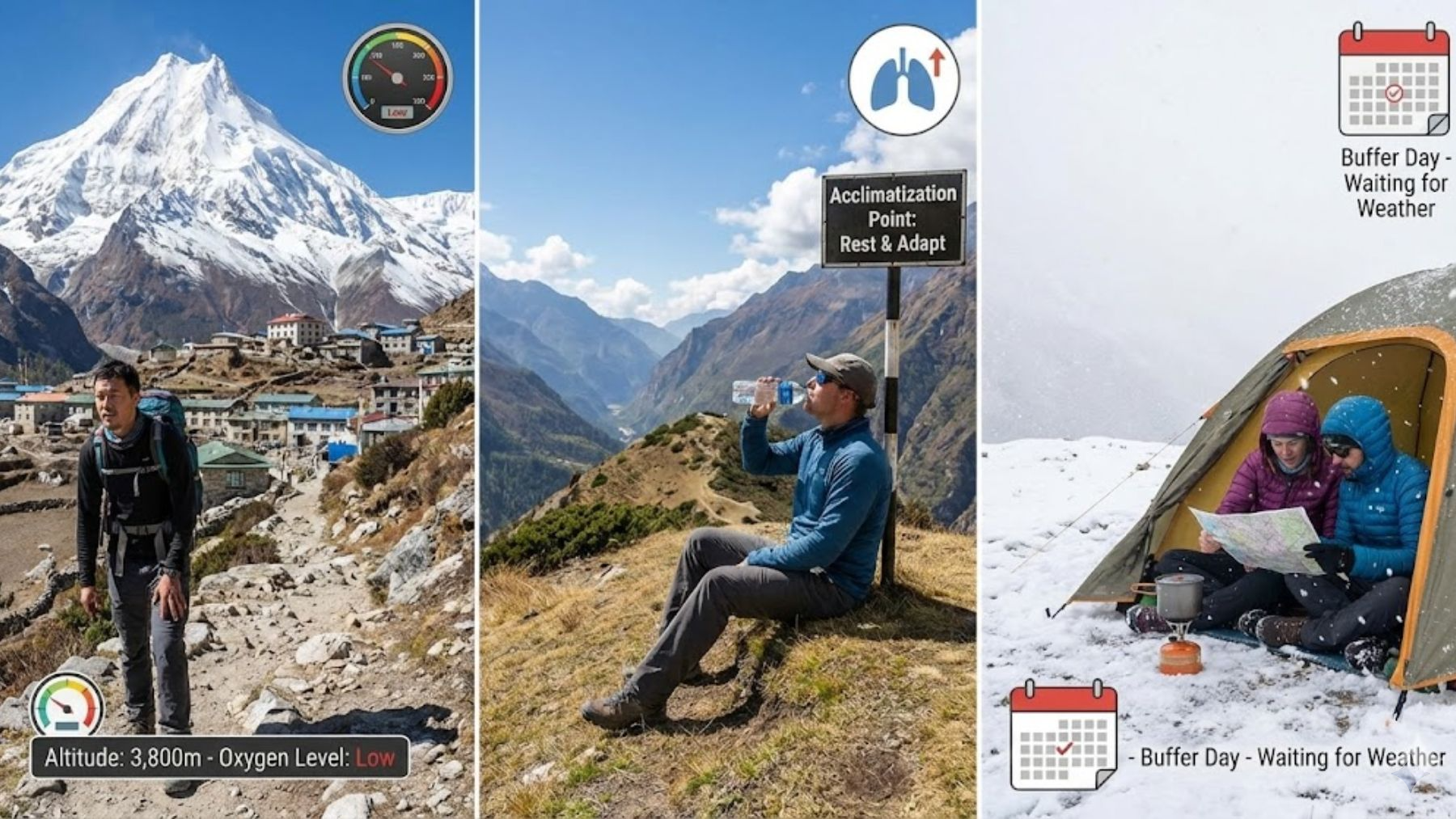
Altitude is one of the most important reasons the Manaslu Circuit Trek takes as long as it does. Unlike lower elevation treks where distance largely determines duration, Manaslu climbs steadily into high altitude terrain where time is added deliberately for safety, not comfort. As the trail rises above 3,000 meters, the body needs more time to adjust to reduced oxygen levels. Walking speed naturally slows, recovery takes longer, and rest becomes part of the trekking process rather than something reserved for the evening. On the Manaslu Circuit, this effect becomes more noticeable as trekkers approach the higher villages and the ascent toward Larkya La Pass.
Acclimatization days are therefore built into well planned itineraries. These are not full rest days in the traditional sense, but controlled days with shorter walks or gradual altitude gains. Their purpose is to help the body adapt without stress, reducing the risk of altitude related illness and excessive fatigue. Removing these days may shorten the trek on paper, but it increases physical strain and limits margin for error. Buffer days serve a different but equally important role. The Manaslu region is remote, with limited infrastructure and few alternative routes. Weather changes, trail conditions near the high pass, or group pacing can all affect daily progress. Buffer days allow flexibility so the trek can continue safely without forcing longer or riskier days when conditions are not ideal.
This is why longer Manaslu itineraries are often described as more comfortable or better paced, even though the route itself does not change. The additional days reduce pressure, spread physical effort more evenly, and provide space to respond calmly to altitude and environmental factors. In practical terms, these extra days are what turn the Manaslu Circuit from a demanding endurance challenge into a sustainable high altitude journey. They do not make the trek easier in terms of terrain or elevation, but they make it realistically achievable for a much wider range of trekkers by respecting how the human body performs at altitude.
Planning your Manaslu adventure? Travel with confidence - connect with Recreation Holidaysand explore your ideal trekking package today.
How Many Days Should You Realistically Plan for the Manaslu Circuit Trek?
When planning time for the Manaslu Circuit Trek, the most reliable approach is to think in ranges rather than fixed numbers. While it is technically possible to complete the trek on a shorter schedule, most trekkers benefit from allowing enough time for acclimatization, recovery, and flexibility in a remote mountain environment. For the majority of trekkers, planning 14 to 16 days in total offers the best balance. This timeframe includes trekking days, long road transfers to and from the trailhead, acclimatization days, and a small buffer for weather or pacing adjustments. It allows you to move steadily without feeling rushed and reduces the physical and mental strain that comes from trying to compress the itinerary.
Trekkers with limited time and strong fitness can plan closer to the lower end of the range, but this requires comfort with longer daily walks and fewer rest days. On the other hand, those who prefer a more relaxed pace, additional acclimatization, or greater comfort should plan toward the longer end. Extended itineraries are especially valuable for first time high altitude trekkers, older trekkers, or anyone who values margin and flexibility over speed.
It is also wise to account for one or two extra buffer days outside the core trekking schedule. These days provide protection against delays caused by weather, road conditions, or personal recovery needs. Even if they are not used, having them available removes pressure and allows you to enjoy the trek without constantly watching the calendar. Ultimately, the right duration is not about finishing as quickly as possible. The Manaslu Circuit Trek rewards those who respect altitude, terrain, and pacing. Planning enough time ensures that the journey remains safe, manageable, and rewarding from start to finish, rather than becoming a race against the clock.
Understanding the Manaslu Circuit Trek’s Duration
Understanding how long the Manaslu Circuit Trek takes is less about finding a single number and more about understanding how Himalayan trekking actually works. The duration of this trek is shaped by altitude, terrain, remoteness, and the need for careful pacing rather than by distance alone. This is why timelines vary and why different itineraries can follow the same route yet unfold over different lengths of time.
The Manaslu Circuit is not designed to be rushed. Its high altitude environment, long walking days, and limited infrastructure require time for acclimatization, recovery, and flexibility. When extra days are included in an itinerary, they are not unnecessary additions but deliberate measures that make the trek safer, more sustainable, and more enjoyable. Thinking about the trek in terms of ranges instead of exact days allows for better planning and fewer surprises. Whether a trek is completed on a shorter schedule or a more relaxed one, the experience remains defined by steady progress, respect for altitude, and adaptation to changing conditions. This perspective helps trekkers align expectations with reality before setting foot on the trail.
Ultimately, the Manaslu Circuit Trek rewards those who give it the time it deserves. When planned with a clear understanding of pacing, acclimatization, and buffer days, the trek becomes a well balanced journey through one of Nepal’s most dramatic and rewarding mountain regions, rather than a race against the calendar.
Read Other Related Blogs