
The Ghorepani Poon Hill Trek is easy to moderate, with daily walking on stone steps and forest trails, and only mild altitude exposure.
How Difficult Is the Ghorepani Poon Hill Trek?

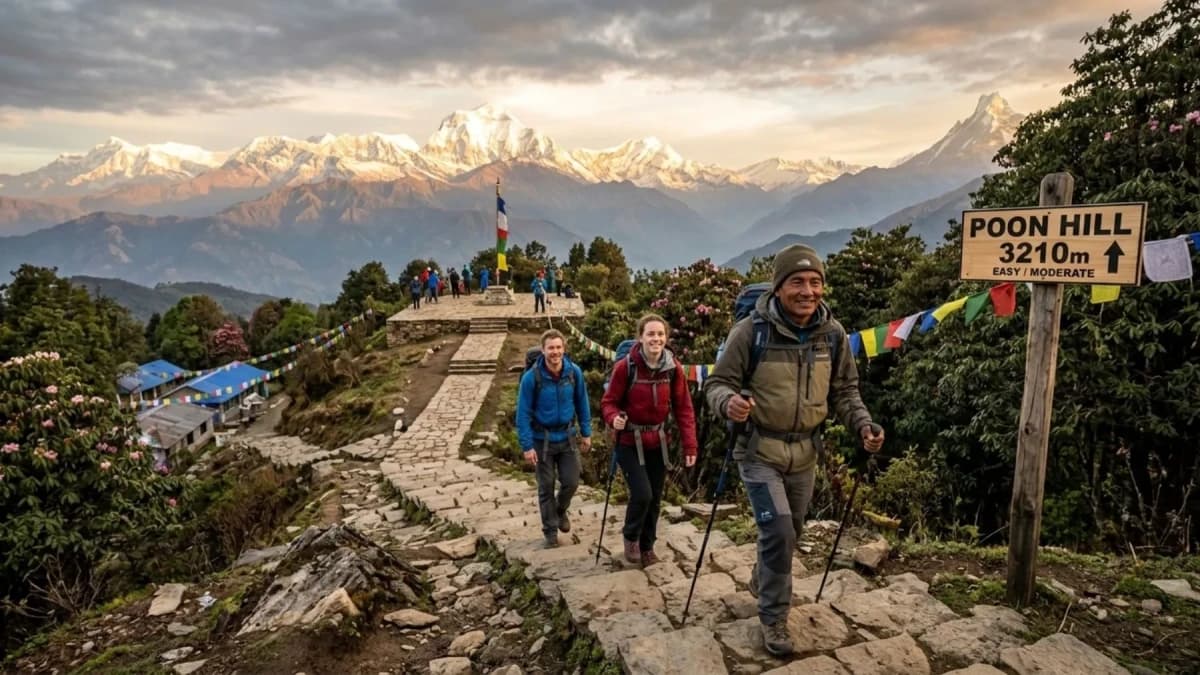
This trek is often recommended as one of the most accessible routes in Nepal, yet many trekkers are surprised to find it more tiring than expected. The reason is not technical difficulty or high altitude, but the steady physical effort required over several days. Long stair sections, repeated ascents and descents, and continuous walking shape how challenging the trek feels in practice.
The route to Ghorepani Poon Hill is well established and supported by teahouses, which makes it suitable for beginners, families, and older trekkers. At the same time, it is not a casual walk. Most days involve 4 to 6 hours of trekking, often on uneven terrain, which requires basic fitness and a willingness to maintain a steady pace.
Altitude plays a smaller role compared to longer Himalayan treks. The highest point of the journey is Poon Hill at 3,210 meters, where altitude related discomfort is generally mild for most people. However, combined with physical fatigue, even this moderate elevation can make walking feel more demanding toward the later days.
This article explains the difficulty of the Ghorepani Poon Hill Trek in a simple and realistic way. Rather than labeling it as simply easy or hard, it breaks down what actually makes the trek feel challenging, which sections demand the most effort, and how different trekkers experience the route. Understanding these factors helps set the right expectations before starting the trek.
Physical Difficulty and Terrain on the Ghorepani Poon Hill Trek
The physical difficulty of the Ghorepani Poon Hill Trek comes from steady daily walking and repeated elevation changes rather than from long distances or technical terrain. Most trekkers walk for 4 to 6 hours per day, covering an average of 8 to 12 kilometers. While this pace is manageable for a wide range of people, the trail’s structure makes the effort feel more demanding than the numbers suggest.
A key factor is the frequent ascents and descents built into the route. Instead of gradual slopes, the trail often climbs sharply out of river valleys and villages before descending again. These repeated changes in elevation place continuous strain on the legs, especially over consecutive days. Trekkers quickly notice that fatigue builds not from speed, but from repetition.
The most physically demanding section of the trek is the climb from Tikhedhunga to Ulleri, which involves over 3,000 stone steps gained in a relatively short distance. This section alone accounts for a large portion of the trek’s difficulty. Climbing these steps requires sustained leg strength, while descending similar stair sections on other days places pressure on the knees and joints. Even fit trekkers often slow their pace here to manage effort.
Trail surfaces also vary throughout the trek. Walkers move between forest soil, uneven stone steps, exposed roots, and rocky paths. This uneven footing requires constant balance and attention, which increases energy use even at a relaxed walking speed. Downhill sections, although less demanding on breathing, often feel harder on the body because of the impact on joints over time.
Most trekkers carry a light daypack weighing around 4 to 6 kilograms, which typically includes water, snacks, and extra layers. While this load feels light at the start, it becomes more noticeable during long stair climbs and toward the later days of the trek, adding to cumulative fatigue.
Overall, the physical difficulty of the Ghorepani Poon Hill Trek lies in its consistency. It does not demand exceptional fitness, but it does require the ability to walk several hours each day on steep, uneven terrain and to repeat that effort over multiple days without rushing.
Physical Effort at a Glance
| Factor | What Trekkers Experience |
|---|---|
| Daily walking time | 4–6 hours |
| Daily distance | ~8–12 km |
| Major stair sections | 3,000+ steps (Tikhedhunga–Ulleri) |
| Terrain type | Stone steps, forest trails, uneven paths |
| Load carried | ~4–6 kg daypack |
Altitude Difficulty and How It Affects the Poon Hill Trek
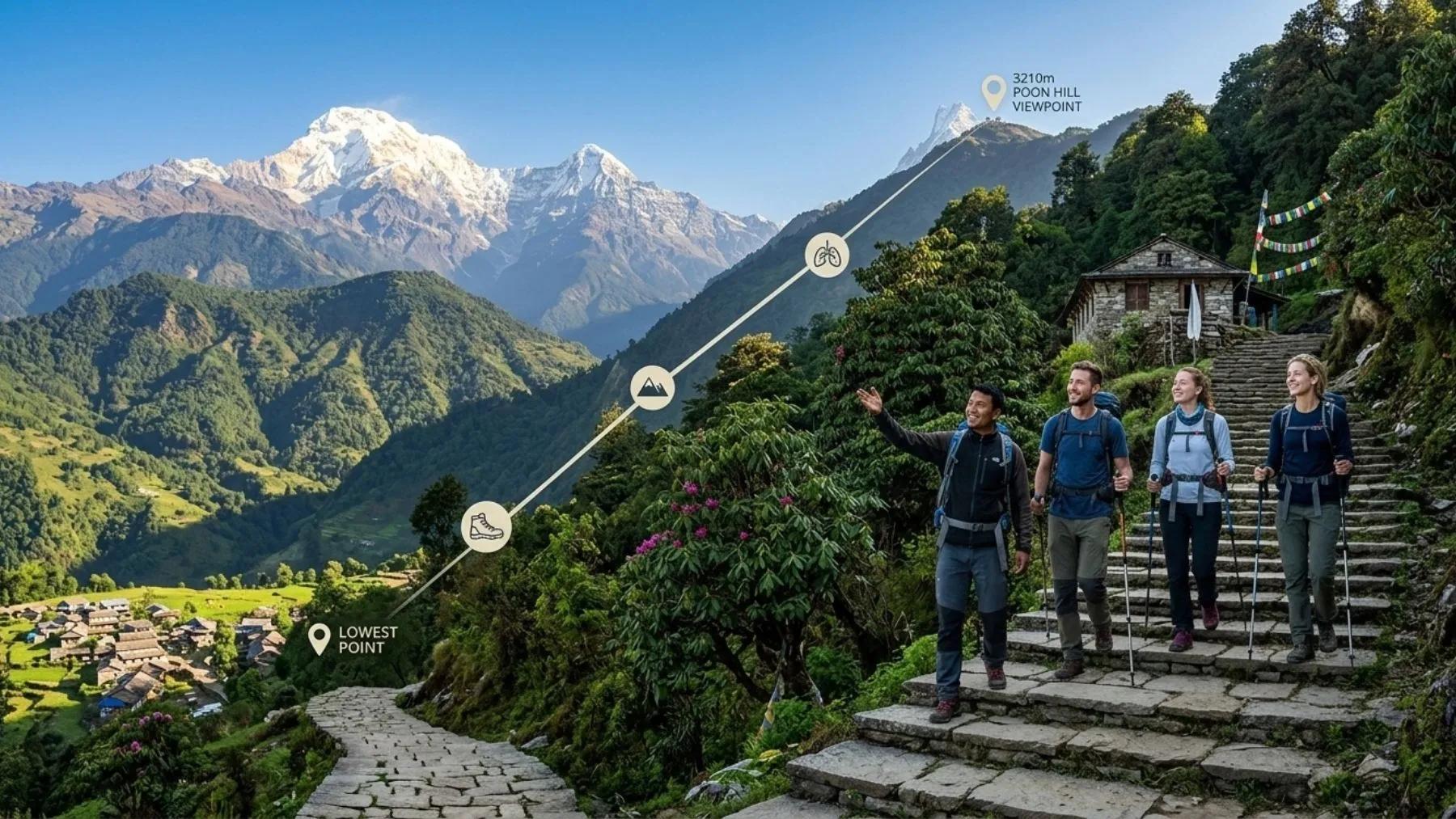
Altitude plays a limited but noticeable role in the difficulty of the Ghorepani Poon Hill Trek. Compared to longer Himalayan routes, altitude related challenges here are mild, but they should not be completely ignored. The trek gradually rises from around 1,070 meters at Nayapul to its highest point at Poon Hill, 3,210 meters, which is well below the extreme elevations found on treks like Annapurna Base Camp.
Most trekkers begin to notice altitude effects above 2,500 meters, particularly around Ghorepani. At this elevation, oxygen levels are lower than at sea level, which can make breathing slightly heavier during climbs. For the majority of people, this results in a slower walking pace rather than serious discomfort. Headaches or mild tiredness can occur, but the risk of significant altitude sickness remains low on this route.
One reason altitude feels manageable on the Poon Hill Trek is the short duration spent at higher elevations. Trekkers usually reach Ghorepani in two days and descend again shortly after the Poon Hill sunrise hike. This limited exposure time allows the body to adjust naturally without prolonged stress. Unlike higher altitude treks, there are no long overnight stays above 3,000 meters, which greatly reduces overall altitude related strain.
However, altitude can still amplify physical fatigue. When combined with long stair climbs and continuous walking, even moderate elevation can make the body feel more tired than expected. Trekkers often notice this effect early in the morning during the ascent to Poon Hill, when cold temperatures and thinner air make the climb feel more demanding despite its short duration.
For most people, altitude on the Ghorepani Poon Hill Trek does not determine whether the trek is difficult or not. Instead, it acts as a supporting factor, subtly increasing effort rather than creating a major challenge. Proper hydration, steady pacing, and avoiding rushing are usually enough to manage altitude comfortably on this trek.
Related: How Difficult Is the Annapurna Base Camp Trek?
Altitude Impact at a Glance
| Altitude Range | What Most Trekkers Experience |
|---|---|
| Below 2,500 m | Normal breathing, minimal impact |
| 2,500–3,000 m | Slightly heavier breathing during climbs |
| Around 3,210 m | Mild fatigue, slower pace on ascent |
| Overall risk | Low altitude sickness risk |
The Hardest Section, Seasonal Factors, and How Difficulty Changes
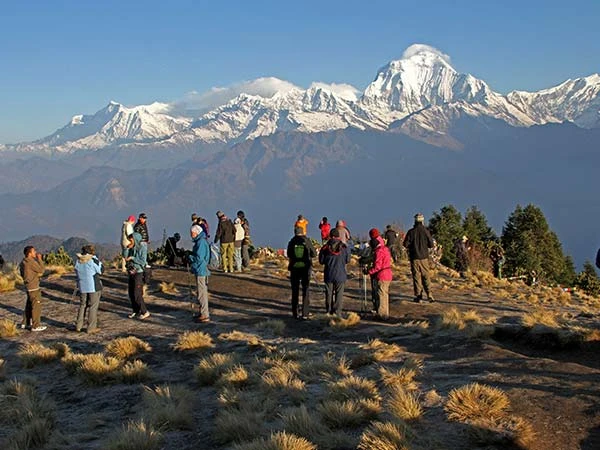
While the Ghorepani Poon Hill Trek is considered easy to moderate overall, difficulty is not evenly distributed along the route. Certain sections demand noticeably more effort, and seasonal conditions can significantly influence how challenging the trek feels on any given day.
1. The Hardest Section of the Trek
For most trekkers, the Tikhedhunga to Ulleri climb is the single most demanding part of the journey. This section gains a large amount of elevation over a short distance and is famous for its long sequence of stone steps. Trekkers ascend more than 3,000 stone steps, often with limited flat breaks. The climb tests leg strength and endurance rather than speed, and many people need to stop frequently to manage breathing and muscle fatigue.
What makes this section challenging is not altitude but repetition and gradient. The steps are uneven, and the incline is sustained, which can feel strenuous even for fit hikers. Those who pace themselves, take short breaks, and avoid rushing generally find the climb manageable, while those who try to push too fast often experience early exhaustion.
2. Difficulty of Key Sections at a Glance
| Section | Elevation Change | Terrain | Difficulty Level |
|---|---|---|---|
| Nayapul to Tikhedhunga | Gradual gain | Forest paths, village trails | Easy |
| Tikhedhunga to Ulleri | Steep gain | 3,000+ stone steps | Most demanding |
| Ulleri to Ghorepani | Moderate gain | Forest trails, mixed steps | Moderate |
| Ghorepani to Poon Hill | Short steep climb | Stone steps | Moderate but short |
3. Seasonal and Weather Based Difficulty
Season and weather conditions also affect how difficult the Ghorepani Poon Hill Trek feels. While the route remains the same year round, temperature, trail condition, and visibility can either ease or increase effort.
In spring and autumn, stable weather and dry trails make walking more predictable and comfortable. During the monsoon season, rain can make stone steps slippery and increase physical strain, even though temperatures are warmer. In winter, cold mornings and occasional snow at higher points slow movement and require extra caution on stair sections.
4. Seasonal Difficulty Comparison
| Season | Weather Conditions | Trail Condition | How Difficulty Feels |
|---|---|---|---|
| Spring (Mar–May) | Mild, stable | Dry trails | Comfortable and steady |
| Monsoon (Jun–Aug) | Warm, rainy | Slippery steps | Physically more tiring |
| Autumn (Sep–Nov) | Clear, cool | Dry and firm | Most balanced conditions |
| Winter (Dec–Feb) | Cold, occasional snow | Icy sections | Slower, more cautious |
Overall, difficulty on the Ghorepani Poon Hill Trek is shaped by where and when you walk rather than by extreme altitude or technical terrain. Understanding which sections require the most effort and how seasons influence conditions helps trekkers prepare realistically and manage energy throughout the journey.
Thinking about the Poon Hill sunrise trek? Explore the journey with Recreation Holidays and find the perfect Himalayan experience.
Is the Ghorepani Poon Hill Trek Right for You?
The Ghorepani Poon Hill Trek is best described as easy to moderate, making it one of the most accessible trekking routes in Nepal without being completely effortless. Its difficulty does not come from high altitude, technical terrain, or long daily distances, but from steady walking, repeated stair climbs, and the need to maintain energy over several consecutive days.
For beginners and casual hikers, the trek is achievable with basic fitness and a willingness to walk for several hours each day. Trekkers who are comfortable walking 4 to 6 hours daily on uneven terrain generally adapt well, especially when they pace themselves and take regular breaks. Families and older trekkers often find the route manageable when the itinerary is not rushed and rest days are respected.
More experienced trekkers usually find the Poon Hill route physically straightforward, but still engaging. The long stair sections, particularly on the climb to Ulleri, provide a solid workout and prevent the trek from feeling monotonous. Even for seasoned hikers, the route demands attention and steady movement rather than speed.
One of the strengths of the Ghorepani Poon Hill Trek is how forgiving it is compared to higher Himalayan routes. With a maximum elevation of 3,210 meters, limited exposure to altitude, and regular teahouse stops, recovery is easier and the overall strain on the body remains moderate. This makes the trek suitable as a first Himalayan experience or as a short, scenic trek for those with limited time.
Ultimately, the difficulty of the Ghorepani Poon Hill Trek lies in its rhythm rather than its extremes. Trekkers who approach it with realistic expectations, comfortable pacing, and respect for the terrain usually find it both manageable and rewarding. When understood this way, the trek offers a balanced combination of effort, scenery, and cultural experience without overwhelming physical demands.
Other Related Blogs
How Long is the Gokyo Lake Trek?
How Long Is the Manaslu Circuit Trek?
How Difficult Is the Manaslu Circuit Trek?
Francys Arsentiev– The Tragic Story of Everest's Sleeping Beauty
Autumn Trekking NepalFamily Trekking NepalHigh-Altitude TrekkingNepal Trekking TipsPoon Hill TrekTrekking in AnnapurnaTrekking in Nepal
Need Help? Call Us+977 9851001069orChat with us on WhatsApp
Latest Travel Blogs
News and Events
Dashain 2026: Festival Dates, Tika Time, Rituals & Celebration Guide
Sep 24, 2026By Hari
News and Events
Rainbow Valley Everest | Death Zone of Mount Everest
Sep 17, 2026By Hari

Travel Tips
20 Best Things to Do in Pokhara, Nepal [2027 Guide]
Sep 12, 2026By Hari
Need Help? Call Us.+977 9851001069