Nepal Weather at a Glance
| Month |
Weather |
Mountain Visibility |
Crowd Level |
Ideal For |
| Jan |
Cold & dry |
Excellent |
Low |
Wildlife, budget |
| Feb |
Cool & clear |
Excellent |
Low |
Early trekking |
| Mar |
Warm & blooming |
Very good |
Moderate |
Festivals, trekking |
| Apr |
Mild & stable |
Excellent |
High |
Peak trekking |
| May |
Warm, slightly hazy |
Moderate |
Moderate |
High passes |
| Jun |
Monsoon begins |
Poor |
Low |
Cultural travel |
| Jul |
Heavy rain |
Poor |
Very Low |
Rain shadow treks |
| Aug |
Wet & humid |
Poor |
Very Low |
Mustang/Dolpo |
| Sep |
Clearing skies |
Good |
Rising |
Trekking resumes |
| Oct |
Crisp & clear |
Excellent |
Peak |
All activities |
| Nov |
Dry & bright |
Excellent |
High |
Trekking & sightseeing |
| Dec |
Cold but clear |
Excellent |
Low |
Photography |
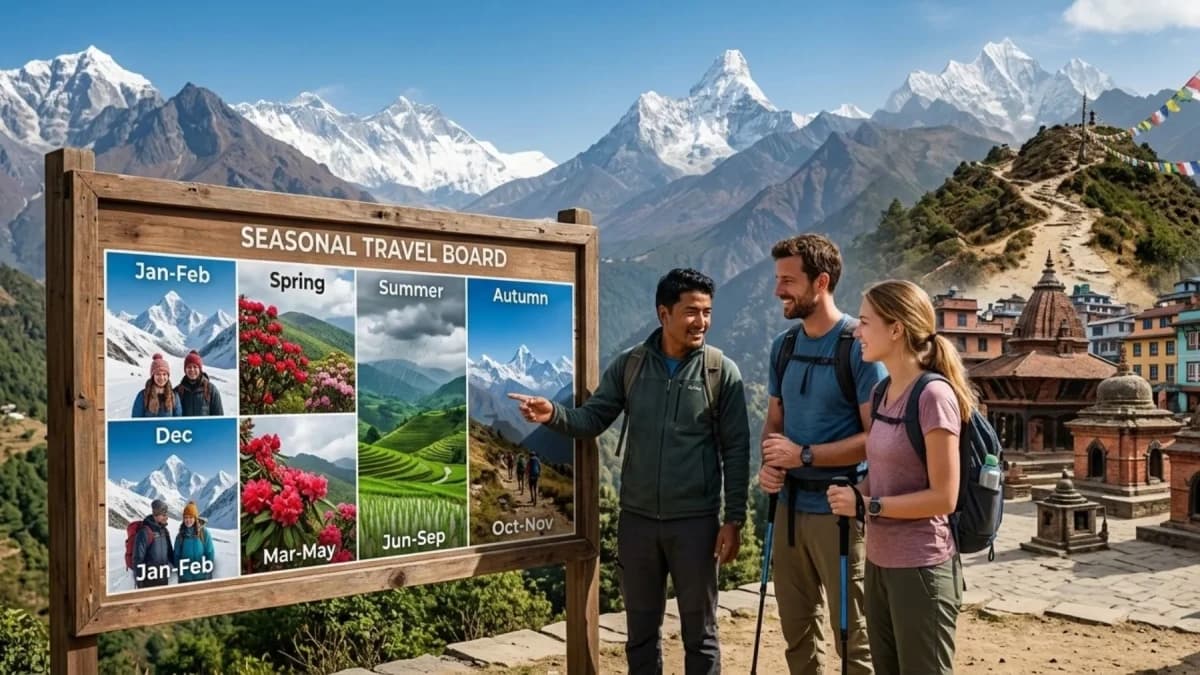
Nepal’s travel conditions follow a predictable annual pattern. January and February are cold but dry, offering excellent visibility and quiet trails, especially for wildlife viewing in parks like Chitwan. Spring (March–May) gradually warms the hills and mountains, bringing blooming rhododendron forests and some of the year’s best trekking conditions, though late May can become hazy and humid.
Monsoon season from June to August brings heavy rainfall and cloud cover across much of the country, particularly in places like Pokhara where rainfall can exceed 700 mm in July. However, rain-shadow regions such as Upper Mustang and Dolpo remain relatively dry, making them rare monsoon trekking options. As the rains fade in September, skies clear quickly and conditions improve. October and November then deliver Nepal’s most reliable weather crisp air, outstanding mountain views, and ideal trekking conditions making autumn the country’s peak travel season.
Nepal’s Climate Zones Explained (Why Timing Differs)
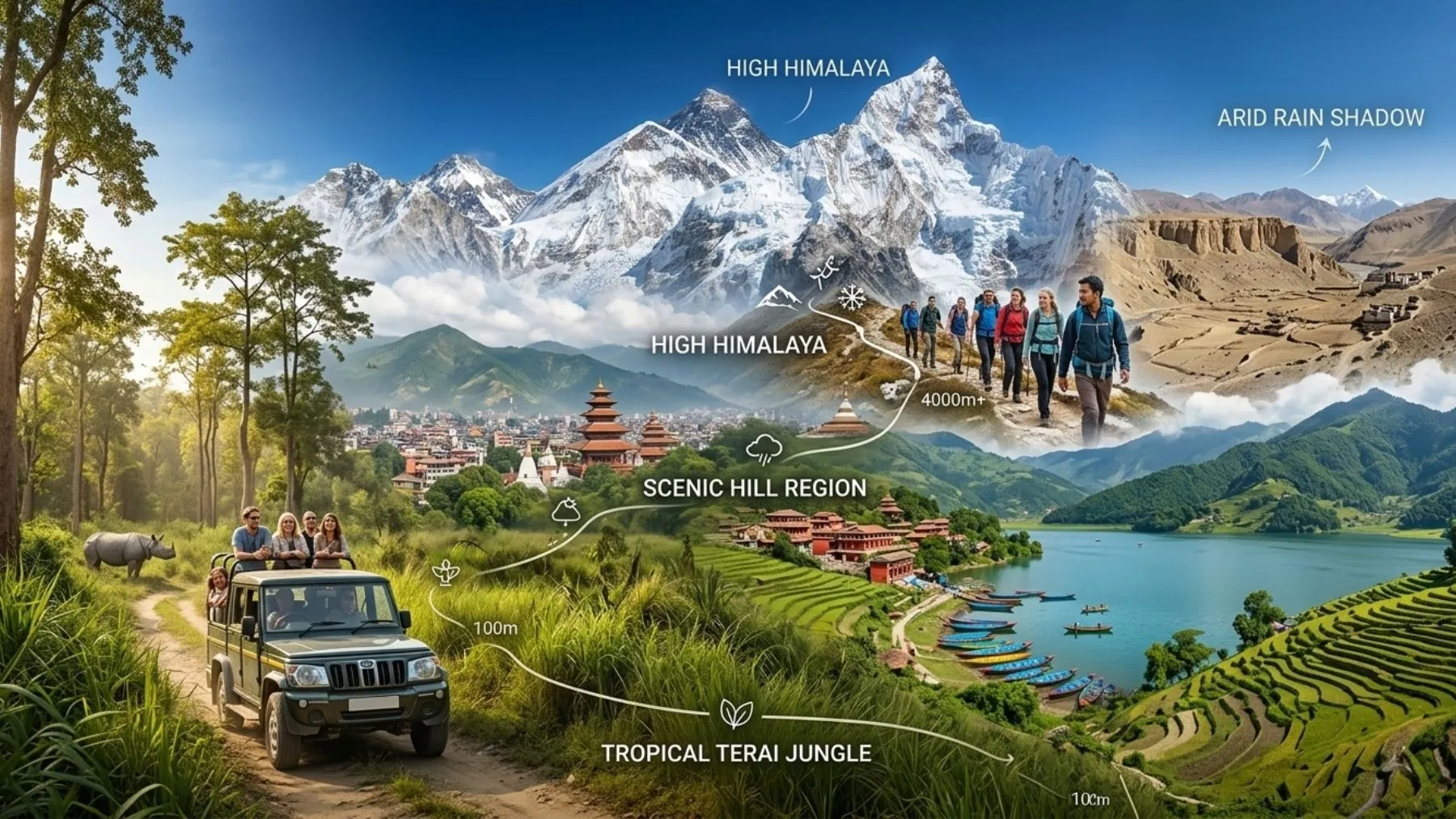
One reason the best time to visit Nepal varies by activity and destination is the country’s dramatic altitude range. Within a short distance, Nepal rises from subtropical plains near the Indian border to some of the highest mountains on Earth. This creates distinct climate zones, each with its own weather pattern and travel season.
The Terai region, which includes places like Chitwan, Bardia, Janakpur, and Lumbini, lies only 100–300 meters above sea level. This area has a subtropical climate, with very hot summers that can reach 35–40°C before the monsoon. Winters, however, are mild and dry, making the months from October to March ideal for wildlife safaris and cultural visits.
Moving north, the Hill region includes major cities like Kathmandu and Pokhara. At elevations around 800–1,500 meters, the climate is generally temperate with warm summers and cooler winters. However, the hills receive significant monsoon rainfall particularly Pokhara, which can receive over 700 mm of rain in July. The most comfortable months here are typically October–November and March–April.
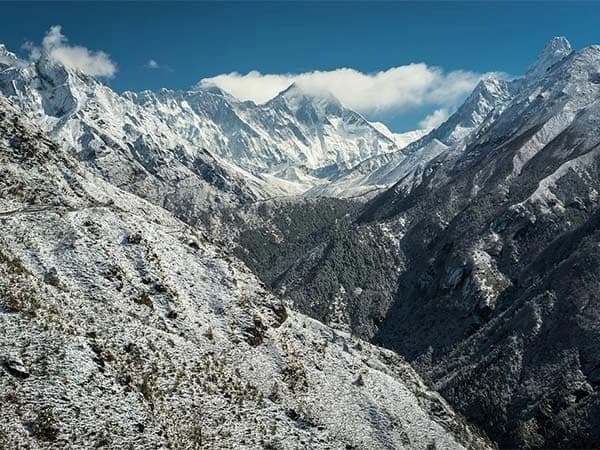
Higher still lies the Himalayan region, where famous trekking areas such as Everest, Annapurna, and Manaslu rise above 3,000 meters. Winters bring heavy snowfall and freezing temperatures, while autumn provides the clearest mountain visibility. As a result, most high-altitude trekking is concentrated in spring (March–May) and autumn (October–November).
Finally, some areas sit in the rain shadow of the Himalayas, most notably Upper Mustang and Dolpo. These regions receive far less monsoon rainfall because the mountains block incoming moisture. While places like Pokhara experience intense monsoon rain, Mustang may receive as little as 30 mm during peak monsoon, making July and August surprisingly good months to visit these remote regions.
Regional Climate Breakdown
| Region |
Elevation |
Climate Pattern |
Best Months |
| Terai (Chitwan, Bardia, Janakpur, Lumbini) |
100–300 m |
Very hot summers, humid monsoon |
Oct–March |
| Hills (Kathmandu, Pokhara) |
800–1,500 m |
Mild winters, heavy monsoon |
Oct–Nov, Mar–Apr |
| Himalaya (Everest, Annapurna, Manaslu) |
3,000 m+ |
Snow in winter, clear autumn |
Mar–May, Oct–Nov |
| Rain Shadow (Upper Mustang, Dolpo) |
2,800 m+ |
Dry even in monsoon |
July–August |
Best Time for Trekking in Nepal (Route-by-Route Guide)
Major Treks & Ideal Seasons
Trekking is one of the main reasons travelers visit Nepal, but the best time to trek varies depending on altitude, weather stability, and trail conditions. Across most Himalayan routes, spring (March–May) and autumn (September–November) provide the most reliable trekking conditions. During these seasons, skies are generally clear, temperatures are manageable at higher elevations, and trails are safer after winter snow or monsoon rains.
Monsoon months often bring heavy rainfall, muddy trails, and landslide risks, especially in regions like the Annapurna foothills where rainfall can exceed 700 mm in July. Winter, while often dry with excellent visibility, brings heavy snow to high passes. For this reason, many of Nepal’s most popular treks are concentrated within the spring and autumn windows.
Trekking Seasons Explained (Strategic Breakdown)
1. Spring (March–May)
Spring is one of Nepal’s most beautiful trekking seasons. Temperatures gradually warm after winter, and rhododendron forests bloom across the hills. Trails in regions such as Everest, Langtang, and Annapurna become fully accessible again, and longer daylight hours make high-altitude trekking more comfortable.
2. Autumn (September–November)
Autumn is widely considered the most reliable trekking season. After the monsoon clears dust from the atmosphere, skies become exceptionally clear, offering some of the best mountain views of the year. Weather patterns are also more stable, making this the preferred time for crossing high passes.
3. Winter (December–February)
Winter brings colder temperatures and snowfall above 3,000 meters. However, lower-altitude treks and foothill routes can still be enjoyable, and the trails are far quieter than in peak seasons.
4. Monsoon (June–August)
Monsoon brings heavy rainfall across much of Nepal. Landslides, muddy trails, and cloud cover can disrupt trekking. However, rain-shadow regions such as Upper Mustang and parts of Dolpo remain relatively dry, making them rare trekking destinations during the monsoon months.
See also: Everest Rainbow Valley
High Passes & Weather Stability
Weather conditions become especially important when crossing high mountain passes. Thorong La (5,416 m) on the Annapurna Circuit is typically safest in October and November, when snow levels are low and visibility is clear. Larkya La (5,106 m) on the Manaslu Circuit is most stable during April and October. In the Everest region, passes like Cho La and Kongma La can become risky after heavy snowfall or during unstable weather periods. Trekkers should also expect afternoon cloud build-up in late spring, which can reduce visibility later in the day at high elevations.
Best Time Based on Your Purpose of Visit
| Purpose |
Best Months |
Why |
| First-time Nepal trip |
October |
Balanced nationwide weather |
| Trekking adventure |
Mar–May, Oct–Nov |
Clear skies |
| Wildlife safari |
Jan–April |
Short grass visibility |
| Cultural immersion |
Sept–Nov |
Major festivals |
| Spiritual pilgrimage |
Oct–March |
Comfortable Terai weather |
| Photography trip |
Oct–Nov |
Crisp visibility |
| Budget travel |
Jan–Feb |
Lower demand |
| Family holiday |
Oct–Nov |
Pleasant temperatures |
The best time to visit Nepal often depends on what kind of experience you want. While spring (March–May) and autumn (September–November) offer the most stable weather overall, certain months are better suited for specific activities. For example, October is ideal for first-time visitors thanks to clear skies and comfortable temperatures across the country. Wildlife safaris in Chitwan and Bardia are best from January to April, while festival season peaks between September and November. Travelers looking for fewer crowds and lower prices often prefer January and February.
Best Time by Major Cities & Destinations
Nepal’s travel conditions vary significantly by destination because of differences in altitude, rainfall, and regional climate. Cities in the hills such as Kathmandu and Pokhara enjoy milder temperatures for most of the year, while the southern plains of the Terai can become extremely hot before the monsoon. Meanwhile, high Himalayan regions follow their own seasonal patterns due to altitude and snowfall.
City-by-City Breakdown
| Destination |
Best Months |
Avoid |
| Kathmandu |
Oct–Nov, Mar–Apr |
July–Aug |
| Pokhara |
Oct–Nov, Feb–Apr |
Peak monsoon |
| Chitwan |
Jan–March |
May–June heat |
| Bardia |
Feb–April |
Monsoon |
| Janakpur |
Oct–March |
Peak summer |
| Lumbini |
Nov–Feb |
May heat |
| Upper Mustang |
July–August |
Winter snow |
The main difference comes from Nepal’s Terai plains versus hill regions. Cities like Chitwan, Janakpur, and Lumbini lie in the lowland Terai, where temperatures can climb to 35–40°C before the monsoon, making late spring and early summer extremely hot. In contrast, hill destinations such as Kathmandu and Pokhara sit at higher elevations with more comfortable temperatures throughout much of the year. Meanwhile, remote Himalayan regions like Upper Mustang experience unique weather patterns due to their rain-shadow location, making them suitable for travel even during the monsoon months.
Nepal’s Major Festivals & When to Experience Them
Nepal’s cultural calendar is filled with vibrant festivals that reflect the country’s deep spiritual traditions and community life. Many of the largest celebrations occur in autumn, which is one of the reasons this season is considered the most rewarding time to visit Nepal for cultural experiences.
Festival Calendar Snapshot
| Festival |
Month |
Best Place |
| Dashain |
Sept–Oct |
Nationwide |
| Tihar |
Oct–Nov |
Kathmandu Valley |
| Indra Jatra |
Sept |
Kathmandu |
| Holi |
March |
Kathmandu & Terai |
| Chhath |
Oct–Nov |
Janakpur |
| Losar |
Feb–Mar |
Everest/Mustang |
| Mani Rimdu |
Oct–Nov |
Tengboche |
| Bisket Jatra |
April |
Bhaktapur |
Autumn, especially September to November, is often considered Nepal’s cultural peak season. Major festivals like Dashain, Tihar, and Indra Jatra take place during this period, bringing cities and villages to life with rituals, music, lights, and community gatherings. Combined with clear weather and excellent mountain visibility, this season offers travelers a unique opportunity to experience both Nepal’s natural beauty and its rich cultural traditions at the same time.
Peak vs Shoulder vs Low Season (Crowds & Cost)
Travel seasons in Nepal not only affect weather conditions but also crowd levels, accommodation availability, and overall travel costs. Peak trekking months attract the highest number of visitors, while quieter periods can offer better prices and a more relaxed travel atmosphere.
Crowd & Pricing Comparison
| Season |
Crowd Level |
Price Level |
Ideal For |
| Peak (Oct–Nov, Apr) |
High |
Expensive |
First-time visitors |
| Shoulder (Mar, Sep) |
Moderate |
Balanced |
Smart planners |
| Low (Dec–Feb, Monsoon) |
Low |
Budget-friendly |
Flexible travelers |
Peak season, especially October–November and April, offers the most reliable weather and the clearest mountain views, which is why it attracts the largest number of trekkers and tourists. Shoulder months such as March and September can be a smart choice for travelers who want good weather while avoiding the heaviest crowds. Meanwhile, the low season including winter and the monsoon months sees far fewer visitors, which often means lower prices and quieter destinations, though weather conditions can be less predictable depending on the region.
Ready to experience Nepal at its best? Plan your perfect Himalayan journey with Recreation Holidays and discover your ideal travel season.
Conclusion
Overall, the best time to visit Nepal is during autumn (September–November) and spring (March–May) when weather conditions are stable, mountain visibility is excellent, and most trekking routes are at their best. Autumn offers the clearest skies and major cultural festivals, while spring brings blooming rhododendrons and comfortable temperatures for outdoor travel.
That said, Nepal is a year-round destination. Winter can be rewarding for wildlife safaris and quieter sightseeing, while the monsoon months offer lush landscapes and unique opportunities in rain-shadow regions like Mustang and Dolpo.
In the end, the ideal time depends on what you want to experience trekking in the Himalayas, exploring cultural festivals, photographing mountain landscapes, or enjoying wildlife in the national parks.
FAQs on Best Time To Visit Nepal
Which month is best to visit Nepal?
October is widely considered the best month to visit Nepal. During this time the monsoon has ended, skies are extremely clear, and temperatures are comfortable across most regions.
Which part of Nepal is most beautiful?
Beauty in Nepal depends on what you want to experience. The Himalayan regions such as Everest Region and Annapurna Region are famous for dramatic mountain landscapes and trekking routes.
Is July a good time to visit Nepal?
July falls in the monsoon season, which means heavy rainfall, cloud cover, and possible travel delays in many regions.
Is November a good time to visit Nepal?
Yes, November is one of the best months to visit Nepal. The weather is dry, skies are crystal clear, and mountain visibility is excellent.
When Is Best time to go to Everest Base Camp?
The best time to trek to Everest Base Camp is April–May and October–November.
When Is Best time to visit Nepal For Hiking?
For shorter hiking trips and foothill adventures, March–May and October–November are the most favorable months.
Read Other Related Blogs
Francys Arsentiev– The Tragic Story
Is Annapurna Part of Everest?
Annapurna Circuit Trek Cost
Truth About Dead Bodies on Mount Everest