
The Kanchenjunga North Base Camp Trek is a challenging high-altitude trek in eastern Nepal reaching Pang Pema at 5,143 m (16,873 ft), the main objective of the North Base Camp route. Lhonak, at approximately 4,790 m, is the highest overnight stop. The detailed itinerary is 15 days, including travel, trekking, acclimatization at Ghunsa, and the Pang Pema day excursion.
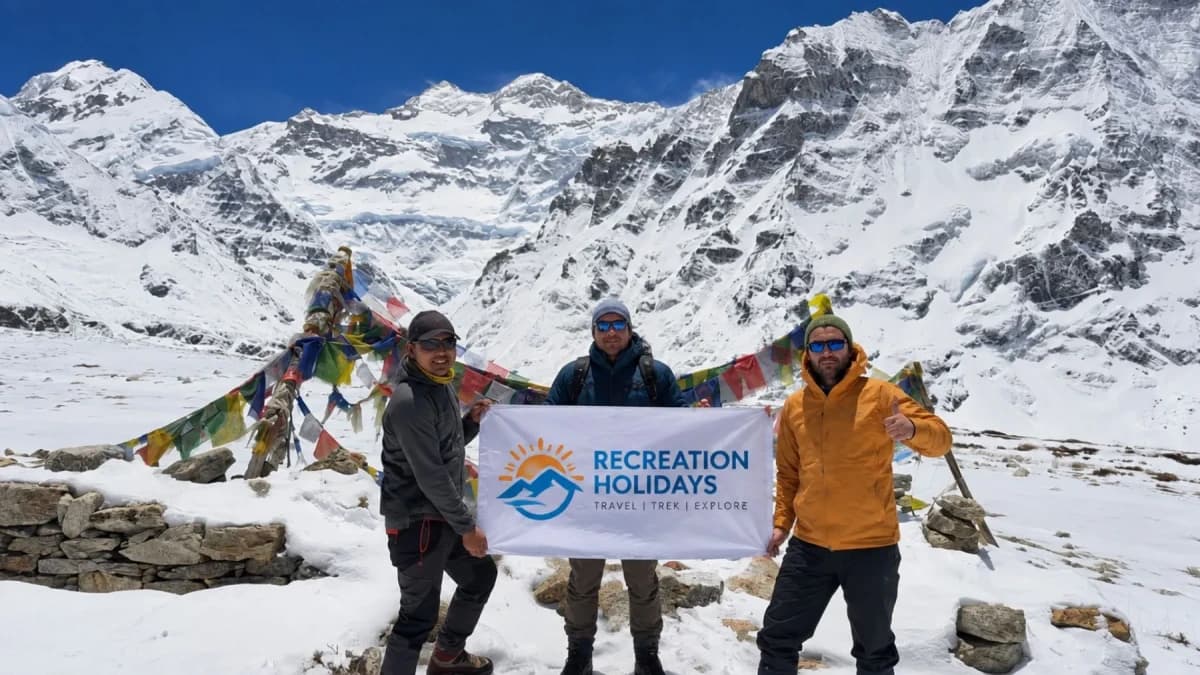
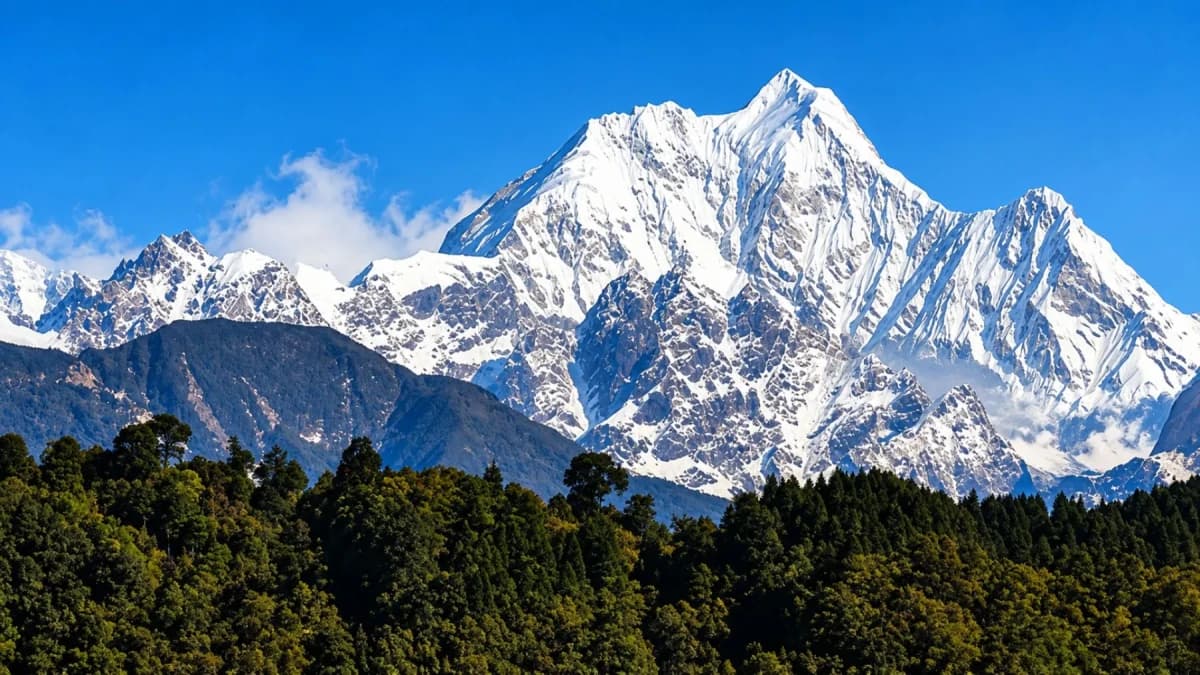
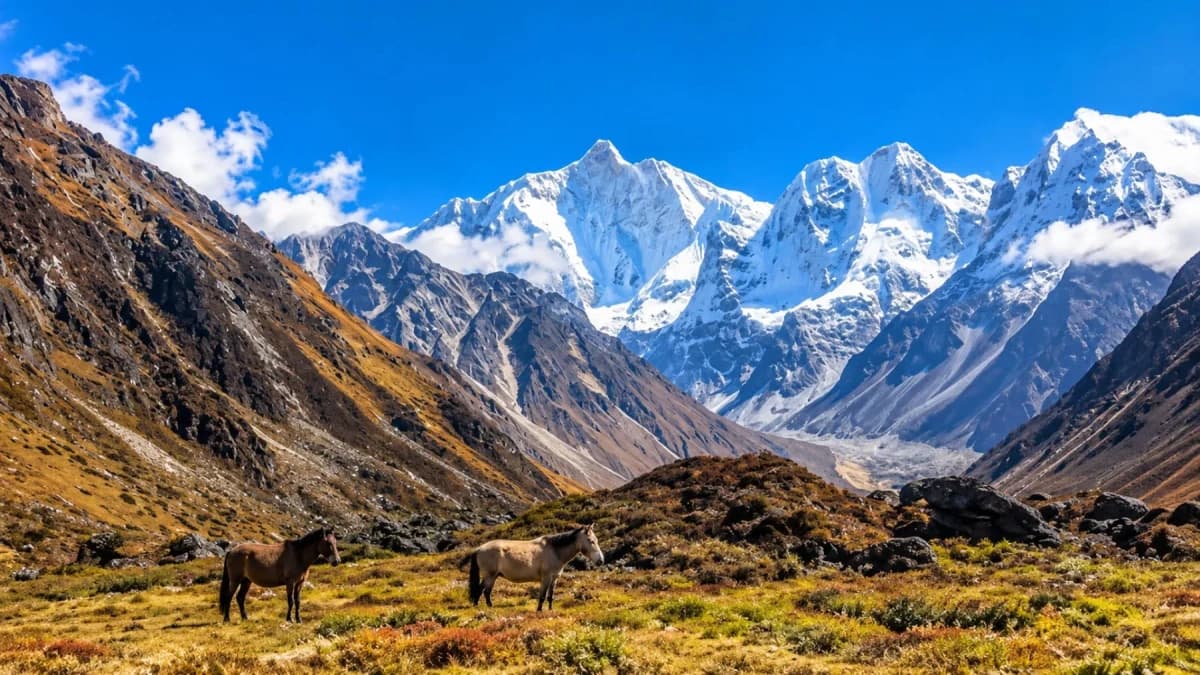
Trip Photos
Kanchenjunga North Base Camp Trek - 15 Days
52 reviews in Google Reviews
Duration15 Days
CountryNepal
Trip GradeModerate
Maximum Altitude5,143 m (16,873 ft)
Group Size1-12
StartsKathmandu
EndsKathmandu
Travel StyleGuided High-Altitude Teahouse Trek
Best TimeApril–May and October–November
Kanchenjunga North Base Camp Trek at a Glance
| Trek Factor | Details |
|---|---|
| Trek name | Kanchenjunga North Base Camp Trek |
| Region | Kanchenjunga region, eastern Nepal |
| Duration | 15 days |
| Trekking days | Approximately 11 trekking days, plus acclimatization and travel |
| Maximum altitude | Pang Pema – 5,143 m (16,873 ft) |
| Highest overnight | Lhonak – ~4,790 m |
| Starting point | Kathmandu; trekking begins around Sekathum/Sukethum |
| Ending point | Kathmandu |
| Difficulty | Challenging |
| Accommodation | Hotels on approach; teahouses/lodges on trek, with basic facilities above Ghunsa |
| Meals | According to confirmed package inclusions |
| Best season | April–May and October–November |
| Group type | Guided trek through a registered operator |
| Package price | Current price on request |
| Main objective | Kanchenjunga North Base Camp / Pang Pema |
| Best suited for | Experienced high-altitude trekkers and well-prepared hikers |
Is the Kanchenjunga North Base Camp Trek Right for You?
Choose this trek if you are prepared for high altitude, long consecutive walking days, rugged terrain and basic mountain infrastructure. The route progresses from lower valleys to Ghunsa (~3,595 m), Kambachen (~4,100 m), Lhonak (~4,790 m) and finally Pang Pema (5,143 m).
This trek is a strong fit if you...
- Have previous high-altitude or multi-day trekking experience.
- Can manage sustained uphill and downhill walking.
- Want a remote, less-developed Himalayan route.
- Are comfortable with basic accommodation and limited facilities at higher elevations.
- Specifically want to reach Pang Pema and the Kanchenjunga North Base Camp area.
Think twice if you...
- Are looking for an easy first multi-day trek.
- Have no altitude experience and are not prepared specifically for high-altitude trekking.
- Expect comfortable hotels, reliable connectivity and extensive facilities throughout the route.
- Prefer short walking days and easy access to modern services.
What Makes the Kanchenjunga North Base Camp Trek Different?
The Kanchenjunga North Base Camp Trek combines high altitude, remote trails, fewer trekkers, basic infrastructure, rugged moraine and glacier-edge terrain, and diverse Himalayan cultures. The route reaches Pang Pema at 5,143 m (16,873 ft), while Lhonak at approximately 4,790 m is the highest overnight stop.
The Route Character
The Kanchenjunga North Base Camp Trek route moves from eastern Nepal's lower valleys into increasingly rugged alpine terrain: Kathmandu → Bhadrapur → Taplejung → Mitlung/Sekathum → Amjilosa → Gyabla → Ghunsa → Kambachen → Lhonak → Pang Pema, then returns along the same general route.
Lower sections include road access and forested trails; higher sections become increasingly alpine, with moraine, loose rock and glacier-edge terrain. The defining objective is Pang Pema on the north side of Kanchenjunga, rather than simply reaching a high elevation.
The Level of Remoteness
Kanchenjunga is substantially less developed than Nepal's major trekking corridors. Fewer trekkers, fewer services and limited infrastructure are part of the route's character. Travel takes longer, connectivity can be limited, accommodation becomes simpler, and weather or transportation conditions can have a greater effect on plans. The benefit is a quieter, more remote Himalayan experience with less commercialization.
The Mountain Environment
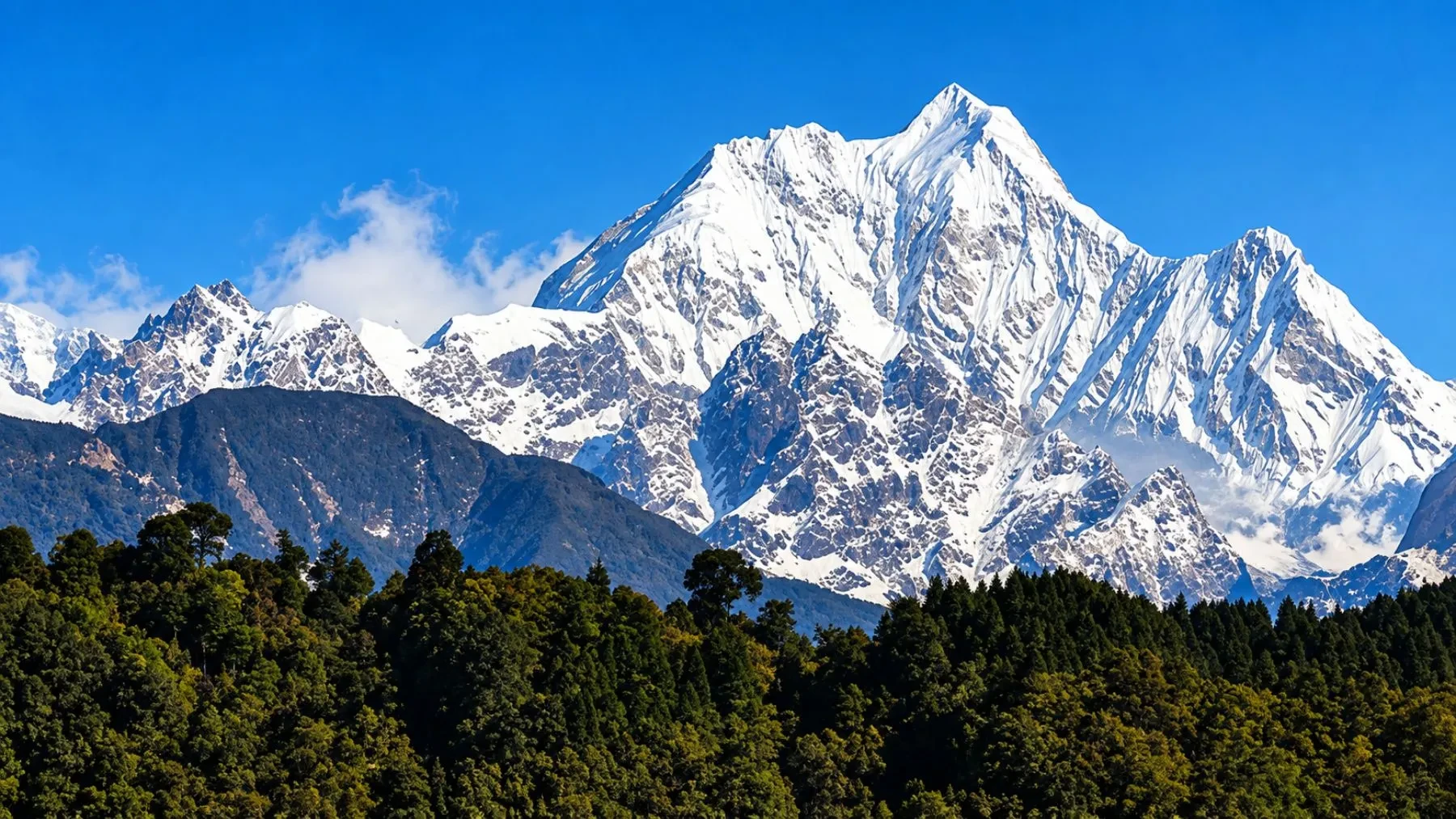
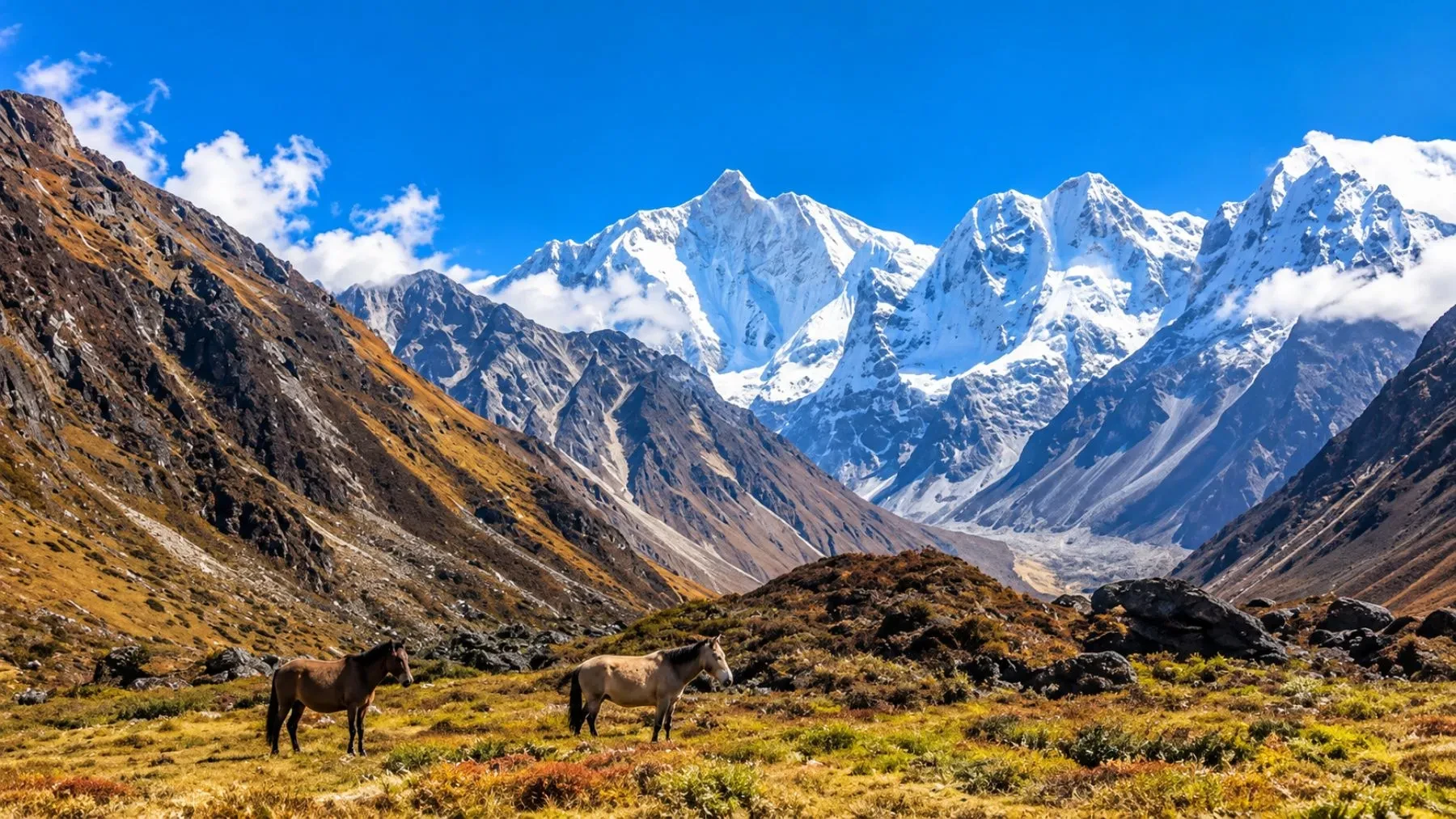
The upper route provides views toward Jannu/Khumbakarna, Kabru, Kirat Chuli/Tent Peak and surrounding peaks, while the landscape around Pang Pema becomes increasingly dominated by glacial and moraine terrain. The 5,143 m Pang Pema excursion is a serious high-altitude day. The route has relatively low technical climbing requirements, but altitude, loose terrain, walking duration and mountain weather make preparation important.
The Cultural Experience
The journey passes through areas associated with Limbu and Rai communities in the lower valleys before reaching the stronger Sherpa and Tibetan-influenced cultural environment around Ghunsa. Villages, monasteries, lodges and local mountain life become part of the trekking experience as the route enters the higher valleys.
The Infrastructure and Facilities
The Kanchenjunga North Base Camp Trek accommodation is simpler than on Nepal's highly developed trekking routes. Lower sections and Ghunsa have comparatively better facilities, while accommodation becomes more basic above Ghunsa. Charging, connectivity, hot showers and other conveniences can be limited or intermittent farther into the high-altitude section.
What You Gain and What You Give Up
You gain remoteness, quieter trails, high Himalayan scenery, cultural depth and access to Pang Pema. You give up some convenience: longer logistics, simpler accommodation, fewer services and greater dependence on weather and trail conditions.
The Main Trade-Offs of the Kanchenjunga North Base Camp Trek
More remoteness → fewer conveniences
Fewer trekkers and services create a quieter wilderness experience but mean simpler facilities and limited connectivity.
Longer commitment → deeper trekking experience
The eastern Nepal approach and extended trekking period require more time, but allow a gradual transition from lower valleys to the high Kanchenjunga landscape.
Higher altitude → greater preparation requirement
With Pang Pema at 5,143 m and Lhonak at ~4,790 m, altitude is a major consideration. Fitness helps, but does not eliminate altitude risk.
Less-developed infrastructure → more remote experience
Basic higher-altitude lodges and limited facilities can be inconvenient, but are integral to the route's remote character.
Remote route → greater logistical sensitivity
Flights, roads, weather and trail conditions can influence the journey, making flexibility an important part of Kanchenjunga North Base Camp Trek preparation.
Kanchenjunga North Base Camp Trek Route
The route travels from Kathmandu through Bhadrapur and Taplejung to the Sekathum/Sukethum area, then continues through Amjilosa, Gyabla, Ghunsa, Kambachen and Lhonak to Pang Pema at 5,143 m before returning through the same mountain corridor.
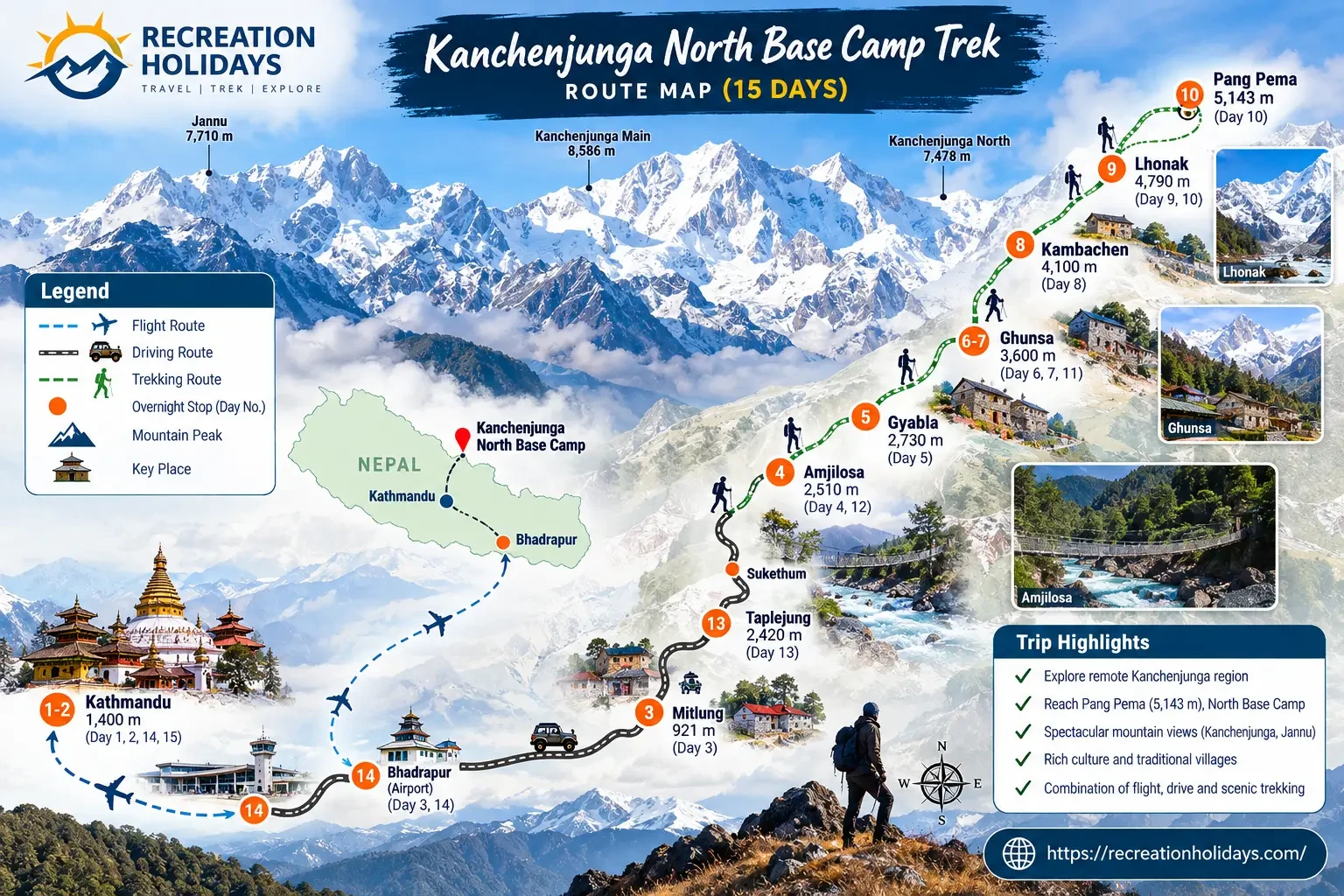
Kanchenjunga North Base Camp Trek Map
Kathmandu → Bhadrapur → Taplejung → Mitlung/Sekathum → Amjilosa → Gyabla → Ghunsa → Kambachen → Lhonak → Pang Pema → return
Key Itinerary Facts
- Duration: 15 days
- Highest point: Pang Pema – 5,143 m (16,873 ft)
- Highest overnight: Lhonak – ~4,790 m (15,715 ft)
- Acclimatization: Ghunsa – ~3,600 m (11,810 ft)
- Main objective: Pang Pema / Kanchenjunga North Base Camp
- Longest listed trekking day: Day 10 – approximately 8–9 hours
- Main access: Kathmandu → Bhadrapur → eastern Nepal
- Return: Trek back toward Taplejung → Bhadrapur → Kathmandu
Kanchenjunga North Base Camp Trek Cost
The Kanchenjunga North Base Camp Trek cost depends on your group size. For 1 person, the price is USD 3,400 per person; for 2–3 people, it is USD 2,225 per person; for 4–7 people, USD 1,870 per person; and for 8–12 people, USD 1,790 per person. Larger groups benefit from a lower per-person cost.
How Difficult Is the Kanchenjunga North Base Camp Trek?
The Kanchenjunga North Base Camp Trek difficulty is best described as challenging. The route has relatively low technical climbing difficulty there are no ropes, crampons or high mountain passes required on the standard North Base Camp route but altitude, long walking days, substantial elevation changes, moraine and glacier-edge terrain, consecutive effort, long descents and remoteness make it physically demanding.
Walking Demand
Walking days range from approximately 5–8 hours, with the Pang Pema day taking about 8–9 hours on the stated itinerary. The return also includes long days, particularly Lhonak to Ghunsa and Ghunsa to Amjilosa.
Altitude Demand
Altitude is the principal challenge. The trek rises from approximately 1,660 m at Sekathum to 3,595 m at Ghunsa, 4,100 m at Kambachen, 4,790 m at Lhonak, and finally 5,143 m at Pang Pema.
Terrain and Consecutive Effort
Lower sections involve mountain trails, while the upper route becomes increasingly rugged, including moraine and glacier-edge terrain. The trek also requires several consecutive days of effort, followed by substantial downhill walking during the return.
Remoteness and Recovery
The restricted-area setting means fewer services and more limited infrastructure than Nepal's major trekking corridors. This makes recovery opportunities less convenient and means trekkers need greater physical preparation and flexibility.
Difficulty Framework
| Factor | Assessment | Why it matters |
|---|---|---|
| Walking duration | Challenging | Several 5–8-hour days; Day 10 is ~8–9 hours |
| Elevation gain/loss | High | Major gains toward Ghunsa, Kambachen and Lhonak, followed by long descents |
| Maximum altitude | 5,143 m | Significant high-altitude exposure |
| High-altitude exposure | Very high | Overnight at ~4,790 m and excursion to 5,143 m |
| Terrain | Rugged in upper section | Moraine and glacier-edge walking |
| Consecutive effort | High | Multiple trekking days with limited recovery opportunities |
| Remoteness | High | Fewer services and simpler infrastructure |
Best Time for the Kanchenjunga North Base Camp Trek
The Kanchenjunga N rth Base Camp Trek best time is gen rally spring (April–May) and autumn (October–November). These periods offer the most favorable combination of trekking conditions, mountain visibility and relatively stable weather.
| Season | Typical conditions | Advantages | Limitations | Suitability |
|---|---|---|---|---|
| Spring | Warming conditions; generally good trekking weather | Rhododendron landscapes, fewer trekkers | Late-season showers/cloud can increase | Very good |
| Summer/monsoon | Heavy rain, cloud, wet trails | Green landscapes, fewer trekkers | Road washouts, landslides, leeches and poor visibility | Not recommended |
| Autumn | Generally dry, clearer skies and good visibility | Excellent mountain views and stable trekking conditions | Colder nights; more trekkers | Best |
| Winter | Very cold; snow becomes more significant above 4,000 m | Quiet trails and clear conditions during suitable periods | Snow, extreme cold and possible high-altitude lodge closures | Experienced trekkers only |
Weather and Trail Conditions
Weather changes significantly with altitude. Lower valleys can be warmer and wetter, while conditions around Kambachen, Lhonak and Pang Pema are substantially colder and more exposed. Visibility can change quickly in the mountains, and cloud or snowfall can obscure surrounding peaks even when lower sections remain manageable.
Rain is particularly important during the June–September monsoon, when heavy precipitation can create muddy trails, landslides and road disruptions on the eastern Nepal approach. At higher elevations, precipitation can instead become snow, potentially affecting the Pang Pema section and accommodation availability.
For this reason, weather is not simply a comfort issue: it can aff ct flight schedules, road access, trail conditions, visibility and the timing of the high-altitude Pang Pema excursion. A flexible approach is essential on this remote route.
Kanchenjunga North Base Camp Trek Packing List
The Kanchenjunga North Base Camp Trek packing list should prioritize warmth, reliable footwear, hydration, sun protection, personal medication, power backup and essential documents. The route reaches 5,143 m at Pang Pema, includes nights around 4,100–4,790 m, and has basic facilities in the upper section.
| Category | Essential items | Why it matters |
|---|---|---|
| Clothing | Base layers, fleece, warm/down jacket, waterproof shell, gloves, warm hat | Cold and changing weather at high altitude |
| Footwear | Broken-in trekking boots, trekking socks | Uneven rock, moraine and long descents |
| Sleeping | Warm sleeping bag | Important for cold nights around Kambachen/Lhonak |
| Backpack | Comfortable trekking pack, rain cover | Long trekking days and variable weather |
| Hydration | Water bottles/bladder, filter or purification tablets | Treated water is important in remote sections |
| Sun protection | Sunglasses, sunscreen, hat, lip protection | Strong high-altitude UV and glacier reflection |
| Medical | Personal medicines, basic first-aid supplies | Remote route and limited medical facilities |
| Electronics | Power bank, charging cables, headlamp | Charging can be limited or paid at higher elevations |
| Documents | Passport, permits, insurance details, copies | Required for restricted-area trekking and emergencies |
Your Next Himalayan Adventure
Find Your Perfect Trek in Nepal
Dreaming of snow-capped peaks, peaceful mountain trails, and unforgettable Himalayan views? Explore these handpicked Nepal trekking adventures and discover the route that best matches your travel goals, available time, and sense of adventure.
Short Annapurna Base Camp TrekReach the heart of the Annapurna Sanctuary on a shorter adventure.→Everest Base Camp TrekJourney into the Everest region and experience legendary Himalayan scenery.→Mardi Himal TrekDiscover quieter trails, forest landscapes, and dramatic mountain views.→Manaslu Circuit TrekExplore remote Himalayan landscapes and traditional mountain villages.→Pikey Peak TrekEnjoy peaceful trails, Sherpa culture, and spectacular sunrise views.→Poon Hill TrekExperience a classic Himalayan sunrise and beautiful mountain panoramas.→
Kanchenjunga North Base Camp Trek - 15 Days Itinerary
Expand All
The Kanchenjunga North Base Camp Trek itinerary covers 15 days, combining Kathmandu preparation, the eastern Nepal approach, trekking through the Kanchenjunga region, an acclimatization day at Ghunsa, the Pang Pema excursion at 5,143 m (16,873 ft), and the return journey to Kathmandu. The route progresses from Kathmandu through Bhadrapur and the Taplejung area to Mitlung/Sukethum, then through Amjilosa, Gyabla, Ghunsa, Kambachen and Lhonak before reaching Pang Pema and retracing the trekking corridor.
Day01
- Overnight: Kathmandu
- Arrive in Kathmandu and transfer to your hotel. The day provides time for initial orientation, trek preparation and settling in before the journey to eastern Nepal.
Day02
- Route: Kathmandu
- Overnight: Kathmandu
- Spend the day sightseeing in Kathmandu and completing final trek preparations. Equipment and relevant travel documents can be checked before leaving the capital for the Kanchenjunga region.
Day03
- Route: Kathmandu → Bhadrapur → Taplejung area → Mitlung
- Travel: Approximately 45-minute flight + 7–8 hours driving
- Overnight: Mitlung
- Fly from Kathmandu Bhadrapur, t en continue by road toward the Kanchenjunga region. The long drive is the principal feature of this access day, connecting the lowland transport hub with the remote eastern Nepal trekking area.
Day04
- Route: Mitlung → Sukethum → Amjilosa
- Travel: Approximately 3–4 hours driving + 5–6 hours trekking
- Overnight: Amjilosa
- Continue by road toward Sukethum before beginning the main trekking section. The subsequent 5–6-hour walk to Amjilosa marks the transition from vehicle travel to sustained mountain trekking and introduces the route's progressive altitude gain.
Day05
- Route: Amjilosa → Gyabla
- Walking: Approximately 5–6 hours
- Overnight: Gyabla
- The trail continues toward Gyabla, gaining approximately 220 m in sleeping elevation. This is part of the lower-altitude progression before the route enters the substantially higher terrain around Ghunsa and beyond.
Day06
- Route: Gyabla → Ghunsa
- Walking: Approximately 6–7 hours
- Overnight: Ghunsa
- The trek climbs approximately 870 m from Gyabla to Ghunsa, making this one of the important altitude-transition days. Ghunsa is a major settlement on the route and serves as the planned acclimatization point before the trek continues above 4,000 m.
Day07
- Route: Ghunsa
- Overnight: Ghunsa
- This acclimatization day provides additional time at approximately 3,600 m before the route moves to Kambachen and Lhonak. The purpose is to allow the body to adapt to increasing elevation and prepare for the higher-altitude section. Activities should follow the confirmed itinerary and guide's assessment rather than assuming an unspecified side hike.
Day08
- Route: Ghunsa → Kambachen
- Walking: Approximately 5–6 hours
- Overnight: Kambachen
- The route enters the higher-altitude section as it climbs to Kambachen. The approximately 500 m increase in sleeping elevation brings greater altitude exposure, while the surrounding landscape becomes increasingly rugged and alpine.
Day09
- Route: Kambachen → Lhonak
- Walking: Approximately 5–6 hours
- Overnight: Lhonak
- Continue toward Lhonak, the highest overnight point of the trek. At approximately 4,790 m, this is a major high-altitude stage and places you directly in position for the following day's Pang Pema excursion.
Day10
- Route: Lhonak → Pang Pema → Lhonak
- Walking: Approximately 8–9 hours total
- Overnight: Lhonak
- This is the main objective and the highest point of the Kanchenjunga North Base Camp Trek. From Lhonak, the trail follows increasingly rugged moraine and glacier-edge terrain toward Pang Pema, reaching approximately 5,143 m before returning to Lhonak.
- Unlike an additional high-altitude overnight, Pang Pema is a day excursion, meaning you climb to the highest point and return to sleep at approximately 4,790 m. The 8–9-hour round trip makes this one of the trek's most demanding days because of the combination of distance, altitude and terrain.
Day11
- Route: Lhonak → Ghunsa
- Walking: Approximately 6–7 hours
- Overnight: Ghunsa
- The descent begins after the Pang Pema objective. Returning from Lhonak to Ghunsa substantially reduces sleeping altitude, but the 6–7-hour descent remains physically demanding after the preceding high-altitude excursion.
Day12
- Route: Ghunsa → Amjilosa
- Walking: Approximately 7–8 hours
- Overnight: Amjilosa
- Continue descending toward Amjilosa. Although altitude exposure decreases considerably, this remains a long trekking day, with approximately 7–8 hours of walking after several days in the high-altitude section.
Day13
- Route: Amjilosa → Sukethum → Taplejung
- Travel: Approximately 4–5 hours trekking + 5–6 hours driving
- Overnight: Taplejung-area accommodation
- The trek continues toward Sukethum before changing back to road transportation. The approximately 5–6-hour drive takes you toward Taplejung, marking the transition from the trekking section to the return journey. The itinerary material lists approximately 2,420 m (7,932 ft) for the Taplejung-area overnight point.
Day14
- Route: Taple ung → Bhadrapur → Kathmandu
- Travel: Approximately 5–6 hours driving + 45-minute flight
- Kathmandu
- Drive from the Taplejung area toward Bhadrapur and fly back to Kathmandu. This combines another long road journey with the return flight, completing the eastern Nepal access loop.
Day15
- Route: Kathmandu → international airport
- The final day is reserved for departure from Nepal. Airport transfer and departure assistance follow the confirmed Kanchenjunga trek package and flight schedule.
Is the proposed itinerary suitable for you?If you are looking for a custom itinerary, please feel free to reach out to our team of professionals at any time.
Customize TripKanchenjunga North Base Camp Trek - 15 Days Route Map
Trip Service Details
Includes
Our package is designed to cover the essential services required for a safe and well-organized Kanchenjunga North Trek. Every inclusion directly supports your safety, comfort, or logistics throughout this remote Himalayan expedition.
- Airport transfers : Hassle-free arrival and departure transportation in Kathmandu.
- Kathmandu hotel accommodation : Comfortable stay before and after the trek.
- Domestic flight (Kathmandu–Bhadrapur–Kathmandu) : The fastest and most reliable access to eastern Nepal.
- Private vehicle and shared jeep transfers : Transportation between Bhadrapur, Taplejung, and the trek starting point.
- All required trekking permits : Including the Restricted Area Permit and Kanchenjunga Conservation Area Permit.
- Experienced licensed trekking guide : Responsible for navigation, altitude monitoring, local coordination, and overall trek safety.
- Porter service : Reduces physical strain by carrying your main duffel bag, allowing you to trek comfortably with only a daypack.
- Tea house accommodation during the trek : Twin-sharing rooms throughout the route.
- Three meals daily during trekking : Freshly prepared breakfast, lunch, and dinner to maintain energy at high altitude.
- Government taxes and service charges : No hidden administrative fees.
- First aid kit and emergency support : Guides carry basic medical supplies and coordinate emergency response if required.
Excludes
To keep pricing transparent, several personal expenses and optional services are not included in the package price. Typical additional expenses include:
- Nepal entry visa fees.
- International airfare.
- Comprehensive trekking insurance covering helicopter evacuation above 5,000 metres.
- Personal trekking equipment and clothing.
- Hot showers where available.
- Charging electronic devices.
- Wi-Fi and mobile data charges.
- Bottled water, snacks, soft drinks, and alcoholic beverages.
- Personal expenses such as laundry and souvenirs.
- Tips for guides and porters (customary but voluntary).
- Costs arising from itinerary changes caused by weather, flight cancellations, natural disasters, or personal circumstances.
Additional Info
The Trek in Five Phases
The Kanchenjunga North Base Camp Trek progresses through five distinct stages: eastern Nepal access, lower-altitude trekking, altitude progression and acclimatization, the North Base Camp approach, and descent/return. The elevation rises from Kathmandu at about 1,400 m to Pang Pema at 5,143 m, with Lhonak at approximately 4,790 m as the highest overnight stop.
Phase 1 : Access and Approach
The journey begins in Kathmandu and travels east toward the Kanchenjunga region. The standard approach uses a flight to Bhadrapur followed by a long road journey toward Taplejung and the trekking trailhead around Mitlung/Sekathum. This is primarily a logistics phase rather than a high-altitude trekking phase.
Phase 2 : Lower-Altitude Trekking
The trekking section begins around Sekathum/Sukethum (~1,660 m) and progresses through Amjilosa (~2,510 m) and Gyabla (~2,730 m). Forested trails, steep sections and changing terrain characterize this part of the route while the body begins adapting to increasing elevation.
Phase 3 : Altitude Progression and Acclimatization
The route then reaches Ghunsa (~3,595 m), where the itinerary includes an acclimatization day, before continuing to Kambachen (~4,100 m) and Lhonak (~4,790 m).
This is the most important altitude-management phase. The key elevation changes include approximately +865 m from Gyabla to Ghunsa, +505 m from Ghunsa to Kambachen, and +690 m from Kambachen to Lhonak. The itinerary therefore requires deliberate pacing and attention to altitude symptoms rather than treating fitness alone as sufficient.
Phase 4 : North Base Camp Approach
From Lhonak, the trek reaches its highest point on the Pang Pema day excursion, climbing to approximately 5,143 m (16,873 ft) before returning to Lhonak to sleep at the lower elevation. This climb-high, sleep-low structure makes the Pang Pema day different from an additional high-altitude overnight. The terrain becomes increasingly dominated by moraine and glacier-edge conditions, and the day is among the most demanding sections of the trek.
Phase 5 : Descent and Return
After Pang Pema, the ute reverses t rough Lhonak, Ghunsa and Amjilosa, followed by the road journey toward eastern Nepal and the return to Kathmandu. Descending does not automatically make the journey easy: long downhill sections can place substantial demands on the legs, particularly after several days at altitude.
Kanchenjunga North Base Camp Trek Elevation Profile
The Kanchenjunga North Base Camp Trek elevation profile rises gradually at first, then becomes significantly steeper in the upper valley. The most important overnight elevations are Ghunsa (~3,595 m), Kambachen (~4,100 m), and Lhonak (~4,790 m), followed by the 5,143 m Pang Pema high point.
Elevation Progression
| Location | Approx. altitude | Role |
|---|---|---|
| Kathmandu | 1,400 m | Arrival/departure |
| Sekathum/Sukethum | ~1,660 m | Trek begins |
| Amjilosa | 2,510 m | Overnight |
| Gyabla | 2,730 m | Overnight |
| Ghunsa | ~3,595 m | Overnight + acclimatization |
| Kambachen | 4,100 m | High-altitude overnight |
| Lhonak | ~4,790 m | Highest overnight |
| Pang Pema | 5,143 m | Highest point / North Base Camp objective |
Why the Altitude Progression Matters
Altitude becomes the dominant physical consideration above Ghunsa. The itinerary includes a dedicated acclimatization day at 3,595 m, but several subsequent elevation gains are substantial. Trekkers should therefore monitor symptoms such as headache, nausea, unusual fatigue or poor sleep, avoid ascending when significantly unwell, and follow the guide's altitude-management decisions.
The elevation profile h uld visually ighlight the Ghunsa acclimatization day, Kambachen and Lhonak overnight points, Pang Pema high point, and the major elevation changes so trekkers can understand the physical progression before beginning the detailed itinerary.
Acclimatization on the Kanchenjunga North Base Camp Trek
Acclimatization is particularly important because the itinerary reaches 5,143 m and includes overnight stops at approximately 4,100 m and 4,790 m. The itinerary provides one dedicated acclimatization day at Ghunsa (~3,600 m) before continuing toward Kambachen and Lhonak.
The sleeping-altitude increases are significant: approximately +865 m from Gyabla to Ghunsa, +505 m from Ghunsa to Kambachen, and +690 m from Kambachen to Lhonak. The
itinerary therefore should not be described as strictly following standard altitude guidelines. Its actual structure is one Ghunsa rest day followed by progressive ascent, with the Pang Pema excursion using a climb-high, sleep-lower pattern because trekkers return to Lhonak after reaching 5,143 m.
Early altitude symptoms can include headache, nausea and poor sleep. Worsening symptoms should be taken seriously; the appropriate response is to stop ascending and, when necessary, descend. Any medication such as acetazolamide should be discussed with a doctor rather than self-prescribed or dosed from trekking advice.
Accommodation on the Kanchenjunga North Base Camp Trek
The Kanche junga N rth Base Camp Trek accommodation consists of hotels during the Kathmandu/approach stages and teahouses or lodges along the trekking route. Facilities are comparatively better in lower sections and around Ghunsa, while accommodation becomes basic above Ghunsa.
Ghunsa has comparatively good lodges for this remote region, with some offering hot showers and intermittent Wi-Fi. Higher up, including around Lhonak, facilities are considerably simpler; operators describe some accommodation as basic stone huts. Charging and connectivity become increasingly limited, and paid charging may be available but should not be treated as guaranteed. Travelers should therefore expect mountain-lodge conditions rather than hotel-style comfort, particularly during the highest part of the trek.
Food and Drinking Water
Food on the trek should be approached as practical high-altitude fuel rather than a restaurant-style experience. As the route becomes more remote and higher, food choices and facilities become more limited, so dietary requirements should be communicated to the trekking team in advance. Hydration deserves particular attention on this route. Bottled water is not consistently reliable in remote sections, making water-treatment tablets or a suitable filter important parts of the Kanchenjunga North Base Camp Trek packing list.
At higher elevations, trekkers should prioritize adequate fluid intake and practical, easily tolerated meals while following their guide's advice on hydration and altitude management.
Transportation and Trailhead Logistics
The Kanchenjunga North Base Camp Trek route begins with travel from Kathmandu into eastern Nepal before the trekking section starts around the Mitlung/Sukethum–Sekathum area. The detailed itinerary uses a Kathmandu–Bhadrapur flight of approximately 45 minutes, followed by long road journeys toward the Taplejung area and the trailhead.
How You Reach the Trailhead
The standard access combines air and road transportation. After flying to Bhadrapur, the journey continues by road toward Taplejung and then the trekking trailhead. Road conditions become progressively more challenging in the remote eastern s ction, so the approach itself is an important part of the itinerary rather than a simple transfer.
Road, Flight and Return Logistics
The itinerary includes the Bhadrapur flight, private/organized road transportation toward the trekking area, and the return road journey to Bhadrapur followed by the flight to Kathmandu. The return route therefore reverses the main access corridor after the trek: trek → Taplejung area → Bhadrapur → Kathmandu. Transportation schedules can be affected by weather, road conditions and delays, particularly during the monsoon period when landslides and road washouts can affect eastern Nepal routes. The itinerary should therefore retain reasonable flexibility around transport connections.
Permits and Entry Requirements
The Kanchenjunga North Base Camp Trek permits are essential because the route enters the restricted Kanchenjunga area. Current Nepal Department of Immigration information lists Taplejung restricted-area trekking permits at USD 20 per person per week for the first four weeks and USD 25 per week thereafter. The Immigration Department also states that restricted-area permits are processed through an authorized trekking agency.
How to Prepare for the Kanchenjunga North Base Camp Trek?
Preparation should f cus on endurance, uphill and downhill ability, strength and sustained effort over consecutive trekking days. A sensible preparation period for an already active trekker is approximately 8–12 weeks.
Prioritize long walks, uphill intervals, loaded-pack hiking and downhill training, because the return includes substantial descents. Strength work should emphasize legs and core. Fitness cannot eliminate altitude risk, so preparation should also include understanding altitude symptoms and following the guide's acclimatization decisions.
Safety on the Kanchenjunga North Base Camp Trek
The principal safety concerns are altitude, weather, rugged terrain and remoteness. Early altitude symptoms can include headache, nausea and poor sleep; worsening symptoms require stopping ascent and potentially descending. Travel insurance should specifically cover high-altitude trekking and helicopter evacuation, with the policy's altitude ceiling checked before departure.
Because this is a remote route, emergencies may require first moving a trekker toward a location accessible to rescue services before evacuation. Company-specific procedures for oxygen, oximeters, communications, guide training and evacuation authority should follow the confirmed Recreation Holidays operating policy.
Common Mistakes to Avoid on the Kanchenjunga North Base Camp Trek
Avoid undertraining, underestimating 5,143 m altitude, using inadequate footwear or cold-weather equipment, assuming remote-route logistics work like developed trekking corridors, relying on connectivity or charging, and purchasing solely on the lowest price. Appropriate high-altitude insurance is also essential.
Why Book the Kanchenjunga North Base Camp Trek With Recreation Holidays?
Recreation Holidays combines experienced guides, organized logistics, safety-focused trekking support and clear package services to help you experience the Kanchenjunga North Base Camp Trek with confidence. We also offer other major Nepal trekking experiences, including the Everest Base Camp Trek, Annapurna Base Camp Trek, Kanchenjunga South Base Camp Trek, and Kanchenjunga Circuit Trek.
Kanchenjunga North Base Camp Trek - 15 Days Gallery
Need Help? Call Us.+977 9851001069