Pikey Peak Trek Altitude and Acclimatization
Altitude and Acclimatization are vital for trekkers. Understanding acclimatization is always important as Pikey Peak route reaches approximately 4,065 meters that might give you the altitude-related illness.
Common symptoms of Acute Mountain Sickness (AMS) are:
- Headache
- Nausea
- Loss of appetite
- Dizziness / Giddiness
- Fatigue / Lack of energy
- Poor or disturbed sleep
- Shortness of breath during exertion or walking towards high altitude
Always inform your trekking guide, if you notice any symptoms. Your guide will monitor your condition throughout the trek and if your condition worsens, you will be immediately taken to lower altitude or emergency evacuation will be arranged if required.
Remember "do not push through" if you are experiencing any symptoms mentioned above, just to complete your trek. Health is wealth. First, maintain your health. Adequate intake of fluids, gradual ascent maintaining your pace, enough rest, avoid alcohol, and maintain good sleep are practical precautions advised to prevent AMS.
Travel and medical insurance covering trekking and emergency evacuation is always recommended.
What Mountains Can You See from Pikey Peak?
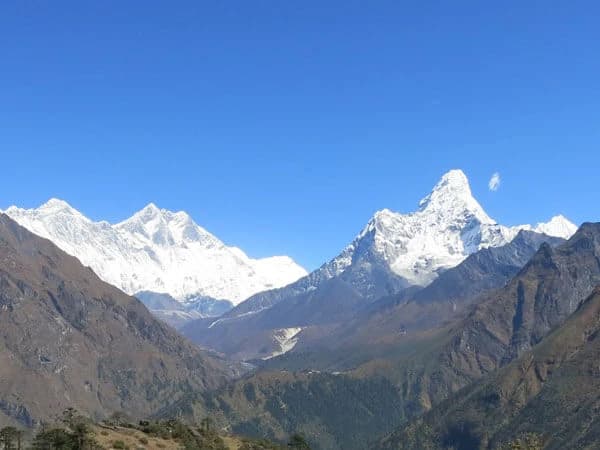
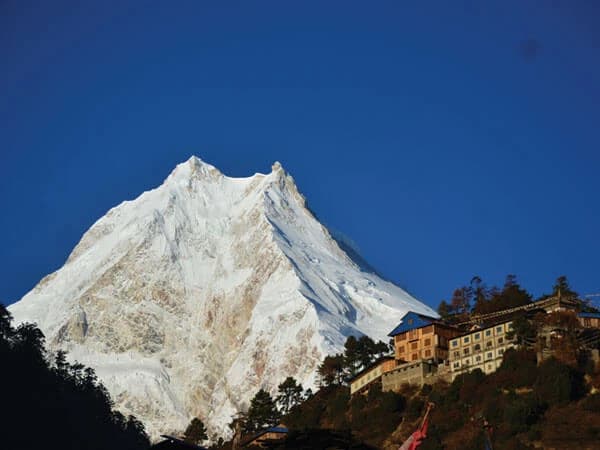
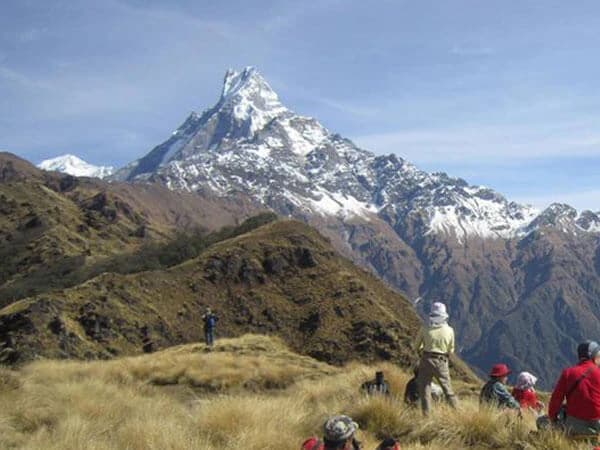
Pikey Peak is the beautiful mountain in this region. It displays the exceptional Himalayan panorama that attracts trekkers to visit again. There are many peaks that are visible from this Pikey Peak as a viewpoint:
- Mount Everest
- Lhotse
- Makalu
- Kanchenjunga
- Cho Oyu
- Manaslu
- Annapurna range
- Dhaulagiri
- Gaurishankar
- Langtang range
- Numbur Himal
Pikey Peak Sunrise Experience
The Pikey Peak Sunrise is mesmerizing. This experience offers you a spectacular Himalayan sunrise making it an ideal choice for the trekkers to enjoy the serene nature and unique lifestyle of local people. An early-morning short hike to Pikey Peak is rewarding with the beautiful Himalayan ranges of Everest, Makalu, Kanchenjunga, Lhotse, and surrounding peaks.
Before sunrise, the temperature can be extremely cold, so wear in layers to keep yourself warm. Once you reach the summit of Pikey Peak, you’ll be in awe of the breathtaking sunrise as its golden rays gently illuminate the majestic Himalayan peaks, creating a truly rewarding and unforgettable experience.
Sherpa Culture on the Pikey Peak Trek
The Pikey Peak Trek is a perfect alternative to Everest or Annapurna trek, especially for trekkers who prefer experiencing authentic Sherpa culture and the spectacular Himalayan panorama.
Trekking to Pikey Peak offers you walk through the traditional Sherpa villages, visit beautiful monasteries, chortens, colorful mani walls, and prayer-flags. En route, the warm hospitality, friendly behavior, authentic food items, Buddhist traditions make you feel home. Dressing respectfully while visiting the holy monasteries and always follow the instructions of your trekking guide while exploring the villages.
Always ask permission to take photographs in villages, monasteries, or religious ceremonies that are being celebrated in Sherpa communities following their ancient cultures and traditions. This trek is an exclusive off-the-beaten-trek away from the trekking crowds, offering a memorable glimpse of beautiful soaring peaks and the unique Sherpa lifestyle.
Junbesi: A Cultural Highlight
Junbesi is the unforgettable stops on the trekking trail of Pikey Peak. You will feel blessed when you enjoy the surrounding areas of peaceful nature and traditional Sherpa settlements who are still in their own world.
Accommodation During Pikey Peak Trek
The accommodation in the mountains is usually simply structured with basic amenities. The trek usually operates tea houses and lodges providing meals. Accommodation during the Pikey Peak Trek is generally simple and is usually a twin-bed sharing type. Every room includes a mattress, pillow, blanket, and basic furniture. Bathrooms are shared, especially when you are at higher elevations. Facilities become more and more basic as you reach remote areas.
Hot showers, internet, and charging electronic devices may be available, but some places might charge extra for it. The sole purpose of teahouses/ lodges in the mountains is to provide a resting place with good meals while traveling through the mountains. It not only supports local businesses, but also allows you to stay close to the trail to continue the journey.
Pikey Peak Trek Permits
Permit requirements for the Pikey Peak Trek can change based on government regulations and the routes you choose. The Nepal Tourism Board maintains the records of trekkers by issuing TIMS card and special trekking permits to trek in designated restricted areas. Meanwhile, the Department of Immigration has its separate trekking-route permit requirements and fees as per the designated treks. Recreation Holidays team will take care of making your permits for your exact route before the trek.
Is a Guide Necessary for Pikey Peak Trek?
A guide is always recommended when trekking in mountainous regions. A trekking guide is not just additional staff but a leader who helps travelers get a better opportunity to explore and understand the communities at their root level. A professional, experienced local guide for the Pikey Peak Trek will surely be a good choice, especially for first-time visitors to the region.
A professional guide is not only there to guide you during the Pikey Peak Trek, but also he/she shares the local cultural knowledge. The guide will always take care of all your basic needs, arrange accommodation, coordinate meals, help in communicating with local communities, and arrange any emergency measures related to altitude sickness or evacuation. He/she will give you practical trekking advice, as every trekking trails have their own topography. Compared to other trekking routes, this Pikey Peak trek is quieter. You will enjoy the trek, exploring nature and enjoying the adventure.
Porter Service
A Porter service makes your Pikey Peak Trek considerably more comfortable and easier. You will carry only your daypack with your required items, while your porter will carry your full trekking load. At Recreation Holidays, porter arrangements can be effortlessly customized depending on the size of your group and requirements. We request and recommend that you to pack responsibly and kindly avoid unnecessarily heavy luggage.
Physical Preparation for Pikey Peak Trek
Pikey Peak Trek is a significantly enjoyable trek, and you do not need to be a perfect trekker or elite athlete to do this trek. Basic training for physical fitness is always recommended to remain energetic and avoid fatigue during the trek.
45-90 minute regular walk is recommended to start with. Hike whenever and wherever possible; even stairs can be climbed up and down. Cycling, swimming, brisk walking, or jogging help in increasing your endurance. Likewise, squats, lunges, step-ups, calf raises, and core exercises build your strength. The main goal of physical preparation is not only to become stronger but also to teach your body to walk while maintaining a comfortable pace and strength for several consecutive days of trekking.
Pikey Peak Trek for Families
The Pikey Peak Trek is welcoming for everyone. Families with older children can choose this trek, but should consider the following:
- Hiking experience of child
- Ability to walk 5-7 hours
- Altitude sickness and response to weather conditions
- Physical fitness to tolerate cold temperatures
- Accommodation comfort
Pikey Peak Trek for Couples
The Pikey Peak Trek is the perfect choice for couples who prefer a quieter Himalayan experience. This trekking route provides beautiful sunrise viewpoints, peaceful villages, dense forests, and astonishing mountain scenery. These make trekkers feel heavenly and experience the utmost with the unique culture and thrilling adventures of stunning landscapes.
A private trek for a couple can also be tailored to their comfort and walking pace upon request.
Pikey Peak Trek for Solo Travelers
Solo trekkers can select a private guided trek to Pikey Peak. This choice provides flexibility in your trek and is particularly useful for navigation, accommodation, altitude monitoring, making weather decisions, and dealing with emergencies.
Responsible Tourism on Pikey Peak
The Pikey Peak trek is a special trek on its own due to the beautiful nature, cozy environment, and the welcoming communities.
As a responsible traveler to Pikey Peak:
- Avoid throwing rubbish on trails
- Always carry reusable water bottles
- Respect monasteries and wear proper dress
- Ask permission before taking photographs of people, temples, and monasteries
- Support the local tea houses
- Use local guides and porters
- Stay on the established trekking trails
- Avoid unnecessary use of plastics
Safety Tips for Pikey Peak Trek
"Always be safe and enjoy the trek" Following tips will help you to stay safe and fit during the trekking to Pikey Peak:
- Maintain your pace. There is no special prize to reach the destination.
- Maintain hydration to reduce your perception and also to avoid altitude sickness.
- Eat regularly and healthy foods.
- Dress in layers to maintain the temperature as the weather is unpredictable in the mountains.
- Always carry your ID cards and documents of Travel and medical insurances
- Protect yourself from the stronger exposure of UV rays from Sun.
- Kindly listen to your trekking guide as he/she understands the trekking trail, alterations of weather, and logistics.
Travel Insurance for Pikey Peak Trek
Recreation Holidays team strongly recommends to take travel insurance.
Please make sure your insurance policy should ideally cover:
- Emergency evacuation
- High-altitude trekking
- Helicopter evacuation where medically required
- Flight cancellation or delay
- Medical treatment
- Lost baggage
How to Get to Pikey Peak?
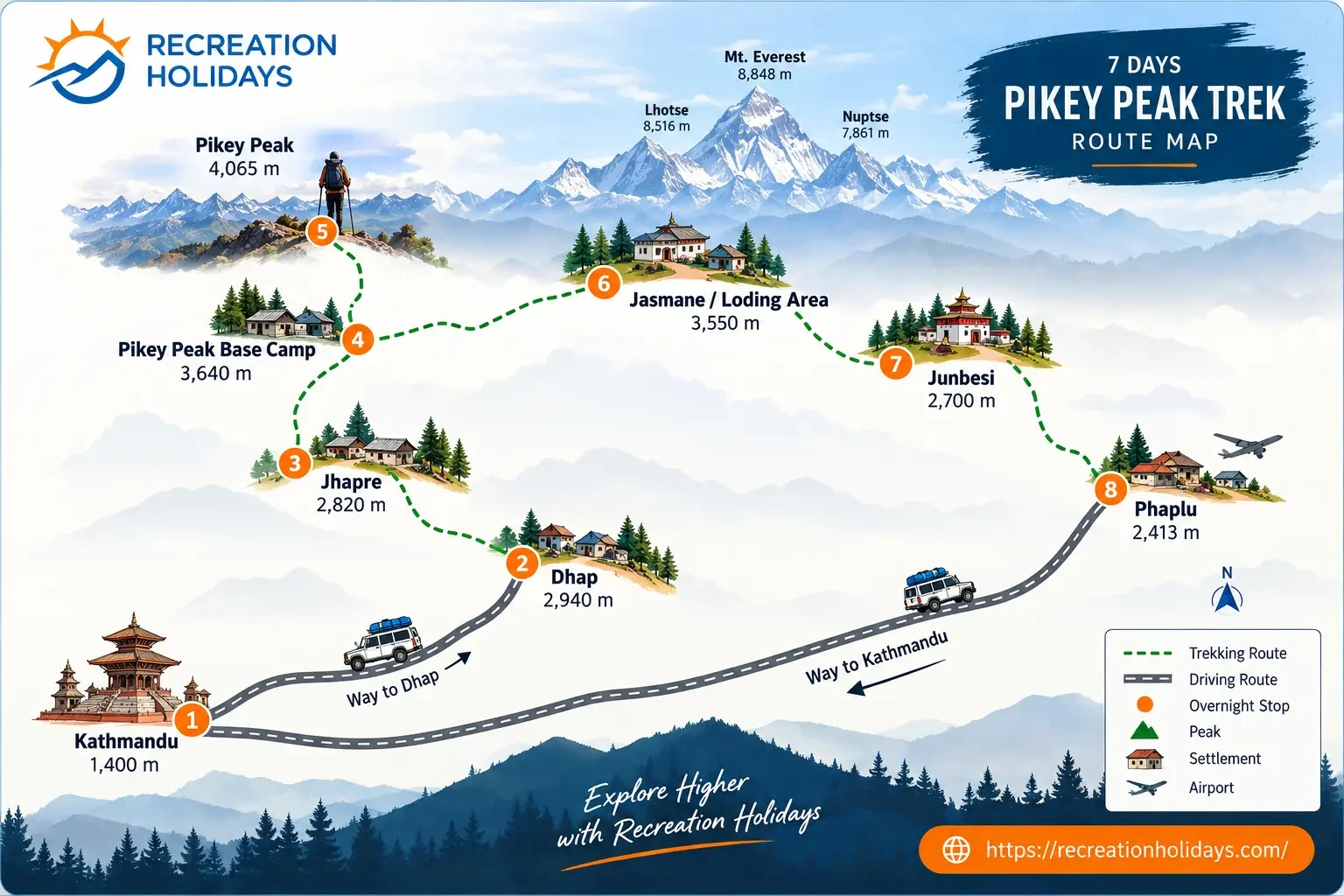
There are two routes: one is through Dhap and another through Phaplu/Salleri. You can travel through any route but Dhap is shorter and most common access to Pikey Peak. The following points matters in choosing the route:
- condition of the road
- season of trekking
- availability of vehicle
- size of the group
- budget of the group
- time of travel
- weather
🚐 Trekking Flexibility
Choose the Route That Works Best for You
The Recreation Holidays team can organize your trek through any of these routes and help arrange transportation, giving you greater flexibility, convenience, and comfort throughout your journey.
Is Pikey Peak Trek Open Throughout the Year?
Pikey Peak Trek is always open throughout the year but spring and autumn are generally preferred time to trek. The trekking experience differs in every season. Spring and autumn are blooming, clear, favorable weather while winter is cold and snowy, fair visibility, and monsoon can bring muddy trails due to rain, poor visibility as cloudy most of the time. To get the best experience, choose your travel dates depending upon the actual weather and the trekking trail conditions by communicating with Recreation Holidays team. We assure you to give the excellent itineraries.
What Should You Bring for Pikey Peak Trek?
A good and light packing strategy is ideal to make the trek smooth and hassle-free. Prioritize your essential items and pack.
- Trekking pants, trekking shoes, light jacket, shirts, shorts, trekking shoes are basic items to wear.
- Snacks, sunscreen lotion, sunglasses, personal medication, rain jacket, batteries, etc. to be packed and carried in daypack.
- Likewise, extra clothes, sleeping bag, heavy toiletries and jackets can be kept in duffle bag.
Why Book Pikey Peak Trek with Recreation Holidays?
Recreation Holidays keeps their clients requirements and demands on the top.
- Experienced Local Guides, English speaking
- Customized itineraries as per your requirements
- Transparent services with inclusions and exclusions
- Safety measures always a priority.
- Local communication to boost tourism
- Comfort of clients always on the top service
- Easy booking and support by our team to initialize your booking
- Personalized support for ground transportation and logistics of your entire trek