
Lukla Airport, officially called Tenzing-Hillary Airport, is a high-altitude mountain airport in Nepal located at 2,845 m (9,334 ft). Known for its 527-meter runway, steep gradient, and specialized mountain flight operations, it serves as the main air gateway to the Everest region and is one of the most famous airports in the world.
10 Facts About Lukla Airport [2026]

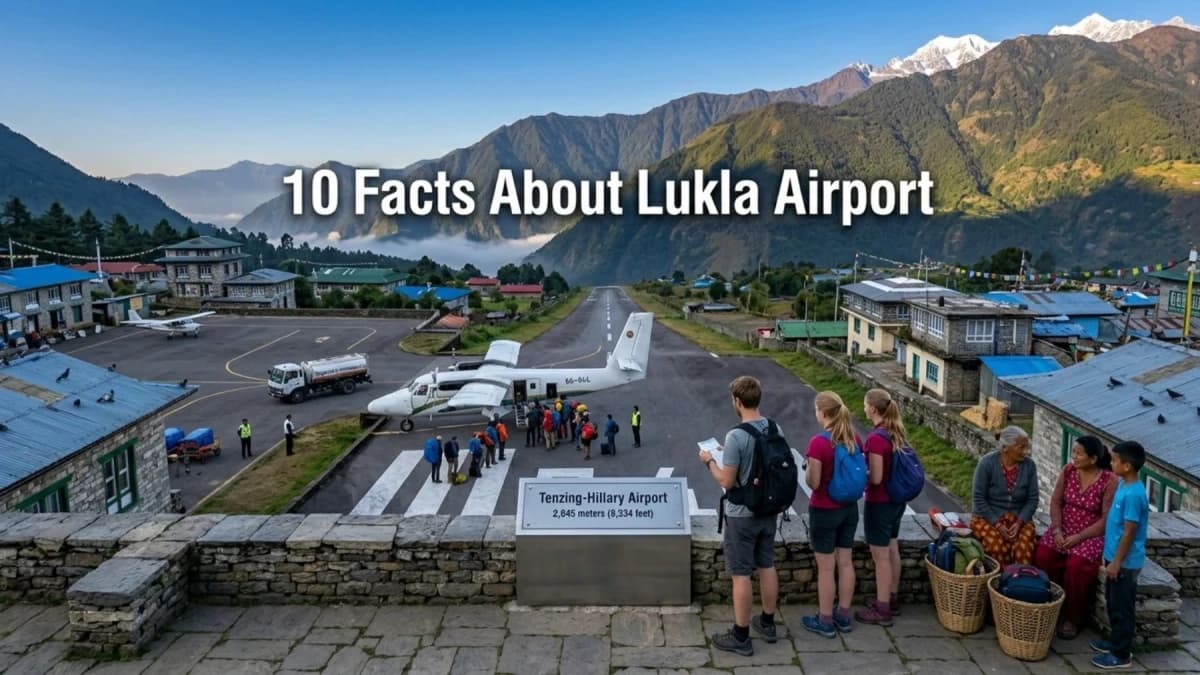
Lukla Airport, officially known as Tenzing-Hillary Airport, is one of the most fascinating aviation hubs in the world. Located at an elevation of 2,845 meters (9,334 feet) in Nepal's Solukhumbu District, it serves as the primary gateway to the Everest region and the starting point for thousands of trekkers heading to Everest Base Camp each year. Famous for its 527-meter runway, steep 12% gradient, high-altitude location, and challenging mountain weather, Lukla Airport has become one of the most recognized airports in global aviation.
These fascinating facts about Lukla Airport reveal why this small Himalayan airstrip is far more than just an airport; it's a vital lifeline for the Khumbu region and an essential gateway to the world's highest mountain.
Lukla Airport at a Glance
| Fact | Details |
|---|---|
| Official Name | Tenzing-Hillary Airport |
| Location | Lukla, Solukhumbu District, Nepal |
| Elevation | 2,845 m (9,334 ft) |
| Airport Code | LUA |
| ICAO Code | VNLK |
| Runway Length | 527 m (1,729 ft) |
| Runway Width | 20 m (66 ft) |
| Runway Slope | Approx. 12% |
| Opened | 1971 |
| Runway Paved | 2001 |
| Renamed | 2008 |
| Main Purpose | Gateway to Everest Region and Everest Base Camp Trek |
| Primary Aircraft | Twin Otter, Dornier 228, LET L-410 (STOL Aircraft) |
10 Fascinating Facts About Lukla Airport
1. Lukla Airport Was Built Through Sir Edmund Hillary's Vision
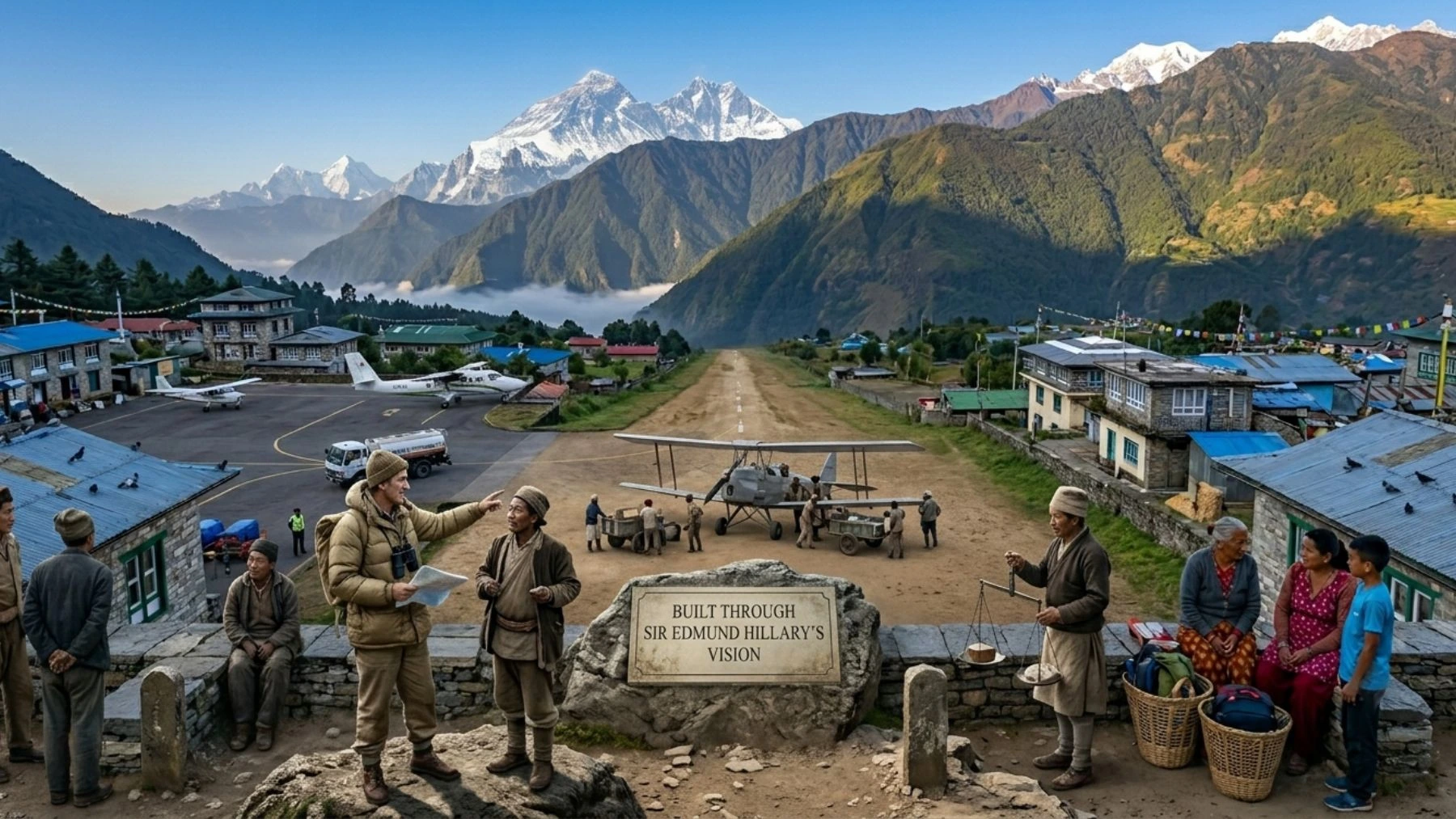
One of the most remarkable facts about Lukla Airport is that it was built through the vision of Sir Edmund Hillary, who wanted better access to the remote Khumbu Region after the historic 1953 Everest expedition with Tenzing Norgay Sherpa. Before Tenzing-Hillary Airport opened in 1971, supplies and trekkers often spent several days walking from lower regions to reach the Everest area. The airport transformed transportation, healthcare, education, and eventually Everest tourism, making it the primary Everest Gateway today.
2. The Airport Was Largely Built by Hand
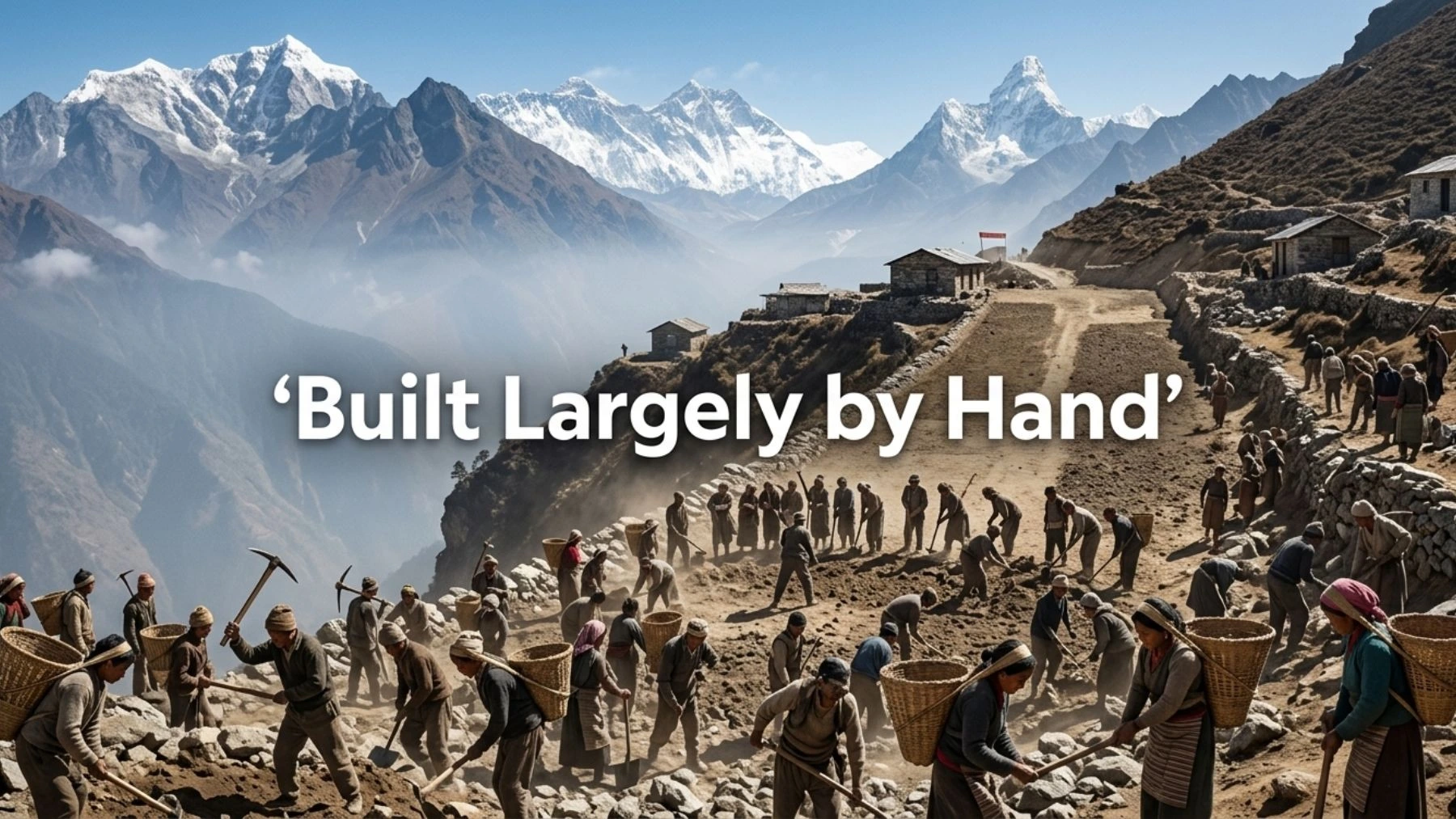
Among the most interesting Lukla Airport facts is that much of the airport was constructed using local labor rather than modern heavy machinery. Due to the remote Himalayan location and lack of road access, members of the local Sherpa community used hand tools, baskets, and manual labor to help build this now-famous mountain airport. The project remains a remarkable achievement in Himalayan aviation and mountain engineering.
💡 QUICK FACT
Many sections of Lukla Airport were built by local workers using traditional building techniques, highlighting the remarkable determination of mountain communities in the Everest region.
Many sections of Lukla Airport were built by local workers using traditional building techniques, highlighting the remarkable determination of mountain communities in the Everest region.
3. Villagers Helped Compact the Runway by Stomping on It
One of the most famous stories in Lukla Airport history involves local villagers helping compact the original runway. Before modern paving, the runway surface consisted of packed soil. Historical accounts suggest that local residents repeatedly walked and stomped across the ground to help compress the surface before aircraft operations began. This unique story has become one of the most memorable Tenzing-Hillary Airport facts and highlights the community effort behind the airport's development.
4. Lukla's Runway Is Only 527 Meters Long
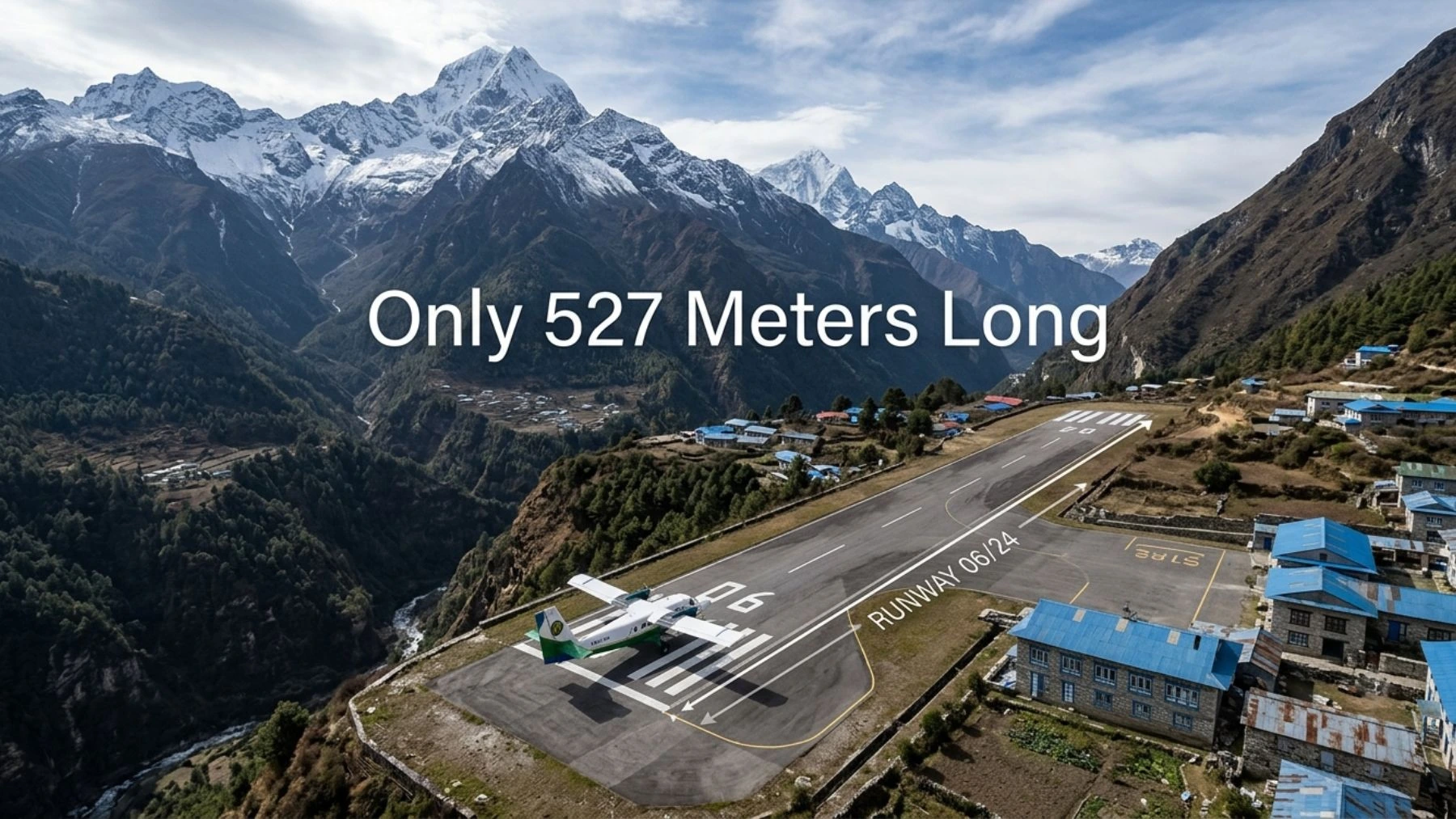
The Lukla Airport runway measures just 527 meters (1,729 ft) in length and 20 meters (66 ft) in width, making it one of the shortest commercial runways in the world. Combined with the airport's 2,845 m (9,334 ft) altitude and approximately 12% runway gradient, aircraft require specialized performance capabilities and highly trained pilots.
| Airport | Runway Length |
|---|---|
| Lukla Airport | 527 m |
| Tribhuvan International Airport | 3,350 m |
| Typical International Airport | 2,500–4,000 m |
Because of the short runway, high elevation, and surrounding mountain terrain, only specialized STOL (Short Takeoff and Landing) aircraft such as the Twin Otter Aircraft, Dornier 228, and LET L-410 regularly operate Lukla Airport flights, contributing to its reputation as one of the world's most unique high-altitude airports.
5. The Runway Has a Steep 12% Slope
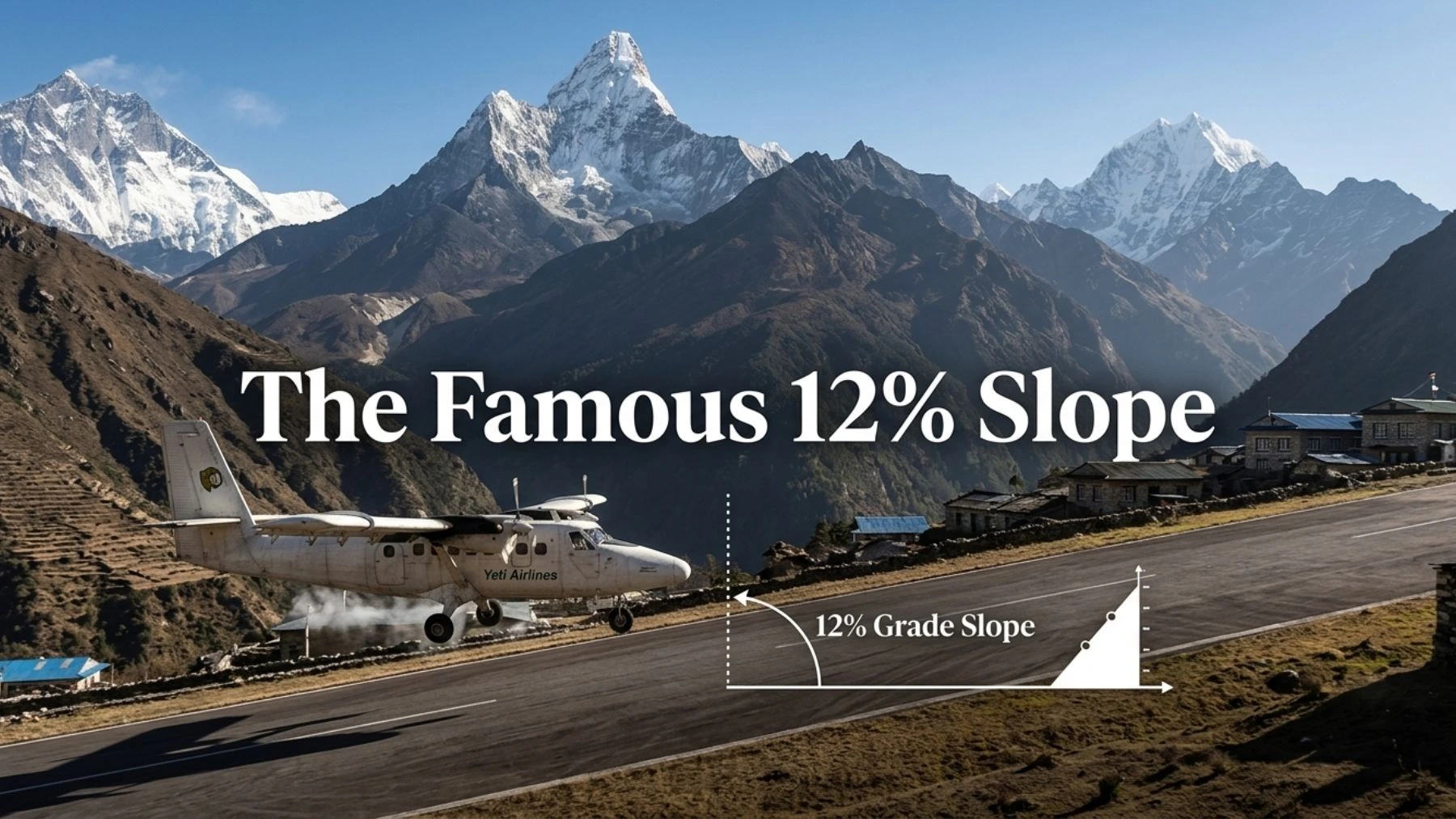
One of the lesser-known Lukla Airport facts is that the Lukla runway has an uphill gradient of approximately 11.7–12%. This design is intentional: the slope helps aircraft slow down during landing, assists acceleration during takeoff, and improves overall Lukla Airport safety on a runway that is only 527 meters long. The sloped runway is a key engineering feature of this famous high-altitude airport.
6. Pilots Need Special Training to Fly to Lukla
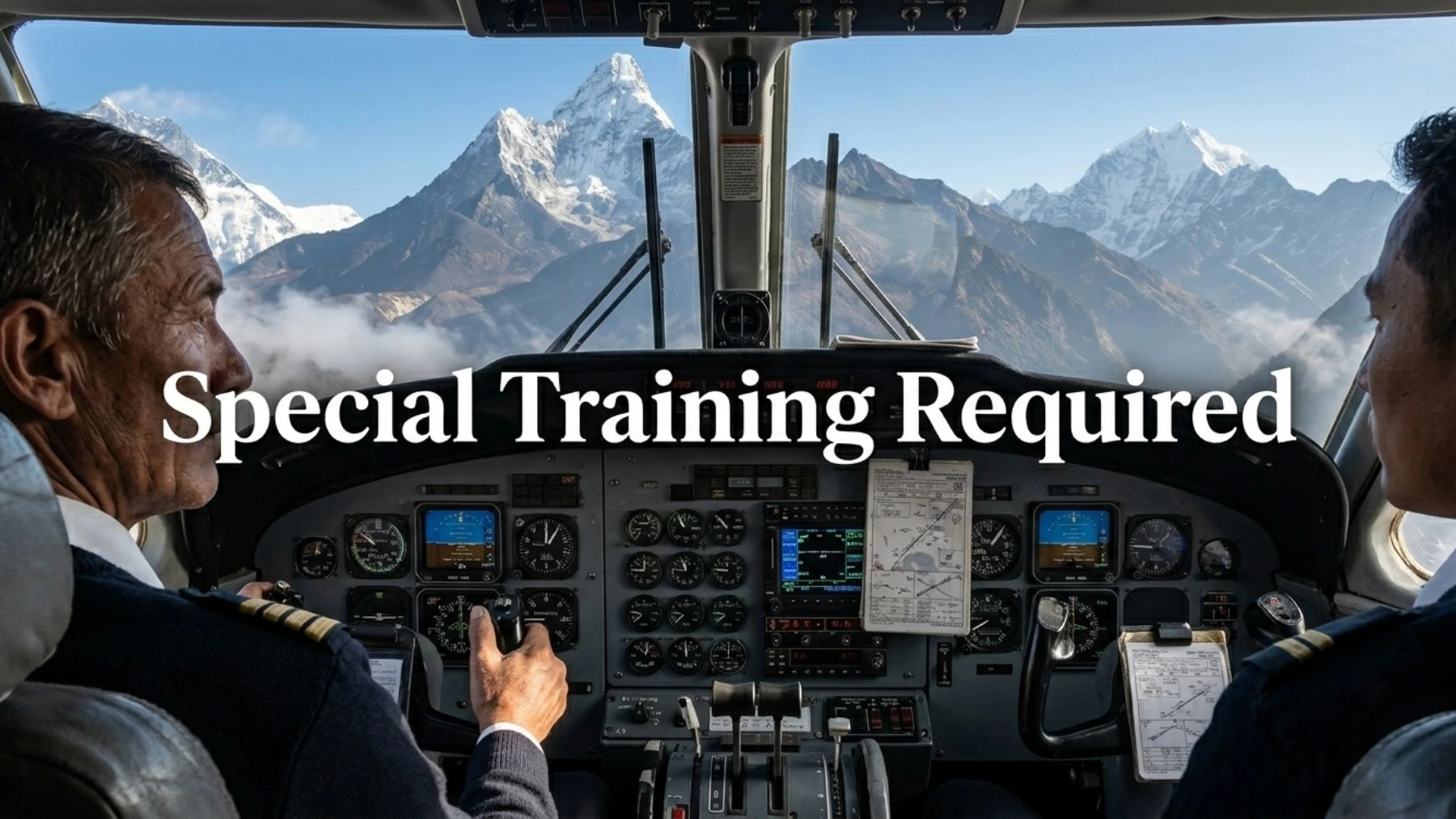
Flying to Tenzing-Hillary Airport requires highly specialized skills. Under Nepal's Civil Aviation regulations, pilots must have extensive STOL (Short Takeoff and Landing) aircraft experience, mountain-flying training, and supervised Lukla landings before operating commercial Lukla Airport flights. This strict qualification process is one reason why Lukla flight safety standards remain high despite the airport's challenging environment.
7. There Is No Go-Around Option During Landing
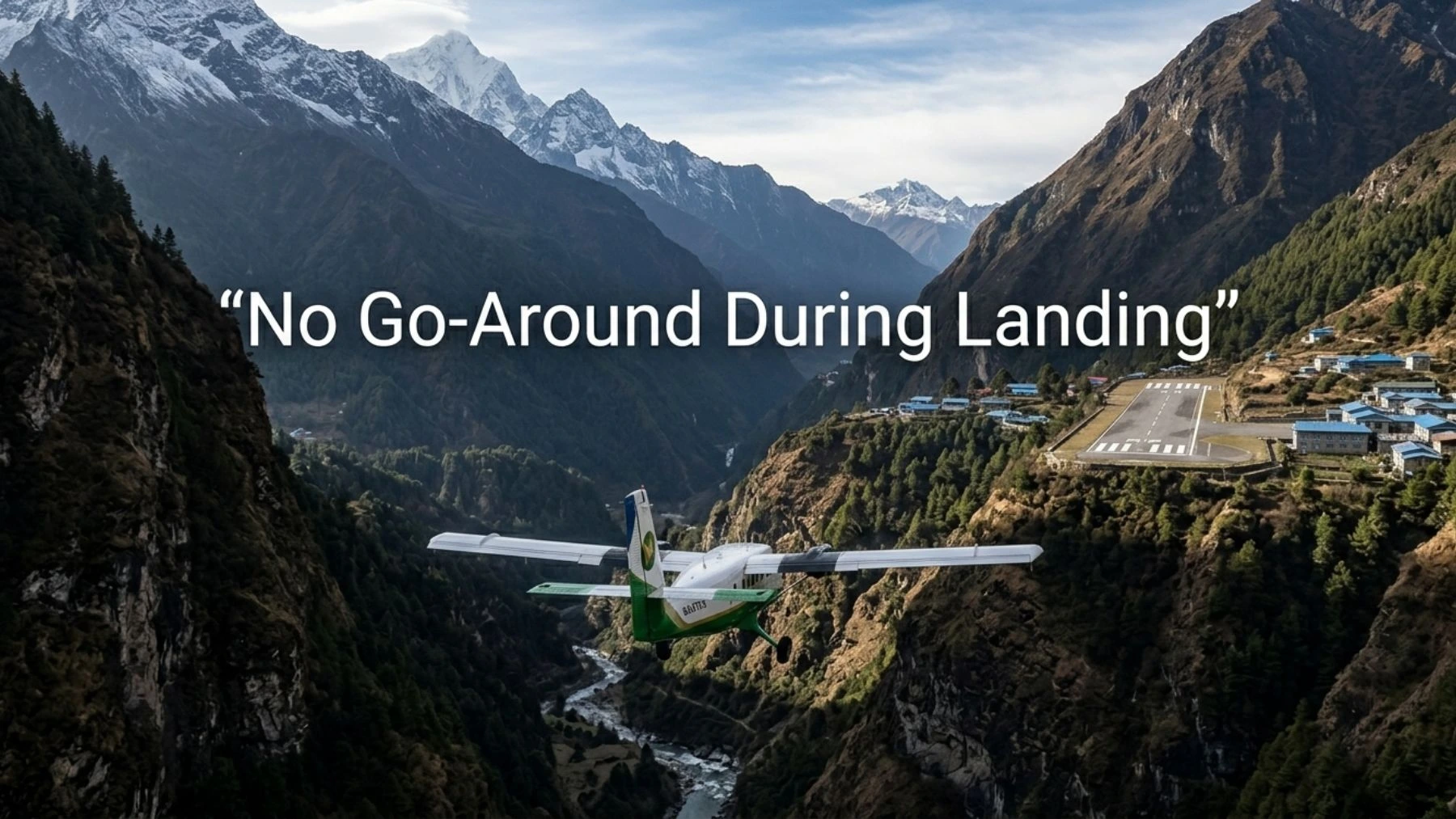
One of the reasons people ask "Why is Lukla Airport dangerous?" is the airport's unique approach path. Aircraft descend through a narrow mountain valley toward a runway with a steep mountain wall at one end and a valley drop at the other. Unlike many airports, there is virtually no practical go-around option once the final approach is committed, making precision and pilot judgment essential during every landing.
8. Lukla Flights Operate Only During Daylight Hours
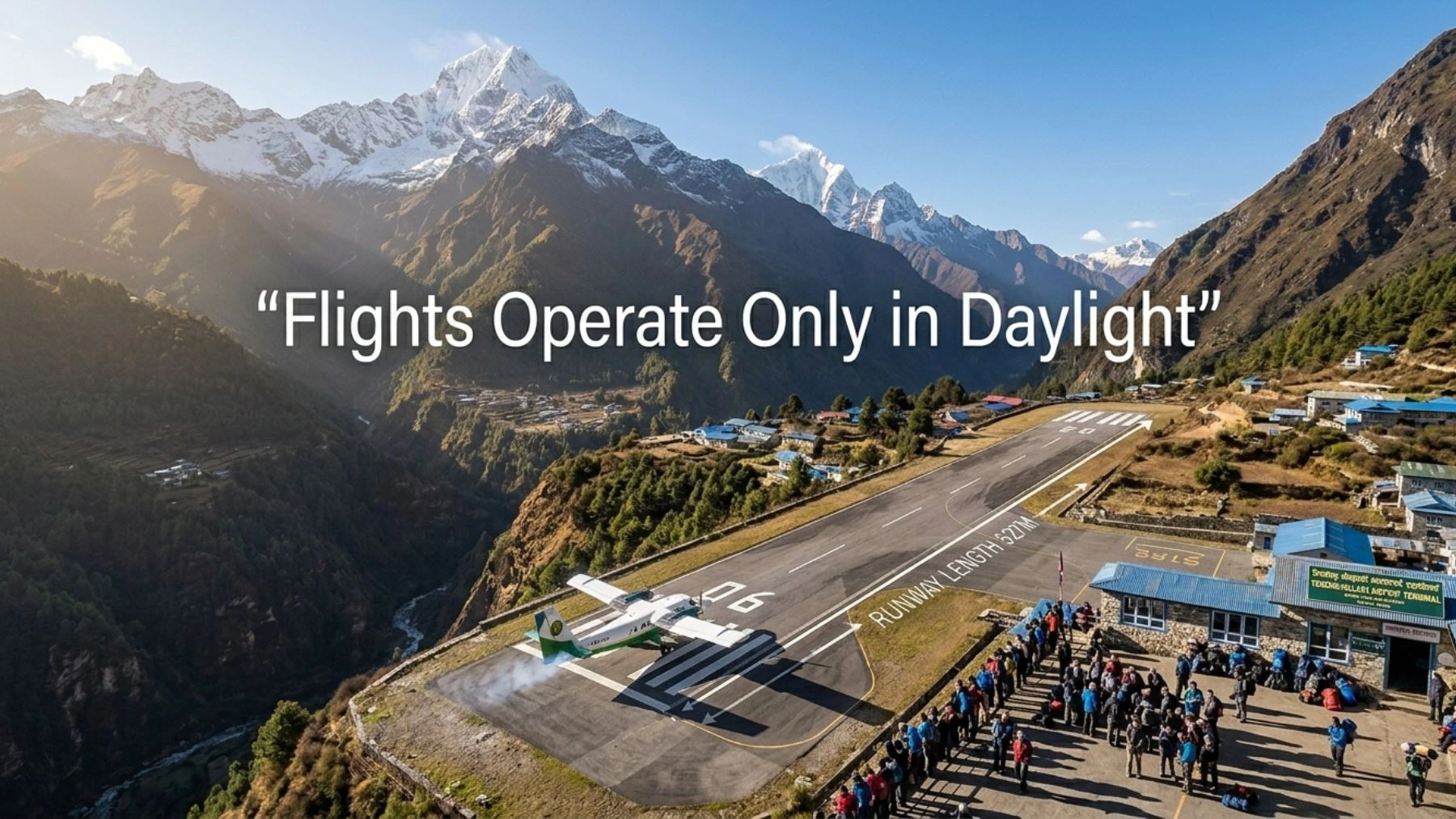
All commercial Lukla Airport flights operate during daylight under Visual Flight Rules (VFR). Due to rapidly changing Lukla weather, mountain cloud formation, and challenging terrain, night operations are not permitted. Clear visibility is essential for safe navigation, which is why weather-related Lukla flight delays and cancellations are common, particularly during the monsoon season.
9. Lukla Airport Changed Everest Trekking Forever
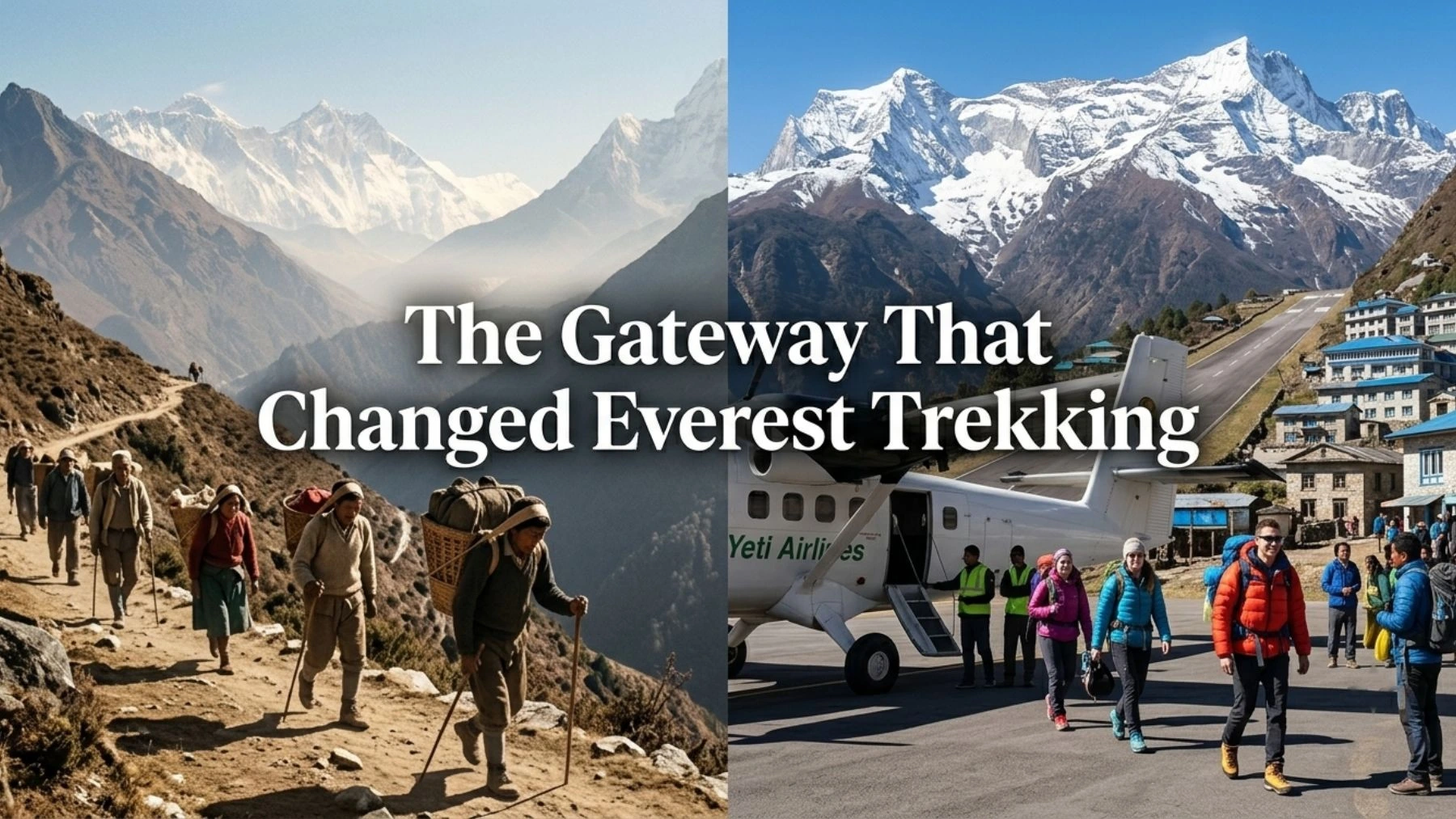
A fascinating chapter of Lukla Airport history is how it transformed access to the Everest region. Before the airport opened in 1971, trekkers heading for the Everest Base Camp Trek often began their journey from Jiri and spent an additional 7–10 days reaching the Khumbu region. Today, a 25–35 minute Lukla Airport flight dramatically reduces travel time and has played a major role in the growth of Everest tourism.
10. Lukla Is More Than an Airport : It's a Lifeline for the Khumbu Region
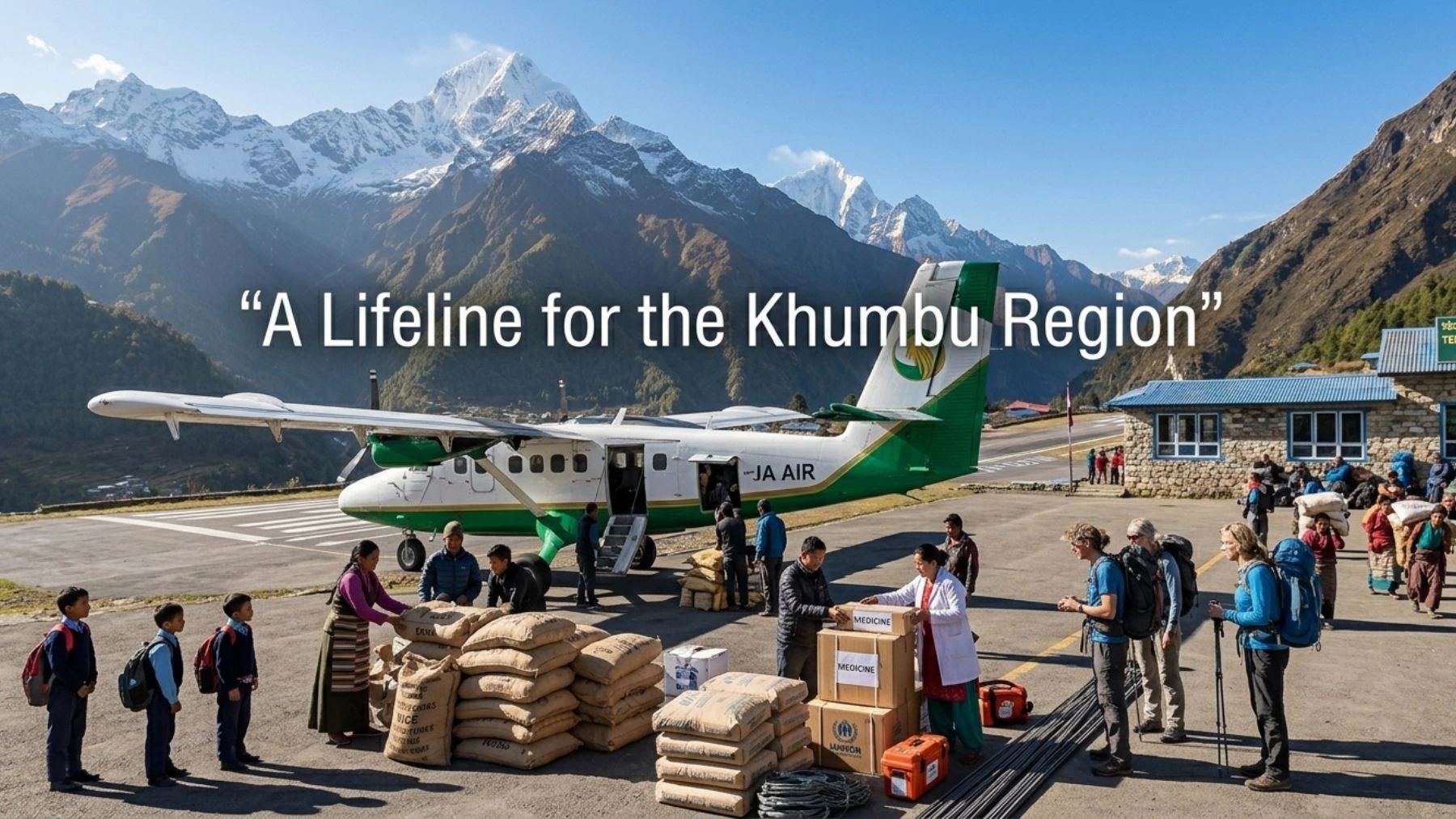
Beyond serving as the Everest Gateway, Lukla Airport Nepal is a critical transportation hub for the Khumbu Region and communities surrounding Sagarmatha National Park. The airport supports the delivery of food, construction materials, medicine, and educational supplies, while also facilitating emergency medical evacuations and search-and-rescue operations. For the local Sherpa community, Tenzing-Hillary Airport is not just an airport, it is an essential lifeline that supports regional development and daily life.
Recommended: Beauty of Lakuri Bhanjyang in Lalitpur
Why Is Lukla Airport Considered One of the World's Most Challenging Airports?
The reputation of Tenzing-Hillary Airport comes from a combination of technical and environmental factors. Located at a Lukla Airport altitude of 2,845 m (9,334 ft), the airport operates in thin mountain air where aircraft performance is affected by reduced air density. Combined with a 527-meter runway, a 12% slope, rapidly changing weather, surrounding Himalayan terrain, and strict daylight-only operations, Lukla remains one of the most unique examples of Himalayan aviation anywhere in the world. Despite these challenges, specialized Twin Otter Aircraft, Dornier 228, and LET L-410 aircraft, along with highly trained pilots, safely connect thousands of travelers to the Everest region every year.
Known worldwide as Tenzing-Hillary Airport, Lukla has gained a reputation as one of the most technically demanding airports due to its short runway, high altitude, mountain terrain, and rapidly changing weather. However, strict regulations, specialized aircraft, and highly trained pilots help maintain strong Lukla Airport safety standards.
Quick Answer: Why Is Lukla Airport Challenging?
| Challenge | Explanation |
|---|---|
| Short Runway | Only 527 m (1,729 ft) long |
| High Altitude | Located at 2,845 m (9,334 ft) |
| Mountain Terrain | Surrounded by steep valleys and peaks |
| Rapid Weather Changes | Visibility can change within minutes |
| No Instrument Landing System | Pilots rely primarily on visual conditions (VFR) |
Mountain Terrain
One of the key facts about Lukla Airport is its location within the rugged Khumbu Region. The airport sits among steep Himalayan valleys, leaving little room for maneuvering during takeoff and landing. This challenging terrain is a defining characteristic of Himalayan aviation.
Thin Air and Aircraft Performance
The Lukla Airport altitude of 2,845 m means air density is significantly lower than at sea level. Thin air reduces engine efficiency and lift generation, which is why specialized STOL aircraft are required for operations at this high-altitude airport.
Rapid Weather Changes
Lukla weather is highly unpredictable. Clear skies can quickly give way to clouds, fog, strong winds, and reduced visibility, making Lukla flight delays and cancellations common, especially during the monsoon season.
Visual Flight Rules (VFR)
Unlike major international airports, Tenzing-Hillary Airport operates primarily under Visual Flight Rules (VFR). Pilots must maintain visual contact with the terrain and runway, making weather conditions a critical factor in flight operations.
Narrow Landing Approach
The final approach follows a narrow mountain valley and requires precise aircraft control. Combined with the short Lukla Airport runway, this makes every landing highly technical and one of the reasons many travelers ask, "Why is Lukla Airport dangerous?"
See also: 10 Facts About Namche Bazaar
Aircraft That Fly to Lukla Airport
Only specialized STOL (Short Takeoff and Landing) aircraft are capable of operating safely on the short runway and in the demanding mountain environment of Lukla Airport Nepal.
| Aircraft | Passenger Capacity | Why It Is Used |
|---|---|---|
| Twin Otter Aircraft | 13–19 | Exceptional STOL (Short Takeoff and Landing) capability and mountain performance |
| Dornier 228 | Up to 19 | Reliable for high-altitude mountain operations |
| LET L-410 | Up to 19 | Strong short-runway performance and climbing ability |
These aircraft form the backbone of Lukla Airport flights, connecting trekkers and local communities to the Everest region throughout the year.
Explore: MICE Tourism in Nepal
How Lukla Airport Transformed Everest Tourism?
One of the most important Lukla Airport facts is its role in transforming access to the Everest region. Since opening in 1971, Tenzing-Hillary Airport has dramatically reduced travel time and helped make the Everest Base Camp Trek accessible to thousands of visitors annually.
Growth of Everest Tourism
| Year | Estimated Trekkers |
|---|---|
| 1964 | 40 |
| 1975 | 2,000 |
| 1985 | 10,000 |
| 1995 | 25,000 |
| 2005 | 40,000 |
| 2015 | 50,000+ |
Easier Access to Everest
Before Lukla Airport, trekkers often spent more than a week walking from Jiri before reaching the Everest region. Today, a short 25–35 minute Lukla Airport flight provides direct access to the world's most famous trekking area.
Growth of Sherpa-Owned Businesses
The rise of Everest tourism has helped expand local tea houses, lodges, guiding companies, transport services, and tourism-related enterprises operated by the Sherpa community.
Employment Opportunities
The airport supports thousands of jobs in guiding, portering, hospitality, aviation, logistics, and trekking services throughout the Khumbu Region and Sagarmatha National Park.
Impact on Local Communities
Beyond tourism, Lukla Airport Nepal facilitates the transportation of food, medicine, construction materials, and educational supplies, making it an essential part of life in the Everest region and reinforcing its role as Nepal's most important Everest Gateway.
Recommended Experiences
Explore More Adventures in Nepal
Discover some of our most popular trekking routes, cultural tours, helicopter journeys, and Himalayan experiences.
Know more: K2 Mountain Himalayas
Myth vs Fact About Lukla Airport
| Myth | Fact |
|---|---|
| Myth #1: Lukla Airport is the deadliest airport in the world. | While Lukla Airport is considered a challenging mountain airport due to its 527 m runway, 2,845 m altitude, and surrounding mountain terrain, it operates under strict Civil Aviation regulations. Only specially qualified pilots with mountain-flying and STOL aircraft experience are permitted to operate flights. |
| Myth #2: All Lukla flights are dangerous. | Lukla flight safety depends heavily on weather and visibility. Flights operate under Visual Flight Rules (VFR) and are delayed or canceled whenever conditions are unsafe, which is one reason flight delays are common. |
| Myth #3: Only Everest climbers use Lukla Airport. | In addition to climbers, the airport serves Everest Base Camp trekkers, guides, porters, local residents, rescue teams, cargo operators, and the Sherpa community. As the main gateway to the Khumbu Region and Sagarmatha National Park, it plays a vital role in transportation, emergency evacuations, and regional development. |
Planning an Everest Adventure?
Learn more about the journey to Lukla and discover unforgettable Everest trekking experiences in the Himalayas.
Explore Everest TreksWhy Explore Nepal with Recreation Holidays?
At Recreation Holidays, we combine local expertise, experienced guides, and personalized service to create unforgettable Himalayan adventures across Nepal and Tibet. Whether you're trekking in the Everest, Annapurna, Langtang, Manaslu, or Mustang regions, our team ensures a safe, well-organized, and authentic travel experience.
Our most popular adventures include the Everest Base Camp Trek, Luxury Everest Base Camp Trek, Everest View Trek, Everest Base Camp Helicopter Tour, Gokyo Lakes Trek, Everest Three Passes Trek, Annapurna Base Camp Trek, Annapurna Circuit Trek, Mardi Himal Trek, Langtang Valley Trek, Manaslu Circuit Trek, Ghorepani Poon Hill Trek, and other incredible Himalayan journeys. We also offer cultural experiences such as the Kathmandu Valley Tour and Bhaktapur Durbar Square Tour, along with sacred pilgrimage journeys including the Kailash Mansarovar Yatra and Kailash Mansarovar Overland Tour.
From flying into Lukla Airport, the famous gateway to Everest, to exploring remote mountain trails and ancient cultural sites, Recreation Holidays helps you experience the very best of Nepal and the Himalayas with confidence and expert support.
Related blogs you may missed
Truth About Dead Bodies on Mount Everest
Francys Arsentiev– The Tragic Story of Everest
Need Help? Call Us+977 9851001069orChat with us on WhatsApp
Latest Travel Blogs

News and Events
Dashain 2026: Festival Dates, Tika Time, Rituals & Celebration Guide
Sep 24, 2026By Hari
News and Events
Rainbow Valley Everest | Death Zone of Mount Everest
Sep 17, 2026By Hari

Travel Tips
20 Best Things to Do in Pokhara, Nepal [2027 Guide]
Sep 12, 2026By Hari
Need Help? Call Us.+977 9851001069