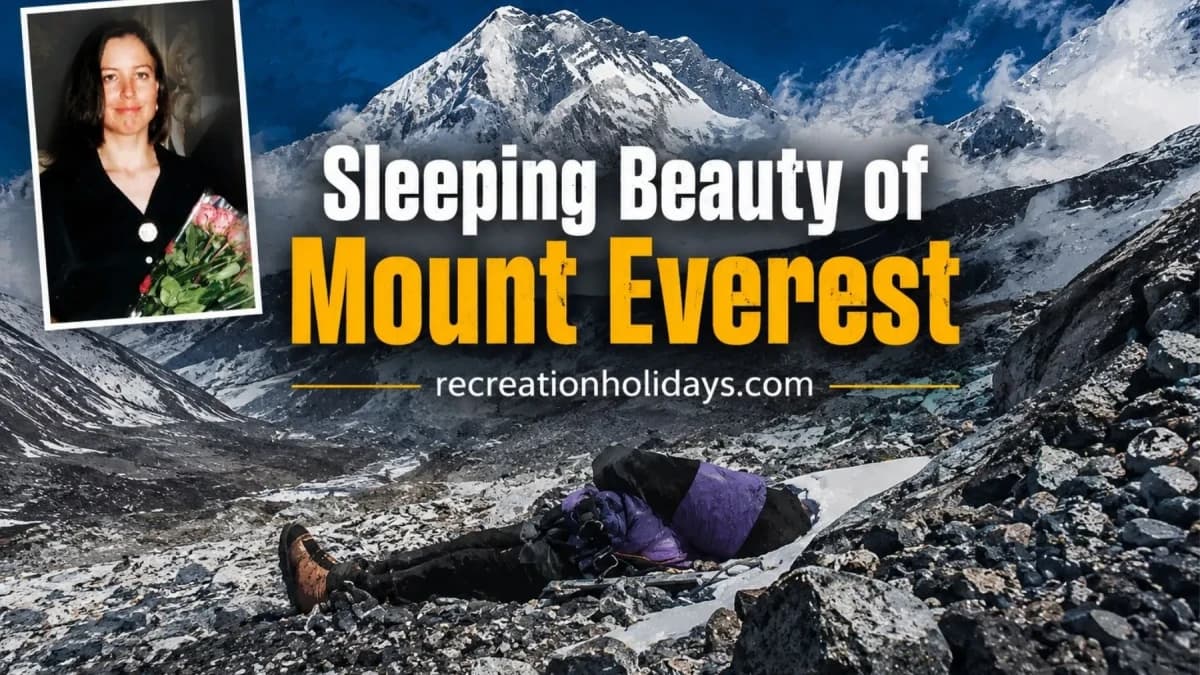
The “Sleeping Beauty of Everest” was Francys Arsentiev, an American mountaineer who died on Mount Everest in May 1998 after becoming the first American woman to reach the summit without supplemental oxygen. She and her husband, Sergei Arsentiev, climbed the mountain from the Tibetan side via the North Col and Northeast Ridge. After reaching the summit on May 22, Francys became severely incapacitated during the descent at roughly 8,500 m in Everest’s Death Zone.
Several climbers attempted to help her, but extreme altitude, exhaustion, limited oxygen, and dangerous terrain made a rescue impossible. Francys died on May 24, while Sergei also disappeared during an attempt to return to her. Her story later became known worldwide through the nickname “Sleeping Beauty of Everest.”
Quick Facts
| Fact | Details |
|---|---|
| Name | Francys Arsentiev |
| Nationality | American |
| Expedition | 1998 |
| Summit | May 22, 1998 |
| Route | North Col & Northeast Ridge, Tibet |
| Supplemental Oxygen | No |
| Achievement | First American woman to summit Everest without supplemental oxygen |
| Nickname | “Sleeping Beauty” |
Who Was the Sleeping Beauty of Everest?
Francys Arsentiev was an American mountaineer who became one of the most remembered figures in Everest history after her 1998 expedition. She and her husband, Sergei Arsentiev, attempted Mount Everest from the Tibetan side via the North Col and Northeast Ridge, deliberately climbing without supplemental oxygen. Francys reached the summit on May 22, 1998, becoming the first American woman to summit Everest without supplemental oxygen.
The achievement was followed by a fatal descent in the extreme environment above 8,000 m. Francys became severely incapacitated, and multiple climbers attempted to assist her. She died during a rescue attempt on May 24. Sergei, who had returned upward carrying oxygen and medicine after realizing she had not descended, subsequently disappeared and was later found dead.
Francys later became known as the “Sleeping Beauty of Everest,” a nickname associated with descriptions of her appearance when climbers encountered her incapacitated on the mountain. The name became deeply connected with the wider story of the Death Zone on Everest, rescue limitations, and the ethical questions surrounding abandoned bodies at extreme altitude.
Her story remains significant not simply because of her death, but because it combines a historic oxygen-free ascent, extreme physiological stress, difficult rescue decisions, and the human cost of high-altitude mountaineering.
Who Was Francys Arsentiev?
Francys Arsentiev was more than the climber remembered by the nickname “Sleeping Beauty.” She was an American mountaineer whose ambitions included climbing Everest without supplemental oxygen. Her partnership with Sergei Arsentiev was central to her mountaineering career, and the couple planned and climbed major expeditions together.
Their Everest objective was particularly demanding because they chose the North Col/Northeast Ridge route and attempted the summit without supplemental oxygen. This distinction is important: Francys was not the first woman to summit Everest without oxygen; that milestone belonged to Lydia Bradey in 1988. Francys's historic achievement was becoming the first American woman to reach the summit without supplemental oxygen.
Why Everest?
For Francys and Sergei, Everest represented an opportunity to attempt one of mountaineering's most demanding objectives: reaching the world's highest summit without supplemental oxygen.
Why Are Oxygen-Free Ascents So Difficult?
Above 8,000 m, climbers enter the Death Zone, where atmospheric pressure is dramatically reduced. Oxygen still makes up roughly 21% of the atmosphere, but the lower pressure means each breath contains far fewer oxygen molecules than at sea level. The result is severe physiological stress, reduced physical performance, impaired judgment, dehydration, and an extremely limited ability to recover from mistakes.
Francys's 1998 ascent therefore represented a significant mountaineering achievement. But the same decision also left her with less physiological reserve during the descent the stage that ultimately became the defining tragedy of her Everest story.
Mount Everest Explained
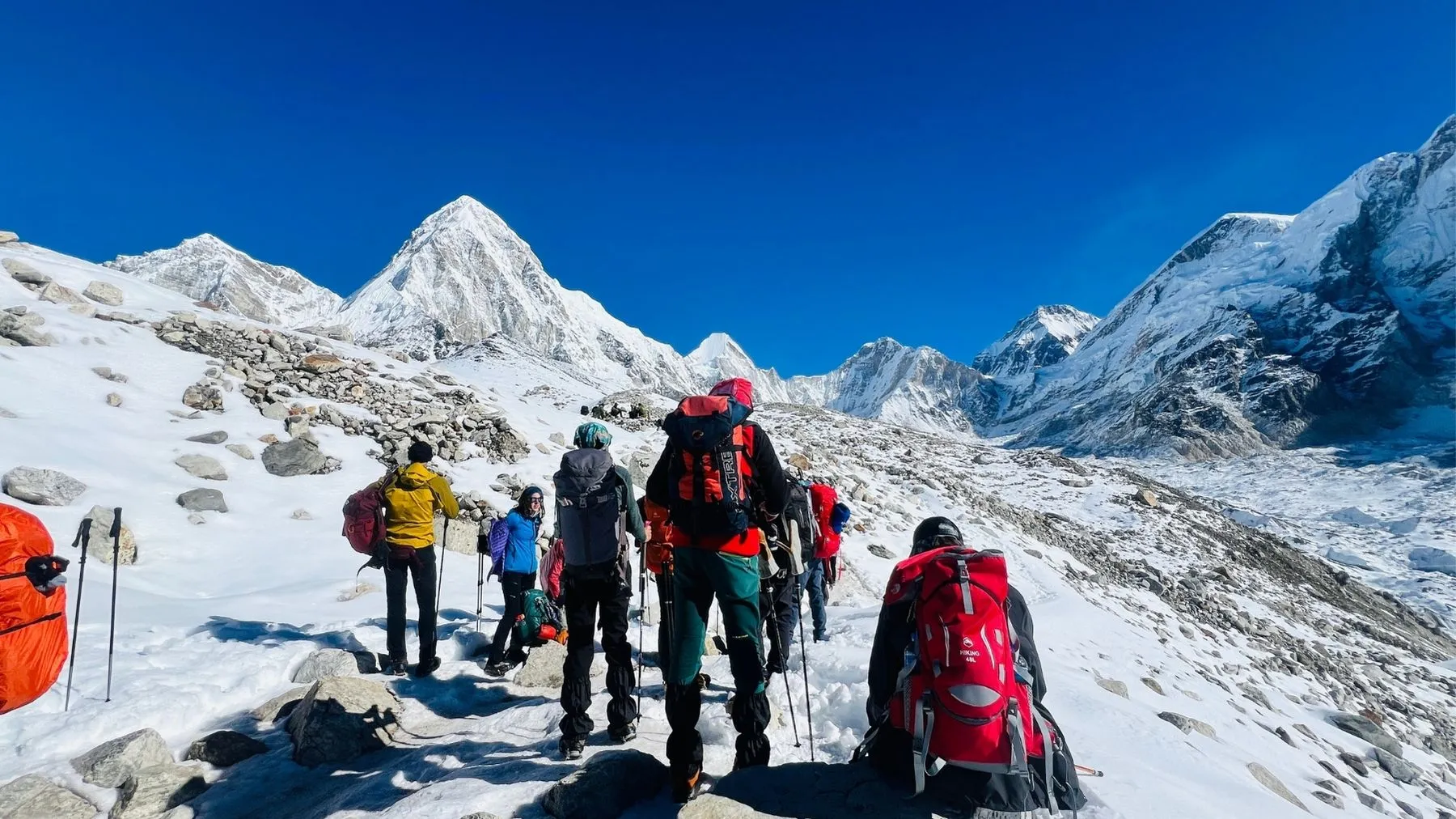
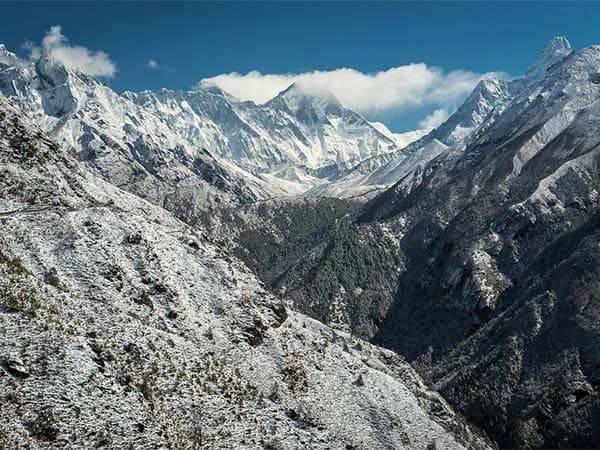
Mount Everest rises to 8,848.86 m (29,031.7 ft) and has two principal climbing approaches: the South Col route from Nepal and the Northeast Ridge route from Tibet. Francys and Sergei Arsentiev climbed the North-side route, so their expedition should not be confused with the Nepal-side Everest Base Camp route.
On the Tibetan side, the expedition used Advance Base Camp, the North Col, higher camps around 7,700 m, and Camp 6 at approximately 8,203 m. This differs from the familiar South-side Camp I–IV terminology. The Death Zone begins above 8,000 m, where prolonged exposure creates extreme physiological stress.
The air still contains about 21% oxygen at altitude; the critical change is falling barometric pressure. Near Everest's summit, pressure is roughly one-third of sea-level pressure, so each breath provides dramatically fewer oxygen molecules. Hypoxia, cold, dehydration, exhaustion, and impaired judgment therefore become increasingly dangerous.
Visual recommendation: Use an annotated North Col–Northeast Ridge route map, clearly separating it from the Nepal/South Col route.
The 1998 Expedition
The Francys Arsentiev Everest expedition became increasingly demanding after several summit attempts. The documented sequence shows how altitude, repeated efforts, equipment problems, and the decision to climb without supplemental oxygen gradually narrowed the couple's safety margin.
| Date | Expedition Progress |
|---|---|
| May 17 | Advance Base Camp → North Col |
| May 18 | Reached approximately 7,700 m |
| May 19 | Reached Camp 6 at about 8,203 m; Sergei radioed that they were in good shape |
| May 20 | Summit attempt abandoned at the First Step after headlamp failure |
| May 21 | Second attempt abandoned after only about 50–100 m of progress |
| May 22 | Final summit attempt; both reached Everest's summit without supplemental oxygen |
The two failed attempts are crucial context. By the time of the final push, Francys and Sergei had already made repeated efforts at extreme altitude. Their oxygen-free strategy also meant a slower climbing pace and less physiological reserve.
Helpful Resources: K2 Mountain Himalayas & Where Is Nepal Located in Asia?
The Summit Push
On May 22, 1998, Francys and Sergei began their final ascent after two unsuccessful attempts. Without supplemental oxygen, their progress was slow, and they reached the summit dangerously late in the day. Francys successfully reached the summit, becoming the first American woman to summit Everest without supplemental oxygen.
The achievement came at a severe cost. Instead of completing the descent within a safer timeframe, the pair were forced into a second unplanned night above 8,000 m. During the descent they became separated, creating a critical new problem in an environment where even experienced climbers have very limited physical and cognitive reserves.
The key warning signs were therefore not one isolated event but a combination of two aborted attempts, accumulated fatigue, oxygen-free climbing, a late summit, and prolonged exposure in the Death Zone.
What Went Wrong?
The Francys Arsentiev story is best understood as a chain of compounding risks rather than a single mistake. The raw research identifies several interconnected factors: repeated summit attempts, no supplemental oxygen, slower progress, a late summit, an unplanned second night above 8,000 m, and separation during the descent.
After the May 22 summit, the situation deteriorated during the descent. On May 23, an Uzbek team found Francys severely incapacitated, gave her oxygen, and attempted to help her descend before exhausting their own oxygen and strength. Sergei, having realized Francys had not returned, went back upward carrying oxygen and medicine; the Uzbek climbers saw him that evening, the last confirmed sighting of him alive.
The following morning, Ian Woodall, Cathy O'Dowd, and additional Uzbek climbers found Francys again. Woodall and O'Dowd abandoned their own summit attempt and spent more than an hour trying to assist her, but the altitude, terrain, and her physical condition made movement extremely difficult. Francys died while they were with her.
The central lesson is stark: above 8,000 m, a late summit can transform a difficult descent into a survival emergency. This is why turnaround-time discipline, oxygen planning, team communication, and conservative decision-making are fundamental principles of high-altitude mountaineering.
Francys' Final Hours
The final events of the Sleeping Beauty of Everest story should be understood through documented accounts rather than later speculation. On May 23, climbers found Francys severely incapacitated at roughly 8,500 m. She was described as semi-conscious and unable to descend independently. An Uzbek team supplied oxygen and attempted to help her, but eventually exhausted their own oxygen and physical strength.
On May 24, Ian Woodall, Cathy O'Dowd, and other climbers encountered her again. They abandoned their own summit objectives and spent more than an hour attempting to assist her. At that altitude, moving an incapacitated climber over technical terrain is extraordinarily demanding, and the rescuers themselves faced potentially fatal exposure. Francys died during the attempted rescue.
Descriptions of her physical condition and possible medical causes should be attributed to the accounts in which they appear. There was no autopsy establishing a definitive clinical diagnosis, so the article should not retrospectively label her death as HACE, HAPE, or another specific condition as proven fact.
Sergei Arsentiev's Final Rescue Attempt
After descending without Francys, Sergei Arsentiev realized she had not returned. Rather than remaining at camp, he went back toward her carrying oxygen and medicine. The Uzbek climbers encountered him that evening; this became the last confirmed sighting of Sergei alive.
His decision illustrates the extraordinary danger of attempting a rescue in the Death Zone. Sergei was already exhausted after the summit attempt, yet returned into an environment where reduced oxygen availability, cold, darkness, technical terrain, and fatigue dramatically reduced his own margin for survival.
His body was eventually discovered in 1999 by Jake Norton, who was involved in the Mallory & Irvine search expedition. The circumstances strongly indicate that Sergei died during his attempt to reach Francys, although the exact sequence cannot be reconstructed with complete certainty.
Why Was She Called “Sleeping Beauty”?
Why is Francys Arsentiev called Sleeping Beauty? The nickname became associated with descriptions of her appearance when climbers encountered her incapacitated on Everest. Her position and condition, combined with the striking circumstances surrounding her death, eventually led to the enduring public label “Sleeping Beauty of Everest.”
However, the nickname should be treated carefully. Francys was a mountaineer who achieved a historic oxygen-free ascent, not simply a symbol of tragedy. Her story is better understood through her mountaineering ambition, the risks of the expedition, the rescue attempts, and the extreme environment in which the events unfolded.
The phrase “Sleeping Beauty Mount Everest” has since become widely associated with the mountain's broader discussion of death, abandoned bodies, and rescue ethics.
The Death Zone Explained
The Death Zone on Everest refers to elevations above approximately 8,000 m, where the human body cannot adequately acclimatize for prolonged exposure. The critical issue is not that the atmosphere contains less than 21% oxygen; oxygen remains approximately 21% of the atmosphere. Instead, barometric pressure falls dramatically, meaning each breath delivers far fewer oxygen molecules to the lungs.
| Factor | Effect Above 8,000 m |
|---|---|
| Hypoxia | Reduced oxygen availability stresses the brain and muscles |
| Cognitive function | Judgment, coordination and decision-making can deteriorate |
| Muscle performance | Strength and endurance decline rapidly |
| Dehydration | Increased respiration and cold, dry air accelerate fluid loss |
| Frostbite | Severe cold and reduced circulation increase tissue-freezing risk |
| Sleep | Extreme altitude disrupts restorative sleep |
| Metabolic stress | The body consumes enormous energy simply maintaining basic function |
These effects help explain why couldn't climbers rescue Francys Arsentiev? The issue was not simply willingness. Potential rescuers were operating in the same hostile environment, often while exhausted themselves. Carrying or supporting an incapacitated adult requires enormous physical effort, while oxygen supplies, weather, technical terrain, and descent options are limited.
At extreme altitude, cognitive decline can also affect navigation and decision-making—the very abilities climbers need to survive. That is why a late summit, prolonged exposure, separation, and exhaustion can compound rapidly into a life-threatening situation.
Visual recommendation: A simple altitude infographic showing sea level → 5,000 m → 8,000 m+ Death Zone, with falling barometric pressure, hypoxia, cognitive impairment, dehydration, frostbite, and reduced physical performance.
This physiological context is essential to understanding the Francys Arsentiev death and why her story remains one of the most discussed tragedies in Everest history.
Learn More: Why is Annapurna 3 Unclimbed?
Why Couldn't Anyone Save Her?
The question “Why couldn't climbers rescue Francys Arsentiev?” has no single answer. At roughly 8,500 m, rescuers faced severe hypoxia, exhaustion, extreme cold, technical fixed-rope terrain, limited oxygen, and their own risk of becoming casualties. Carrying an incapacitated climber required enormous physical effort, while helicopter rescue at such extreme altitude was not a realistic option. The decision framework therefore involved balancing Francys's survival against the lives of potential rescuers.
Everest Without Supplemental Oxygen
Climbing Everest without supplemental oxygen remains one of mountaineering's most demanding objectives. Francys became the first American woman to summit Everest without supplemental oxygen in 1998, placing her achievement within the history of oxygen-free Everest ascents. The strategy reduces available physiological reserve and increases the effects of hypoxia, fatigue, cold, and cognitive impairment.
Women in High-Altitude Mountaineering
Francys's achievement belongs within a broader history that includes Junko Tabei, Lydia Bradey, Stacy Allison, and Melissa Arnot Reid. Her legacy is therefore both tragic and significant: she demonstrated the increasing role of women in extreme-altitude mountaineering while achieving a historic oxygen-free ascent.
Lessons for Modern Mountaineers
The Francys Arsentiev story highlights the importance of conservative turnaround times, weather assessment, acclimatization, oxygen planning, reliable communication, team cohesion, and human-factor risk management. At extreme altitude, a small delay can become a life-threatening problem.
You Might Also Find Useful: Is Annapurna Part of Everest?
Common Myths vs Facts
| Myth | Fact |
|---|---|
| Everyone ignored Francys. | Multiple climbers attempted to help her. |
| Bodies are simply abandoned. | Recovery can be extremely dangerous and technically difficult. |
| Oxygen-free climbing is always reckless. | It is an exceptionally demanding but established mountaineering discipline. |
| Helicopters can rescue anyone. | Extreme altitude and aircraft performance impose major limits. |
| The Death Zone kills instantly. | It severely reduces the body's ability to function and recover. |
Timeline
| Year | Event |
|---|---|
| 1998 | Francys and Sergei attempt Everest from Tibet |
| May 22, 1998 | Francys reaches the summit without supplemental oxygen |
| May 23–24 | Rescue attempts and Francys's death |
| 1999 | Sergei's body discovered |
| 2007 | Francys's remains relocated and covered |
Continue Your Nepal Adventure
From iconic Himalayan treks and scenic helicopter flights to cultural journeys and thrilling outdoor adventures, discover more unforgettable experiences with Recreation Holidays.
Why Choose Recreation Holidays for Trekking?
Recreation Holidays provides experienced licensed guides, carefully planned itineraries, acclimatization support, permits, transportation, and reliable local assistance for trekking across Nepal. Our team specializes in safe, well-organized Himalayan adventures tailored to different experience levels.
Alongside the Everest Base Camp Trek, we offer the Everest Three Passes Trek, Gokyo Lakes Trek, Manaslu Circuit Trek, Annapurna Circuit Trek, Annapurna Base Camp Trek, Langtang Valley Trek, Mardi Himal Trek, Upper Mustang Trek, Kanchenjunga North Base Camp Trek, Kanchenjunga Circuit Trek, and Makalu Base Camp Trek.
Whether you're looking for Everest trekking, remote trekking in Nepal, high-altitude adventures, or classic Himalayan routes, Recreation Holidays can help you plan your next trek with experienced local support.
Planning a Trek? Read These Next
Everest Base Camp Trek in November 2026-2027
Manaslu Circuit Trek in November (2026–2027)
Everest Base Camp Trek in October (2026–2027)
Annapurna Base Camp Trek in September 2026-2027
Top 10 Reasons to Visit Upper Mustang in Nepal
Frequently Asked Questions on Mount Everest Sleeping Beauty
Who was Sleeping Beauty of Everest?
Francys Arsentiev, the first American woman to summit Everest without supplemental oxygen.
What happened to Francys Arsentiev?
She became incapacitated during her descent and died during attempted rescue.
What happened to Sergei Arsentiev?
He disappeared after returning upward to help Francys and was later found dead.
Is Sleeping Beauty still on Mount Everest?
Her remains were relocated and covered in 2007 rather than fully recovered from the mountain.
What is Rainbow Valley on Everest?
It is an informal name associated with the high-altitude area on Everest's northern route where several deceased climbers have historically remained.
Why are bodies left on Everest?
Extreme altitude, terrain, weather, cost, and danger to recovery teams can make retrieval extraordinarily difficult.