Is the Kanchenjunga Base Camp Trek Really Worth It?
The real value is what you experience along the way, The value of the Kanchenjunga Trek lies less in simply reaching Base Camp and more in the journey through one of Nepal's least-developed trekking regions. The route combines remote valleys, alpine landscapes, glaciers, mountain views, and relatively few trekkers. The supplied research estimates around 1,000 trekkers annually, compared with approximately 35,000–45,000 in the Everest region.
Unlike a highly developed trekking route, Kanchenjunga requires you to accept longer travel, simpler accommodation, limited connectivity, and greater logistical uncertainty. In return, you get something many popular routes can no longer provide at the same scale: space, isolation, and a genuine sense of Himalayan wilderness.
This makes the Kanchenjunga Base Camp Trek Nepal experience particularly valuable for trekkers who see remoteness as part of the adventure rather than an inconvenience.
What makes Kanchenjunga worth the effort?
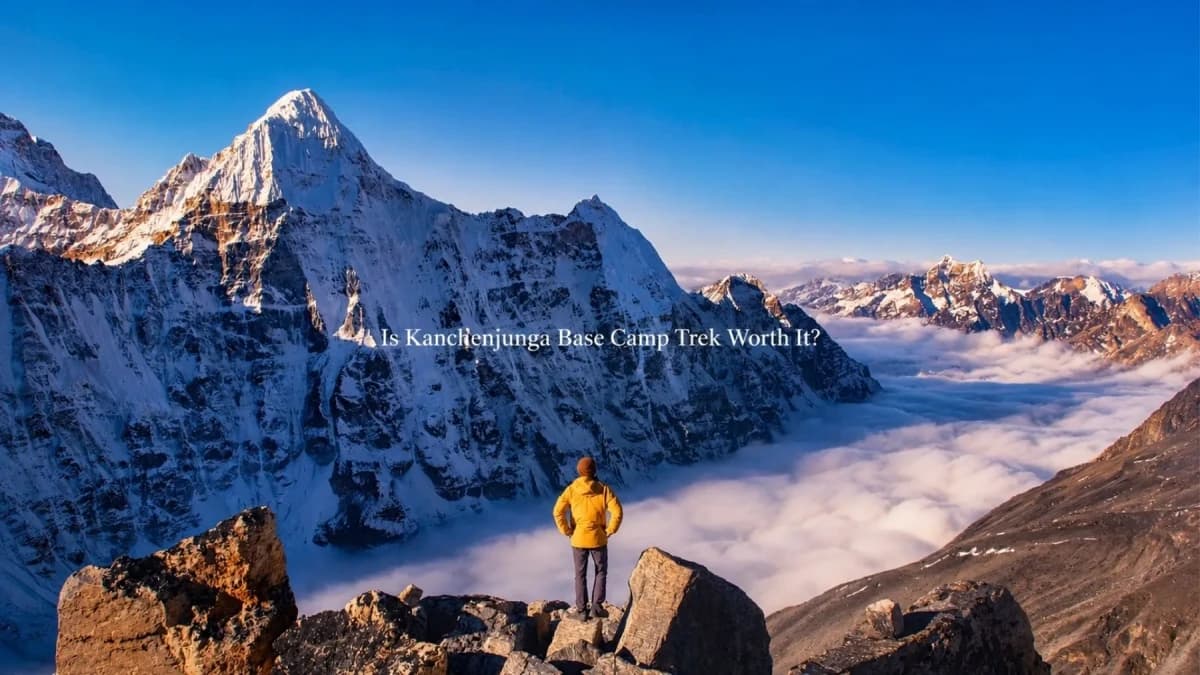
You gain far more than a Base Camp photograph. The route moves through forested valleys, remote settlements, alpine terrain, glaciers, yak pastures, and dramatic mountain landscapes, while exposing you to Limbu, Rai, and Sherpa cultural environments. The isolation itself becomes part of the Kanchenjunga Trek experience.
The physical challenge also creates a genuine sense of achievement. Depending on the route, trekking can involve approximately 7–8 hours of walking per day, around 500–700 m of average daily elevation gain, and substantial cumulative ascent and descent. The full circuit adds demanding high-pass terrain and can require a particularly long day.
Why might it not be worth it?
The same qualities that make Kanchenjunga special can become disadvantages. Transportation is lengthy, accommodation becomes increasingly basic, connectivity is unreliable, and the trek requires flexibility for weather or logistical delays. The overall Kanchenjunga Trek cost is also higher than many standard Nepal treks because of its duration, staffing, transportation, permits, and remote-area logistics.
If you have only a short Nepal vacation or strongly prefer established trails, comfortable facilities, reliable internet, and predictable logistics, Is Kanchenjunga Trek worth it? may reasonably have a different answer for you.
Kanchenjunga “Worth-It” Scorecard
| Factor |
Rating |
Why |
| Scenery |
⭐⭐⭐⭐⭐ |
Glaciers, alpine valleys and huge Himalayan landscapes |
| Solitude |
⭐⭐⭐⭐⭐ |
Far fewer trekkers than major Nepal routes |
| Wilderness |
⭐⭐⭐⭐⭐ |
Remote and less-developed trekking environment |
| Culture |
⭐⭐⭐⭐☆ |
Limbu, Rai and Sherpa communities |
| Difficulty |
⭐⭐⭐⭐⭐ |
Long duration, altitude and cumulative fatigue |
| Comfort |
⭐⭐☆☆☆ |
Basic facilities in remote sections |
| Logistics |
⭐⭐☆☆☆ |
Long road/air transfers and greater uncertainty |
| Cost |
⭐⭐⭐☆☆ |
Higher due to duration and remote logistics |
| Time commitment |
⭐⭐☆☆☆ |
A long Himalayan journey |
| Beginner suitability |
⭐⭐☆☆☆ |
Better suited to prepared or experienced trekkers |
| Experienced trekkers |
⭐⭐⭐⭐⭐ |
Excellent match for wilderness-focused hikers |
Bottom line: If your priority is convenience, comfort and efficiency, another trek may offer better value. If your priority is solitude, wilderness and a deeper Himalayan adventure, the Kanchenjunga Base Camp Trek can be exceptionally worth the investment.
Who Is the Kanchenjunga Trek Really For?
The Kanchenjunga Trek is a strong fit for travelers who value wilderness over convenience, have enough time for a long-distance Himalayan journey, and are comfortable with basic facilities and prolonged isolation. Previous high-altitude trekking experience is a major advantage, particularly because the route combines long walking days, cumulative fatigue, remote logistics, and extended exposure to altitude.
If you have limited vacation time, require reliable connectivity, prefer developed infrastructure, or want a shorter and more predictable Himalayan trek, another route may offer better value. The Kanchenjunga Base Camp difficulty is not only about altitude; duration, terrain, remoteness, and cumulative ascent and descent all contribute to the challenge.
Which Trekker Are You?
Choose Kanchenjunga if: wilderness, solitude, long-distance trekking, remote communities, and achievement are priorities.
Consider another trek if: convenience, comfort, connectivity, shorter duration, or predictable logistics matter more.
What Makes Kanchenjunga Different From Nepal's Popular Treks?
The biggest difference is remoteness. The research estimates roughly 1,000 trekkers annually in Kanchenjunga compared with approximately 35,000–45,000 in the Everest region. Facilities also become increasingly basic as you move deeper into the region.
| Factor |
Kanchenjunga |
EBC |
Manaslu |
Annapurna |
| Remoteness |
★★★★★ |
★★☆☆☆ |
★★★★☆ |
★★☆☆☆ |
| Crowds |
Low |
High |
Moderate |
High |
| Duration |
Long |
Moderate |
Moderate–Long |
Moderate–Long |
| Difficulty |
Very High |
High |
High |
Moderate–High |
| Infrastructure |
Basic |
Developed |
Moderate |
Developed |
| Mountain scenery |
★★★★★ |
★★★★★ |
★★★★★ |
★★★★★ |
| Solitude |
★★★★★ |
★★☆☆☆ |
★★★★☆ |
★★☆☆☆ |
| Logistics |
Complex |
Easier |
Moderate |
Easier |
| Beginner suitability |
Low |
Moderate |
Low–Moderate |
Moderate |
So, Kanchenjunga Base Camp Trek Nepal is not automatically the best choice it is the stronger choice when your priority is remote Himalayan experience rather than convenience.
Is Kanchenjunga Worth the Extra Time?
What do the extra days actually give you?
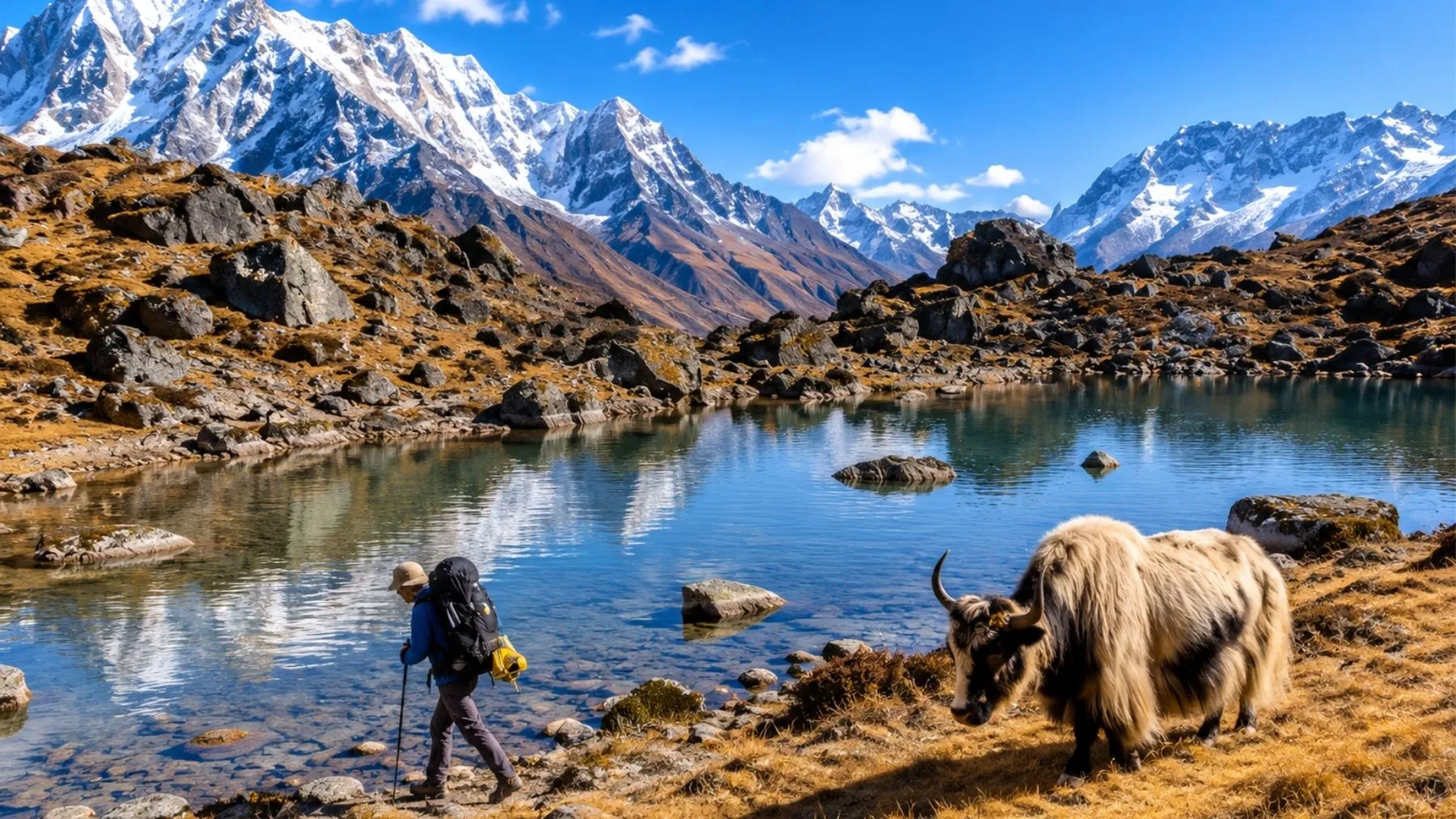
The Kanchenjunga Trek duration is part of its value. The longer journey allows deeper progression through forested valleys, remote settlements, alpine landscapes, glaciers and high-altitude terrain. You also spend more time away from major tourist infrastructure, creating a stronger sense of wilderness and expedition-style travel.
The trade-off is real: if you have only a limited Nepal vacation, those additional days may be better spent on a shorter route such as EBC or Annapurna. But if you have the time and want the journey itself not simply the Base Camp destination the additional commitment can be exactly what makes the Kanchenjunga Trek worth it.
Is Kanchenjunga Worth the Cost?
The Kanchenjunga Trek cost is higher than many standard Nepal treks because you are paying for more than accommodation and meals. Remote transportation, permits, guides, porters, longer staff deployment, basic-area logistics, and contingency planning all increase the operating cost. Research for this guide places typical guided packages broadly around USD 1,800–3,500, with higher-end trips potentially reaching around USD 5,000; exact prices vary by itinerary and inclusions.
The value becomes clearer when you consider what that money supports: Kanchenjunga Trek permits, transportation, a licensed guide, porters, tea-house accommodation, meals, equipment and remote-area operations. Helicopter evacuation can also be substantially more expensive in such remote terrain, making comprehensive trekking insurance essential.
Is the Difficulty of Kanchenjunga Worth the Reward?
The Kanchenjunga Trek difficulty comes from accumulation rather than one single technical obstacle. Trekkers commonly face 7–8 hours of walking per day, roughly 500–700 m of average daily elevation gain, prolonged time above 4,000 m, and substantial cumulative ascent and descent. The full circuit adds demanding high passes and can produce an exceptionally long trekking day.
Altitude is only one component. Terrain, weather, remoteness, consecutive trekking days, limited infrastructure and psychological isolation all increase the workload. Acclimatization therefore matters as much as fitness: maximum altitude alone does not determine how difficult the trek feels.
The trail is physically demanding rather than primarily technical. In other words, most trekkers do not need technical climbing skills, but they do need strong endurance, downhill conditioning, altitude awareness and the ability to function for weeks in basic conditions. That makes the difficulty worthwhile mainly for trekkers who see challenge as part of the Kanchenjunga Trek experience.
For More Information: Annapurna Base Camp Trek in September 2026-2027
What Does “Remote” Actually Mean on the Kanchenjunga Trek?
Here, “remote” is practical not just a marketing description. Deeper sections can have very basic tea houses, limited rooms, squat-style toilets, unreliable electricity, paid charging, weak or absent connectivity, and simple food choices. Lhonak, for example, has only a small number of basic lodging options.
Transportation is another part of the challenge. The journey commonly involves Kathmandu → Bhadrapur → Taplejung → trailhead, with long road transfers and possible weather-related delays. Medical infrastructure is sparse, so travel insurance with emergency evacuation coverage and a buffer day are important parts of Kanchenjunga Trek safety planning.
So, remote in reality means accepting that internet, electricity, hot showers, food variety, transportation and emergency response will not operate like they do on Nepal's more developed trekking routes.
Helpful Resources: K2 Mountain Himalayas - Complete Guide
North Base Camp vs South Base Camp: Which Is More Worth It?
The answer depends on what you want from the Kanchenjunga Base Camp Trek.
| Priority |
Better Choice |
| Pangpema and dramatic northern mountain scenery |
North Base Camp |
| Greener landscapes and cultural diversity |
South Base Camp |
| Lower maximum altitude |
South Base Camp |
| More remote wilderness |
North Base Camp |
| Maximum landscape diversity |
Full Circuit |
| Limited time |
North or South, depending on priorities |
| Complete Kanchenjunga experience |
Full Circuit |
The North Base Camp route leads toward Pangpema at approximately 5,143 m, with dramatic glacial and alpine scenery and a strongly remote character. The South route reaches approximately 4,730 m and offers greener landscapes and greater exposure to local cultural environments.
The Kanchenjunga Circuit Trek Nepal offers the broadest experience but also demands substantially more time and physical commitment, particularly where high passes are involved.
Verdict: choose North for wilderness and mountain drama, South for a somewhat gentler and more culturally diverse experience, and the full circuit when the journey itself is the priority.
You May Also Like: Why is Annapurna 3 Unclimbed?
What Is the Kanchenjunga Trek Actually Like Day by Day?
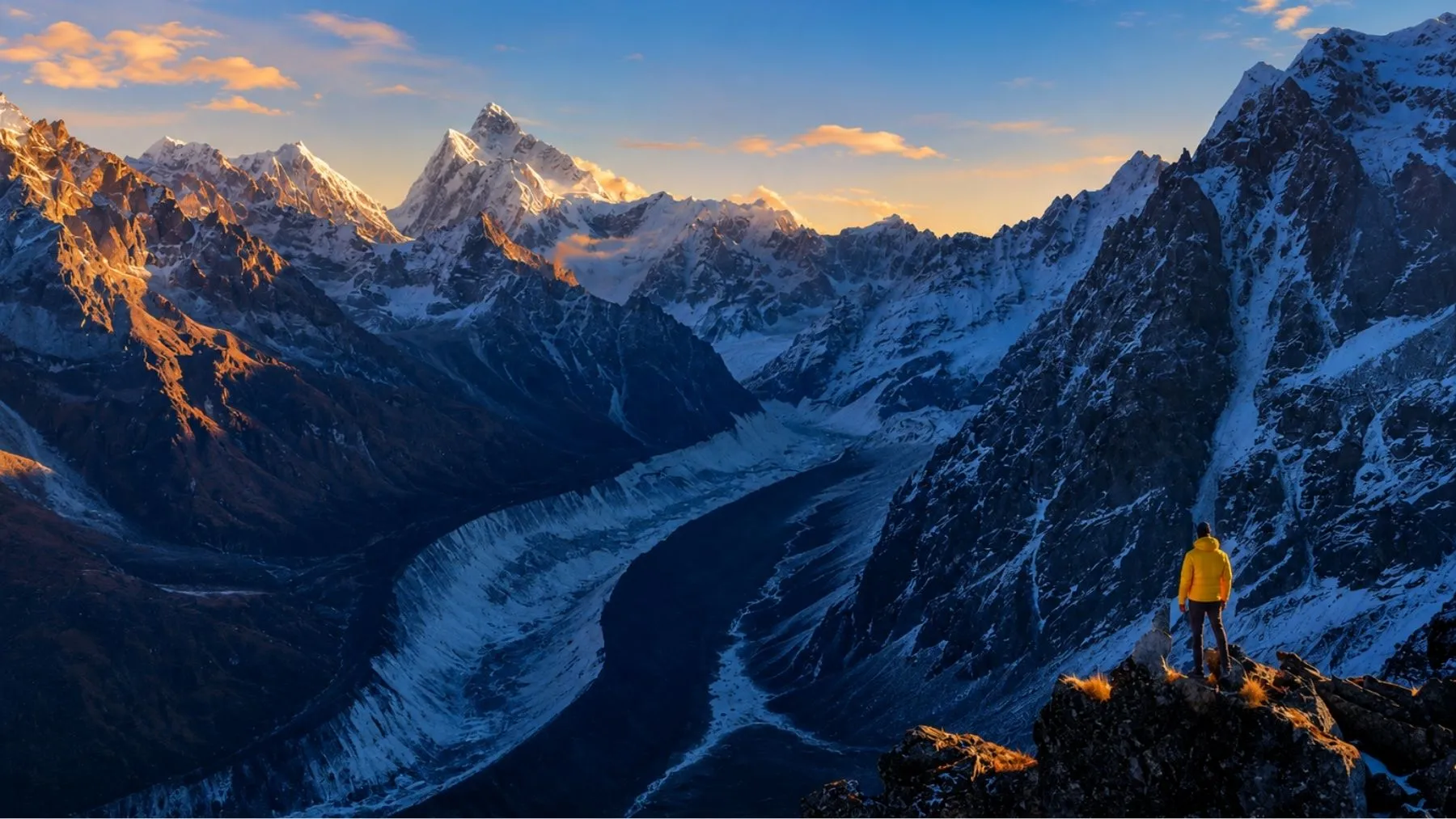
The Kanchenjunga Trek route changes dramatically with altitude. Lower sections pass through warmer valleys, farms and villages; the middle section becomes increasingly forested and isolated; and the upper route transitions into alpine terrain, glacial valleys and moraine landscapes.
As you approach Base Camp, walking becomes more demanding because of altitude, thinner air and cumulative fatigue. Reaching Pangpema (5,143 m) is therefore not simply a destination it is the culmination of a long progression through increasingly remote Himalayan terrain.
The return is also physically important. Descending reduces altitude stress, but does not immediately remove accumulated fatigue. Long downhill sections continue to place significant demands on the legs.
Read More: where is nepal located
What Makes the Kanchenjunga Experience Different From Everest Base Camp?
The clearest difference is wilderness versus infrastructure. Everest Base Camp provides a more established commercial trekking environment, while Kanchenjunga offers substantially greater solitude and logistical uncertainty. The supplied research estimates around 1,000 Kanchenjunga trekkers annually, compared with approximately 35,000–45,000 in the Everest region.
EBC is often an iconic Himalayan pilgrimage with developed tea houses and a predictable trekking ecosystem. Kanchenjunga feels more like an expedition-style journey, where basic accommodation, limited connectivity, longer transportation and fewer services are part of the experience.
So, is Kanchenjunga's extra difficulty buying you something better? For wilderness-focused trekkers, yes. For travelers prioritizing convenience, probably not.
Planning a Trek? Read These Next
Everest Base Camp Trek in November 2026-2027
Manaslu Circuit Trek in November (2026–2027)
Annapurna Base Camp Trek in September 2026-2027
Manaslu Circuit Trek Map on Google Map
Annapurna Circuit Trek Map
When Is Kanchenjunga Most Worth Trekking?
The supplied research identifies March–May and September–November as the strongest overall trekking windows. Autumn generally provides favorable visibility and drier conditions, while spring adds rhododendron blooms and strong landscape appeal.
| Month/Period |
Weather |
Visibility |
Trail |
Overall Suitability |
| March–May |
Generally favorable |
Good |
Good |
Excellent |
| June–August |
Wet/monsoon |
Variable |
Muddy, landslide risk |
Low |
| September–November |
Generally stable |
Excellent |
Mostly favorable |
Excellent |
| December–February |
Very cold |
Variable |
Snow/ice possible |
Low |
Explore More
Continue Your Nepal Adventure
From iconic Himalayan treks and scenic helicopter flights to cultural journeys and thrilling outdoor adventures, discover more unforgettable experiences with Recreation Holidays.
What Makes Kanchenjunga Worth It Beyond the Mountain?
The mountain is only one part of the value. The route passes through remote villages, diverse landscapes and the Kanchenjunga Conservation Area, with opportunities to experience local communities and Himalayan biodiversity. The research identifies numerous bird and mammal species, including red panda and snow leopard habitat, although wildlife sightings are never guaranteed.
The deeper reward is psychological: completing a long journey through an environment with limited infrastructure creates a much stronger sense of achievement than simply reaching a famous viewpoint. For many trekkers, the journey itself is the real Kanchenjunga Trek experience.
Permits, Guides and Logistics You Need to Know
Kanchenjunga involves restricted-area and conservation requirements, and trekking arrangements should be handled through an appropriate Kanchenjunga Trek guide/operator. Current permit and TIMS requirements should be verified before publication or departure because regulations can change; the supplied research contains differing references regarding current TIMS treatment.
Transportation is another major consideration. The journey commonly involves Kathmandu → Bhadrapur → Taplejung → trekking trailhead, with lengthy road transfers and potential weather-related delays. A reputable operator should therefore coordinate Kanchenjunga Trek permits, transportation, guide and porter support, accommodation, meals, insurance guidance and contingency planning.
On such a remote route, professional logistics are not simply a convenience they directly affect Kanchenjunga Trek safety and the overall trekking experience.
Explore More: Everest Base Camp Food List (2026–2027)
Kanchenjunga Base Camp Trek: The Final Worth-It Verdict
Strongly worth it if…
The Kanchenjunga Base Camp Trek is an excellent choice if you prioritize solitude, wilderness, dramatic mountain scenery, cultural immersion, and a genuine remote-Himalayan experience. You should also have sufficient time and be prepared for sustained physical effort, basic facilities, altitude, and logistical uncertainty.
Probably not worth it if…
Consider another trek if you have limited vacation time, prefer comfortable infrastructure, need predictable logistics, or want a shorter and easier Himalayan experience.
The one-sentence verdict
Kanchenjunga Trek is worth it when wilderness matters more to you than convenience; otherwise, a more developed Nepal trekking route may offer better value.
Quick Decision Guide
| Your Priority |
Verdict |
| Maximum solitude |
✅ Excellent |
| Remote wilderness |
✅ Excellent |
| Mountain scenery |
✅ Excellent |
| Cultural experience |
✅ Strong |
| 3+ weeks available |
✅ Strong |
| First serious Himalayan trek |
⚠️ Consider carefully |
| Limited vacation |
❌ Poor fit |
| High comfort |
❌ Poor fit |
| Predictable logistics |
❌ Poor fit |
| Experienced high-altitude trekker |
✅ Excellent |
Why Choose Recreation Holidays for the Kanchenjunga Base Camp Trek?
Recreation Holidays combines local expertise, licensed guides, permit support, transportation, porters, tea-house accommodation, acclimatization planning, and remote-route logistics for the Kanchenjunga Base Camp Trek. Our team helps manage the challenges of this demanding Kanchenjunga trekking experience while keeping safety and personalized support at the center.
Whether you choose the Kanchenjunga North Base Camp, South Base Camp, or Kanchenjunga Circuit Trek Nepal, we handle the essential logistics so you can focus on the mountains, wilderness, and journey. Our team also organizes the Everest Base Camp Trek, Manaslu Circuit Trek, Annapurna Circuit Trek, Annapurna Base Camp Trek, Langtang Valley Trek, Mardi Himal Trek, and Upper Mustang Trek.
For trekkers asking “Is Kanchenjunga Base Camp worth it?”, experienced local support can make a remote Himalayan journey considerably more organized and manageable.
Explore More Trekking Guides
Beauty of Lakuri Bhanjyang in Lalitpur
Top 10 Best Waterfalls Near Kathmandu
10 Facts About Namche Bazaar
Francys Arsentiev– The Tragic Story of Everest's Sleeping Beauty
Unveiling the Truth About Dead Bodies on Mount Everest
White Gumba Kathmandu (Seto Gumba)
Frequently Asked Questions
Is Kanchenjunga Base Camp Trek worth it?
Yes, for trekkers who value wilderness and solitude over convenience. Its long duration, remote logistics, and basic infrastructure are the main trade-offs.
Is Kanchenjunga harder than Everest Base Camp?
Generally, yes in overall commitment. Its difficulty comes from duration, cumulative fatigue, terrain, altitude, and remoteness, rather than altitude alone.
Is Kanchenjunga harder than Manaslu?
It can be more demanding overall because of its longer duration, cumulative elevation gain, and remote logistics, although difficulty varies by route.
How many days do you need?
The Kanchenjunga Trek duration varies by North, South, or full-circuit itinerary, but it requires a substantially longer commitment than many popular Nepal treks.
How much does it cost?
Research supplied for this guide places typical guided trips around USD 1,800–3,500, with higher-end packages potentially costing more.
Is Kanchenjunga suitable for beginners?
It is better suited to experienced or well-prepared trekkers who can manage altitude, long trekking days, basic accommodation, and prolonged isolation.