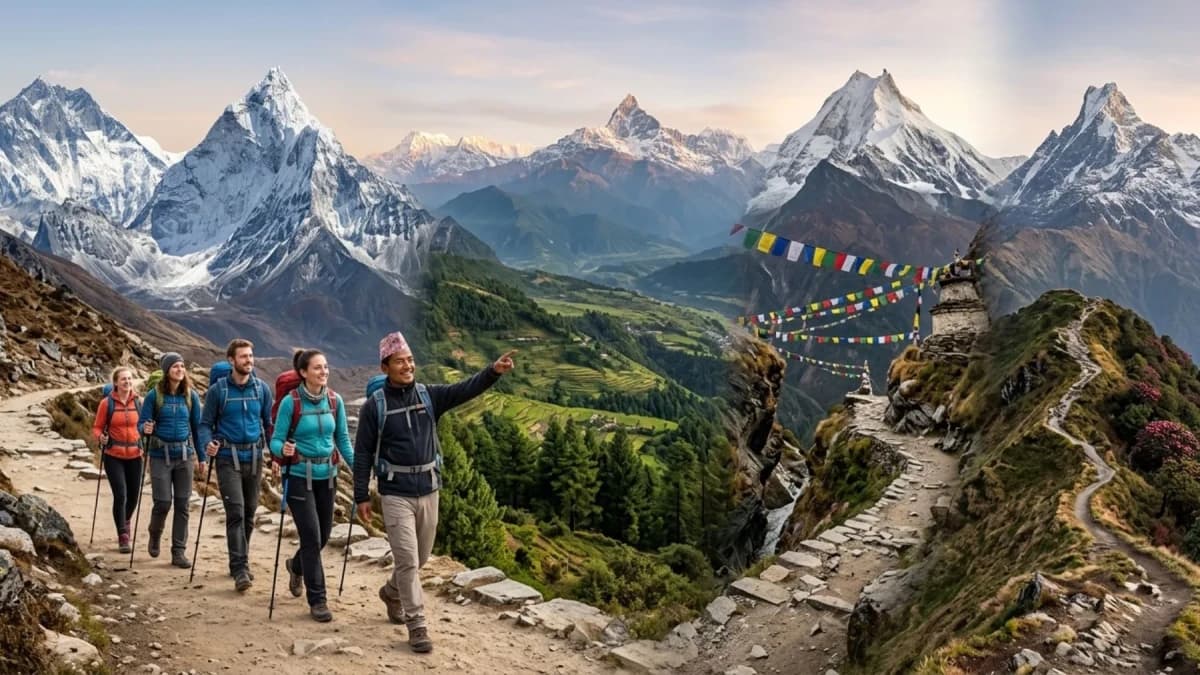
The top 10 best treks in Nepal include Everest Base Camp, Annapurna Base Camp, Annapurna Circuit, Manaslu Circuit, Langtang Valley, Mardi Himal, Ghorepani Poon Hill, Gokyo Lakes, Upper Mustang, and the Everest Three Passes Trek. These routes range from easy short treks to challenging high-altitude adventures, offering Himalayan, views, Sherpa culture, rhododendron forests, and glacial lakes. The best time to trek in Nepal is during spring (March–May) and autumn (October–November) for clear weather and stable conditions.
In this blog, we’ll guide you through the top 10 best treks in Nepal based on experience, time, and difficulty.
Choosing the Best Trek in Nepal
Below is a fully structured, comparison-driven breakdown of the top 10 treks in Nepal designed to help you quickly identify which trek matches your experience, time, and adventure goals.
| Trek | Duration | Starting Price (Per Person) | Key Highlight |
|---|---|---|---|
| Everest Base Camp Trek | 14 days | From $1,190 | Everest views + Sherpa culture |
| Annapurna Base Camp Trek | 12 days | From $680 | Annapurna Sanctuary |
| Manaslu Circuit Trek | 11 days | From $940 (group) | Larkya La Pass |
| Annapurna Circuit Trek | 12 days | From $870 | Thorong La Pass |
| Langtang Valley Trek | 10 days | From $595 | Kyanjin Gompa |
| Mardi Himal Trek | 11 days | From $690 | Machapuchare views |
| Ghorepani Poon Hill Trek | 5 days | From $480 | Sunrise viewpoint |
| Gokyo Lakes Trek | 14 days | From $1,499 | Glacial lakes |
| Upper Mustang Trek | 12 days | Contact for price | Desert landscape |
| Everest Three Passes Trek | 18 days | From $1,560 | 3 high passes |
10 Best Treks in Nepal To Visit
1. Everest Base Camp Trek
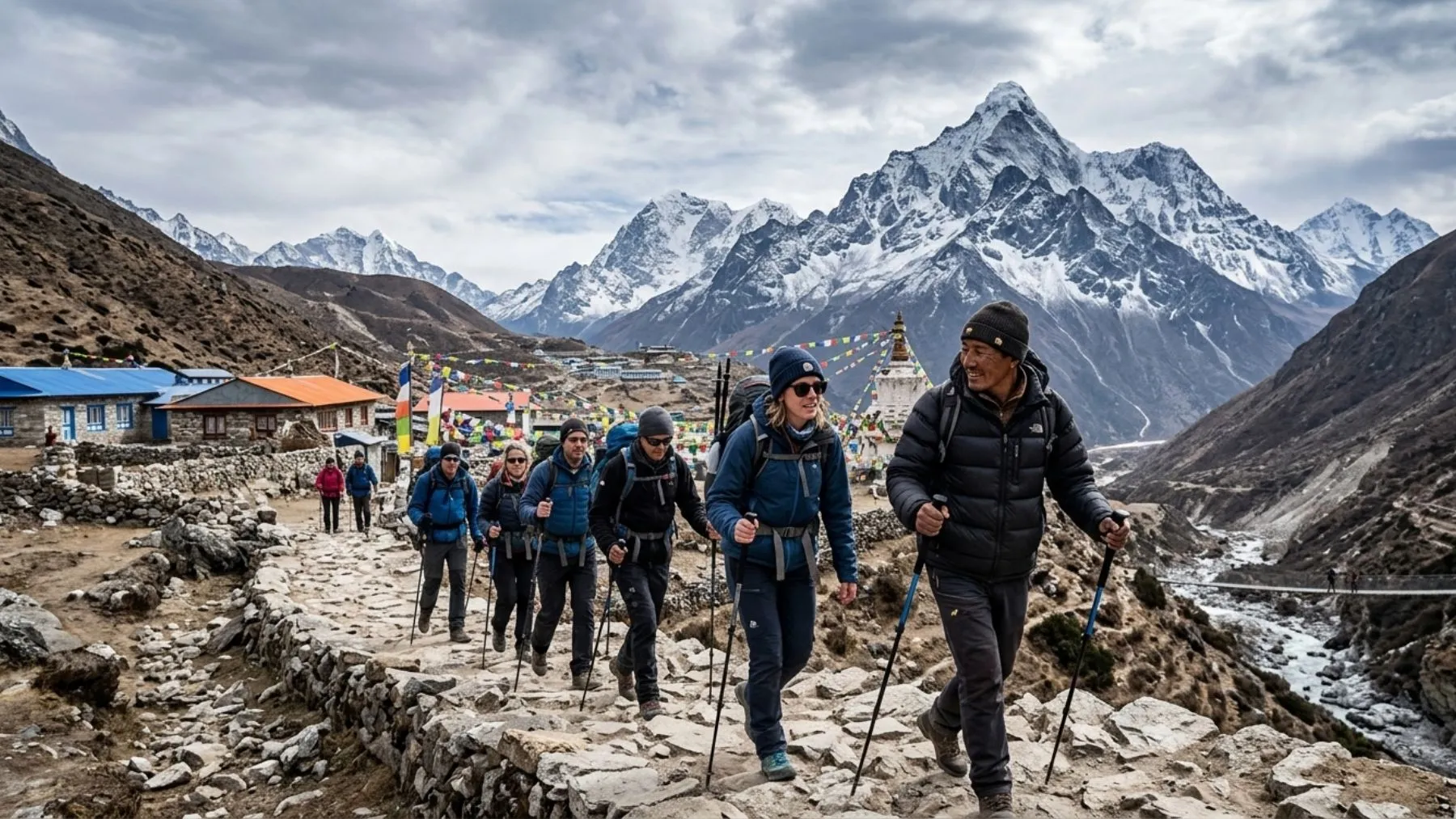
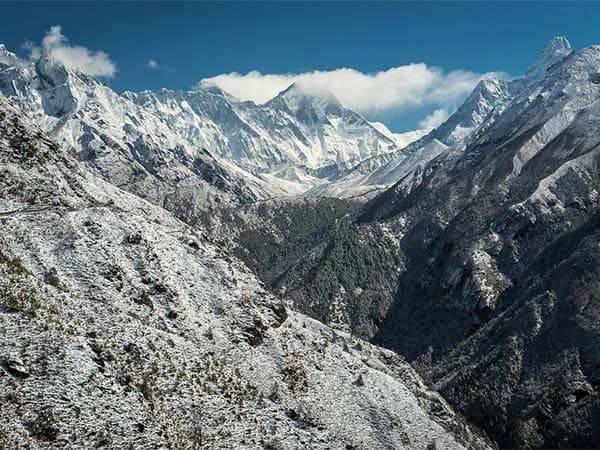
The Everest Base Camp Trek is the most iconic trekking experience in Nepal, taking you to 5,364 meters at the base of Mount Everest, with an optional hike to Kala Patthar (5,644m) for the best panoramic views. Typically completed in 12–14 days, the trek begins with a flight to Lukla and follows the classic route through Namche Bazaar, Tengboche, Dingboche, and Gorakshep. Along the way, trekkers experience a gradual transition from forested trails and Sherpa villages to high-altitude alpine terrain and glaciers within Sagarmatha National Park.
The route is well-developed with teahouse accommodations, meals, and WiFi in key stops, but altitude becomes a major factor above 2,500 meters, requiring proper acclimatization. Permits required include the Sagarmatha National Park entry and Khumbu local permit.
Best Time to Visit Everest Base Camp Trek
The best time to trek to Everest Base Camp is during spring (March to May) and autumn (October to November), when weather conditions are stable, skies are clear, and mountain visibility is at its best. Spring also offers blooming rhododendrons, while autumn provides the sharpest Everest views. Winter is extremely cold, and monsoon season brings poor visibility and flight delays.
Highlights
- Everest Base Camp (5,364m)
- Kala Patthar (5,644m) for the best Everest viewpoint
- Scenic Lukla flight experience
- Namche Bazaar (Sherpa hub and acclimatization stop)
- Tengboche Monastery (spiritual center of Khumbu)
- Sagarmatha National Park (UNESCO World Heritage Site)
- Close-up views of Everest, Lhotse, and Nuptse
- Khumbu Glacier and Icefall landscapes
- Well-developed teahouse trekking route
- Rich Sherpa culture and hospitality
Know more: Truth About Dead Bodies on Mount Everest
2. Annapurna Base Camp Trek
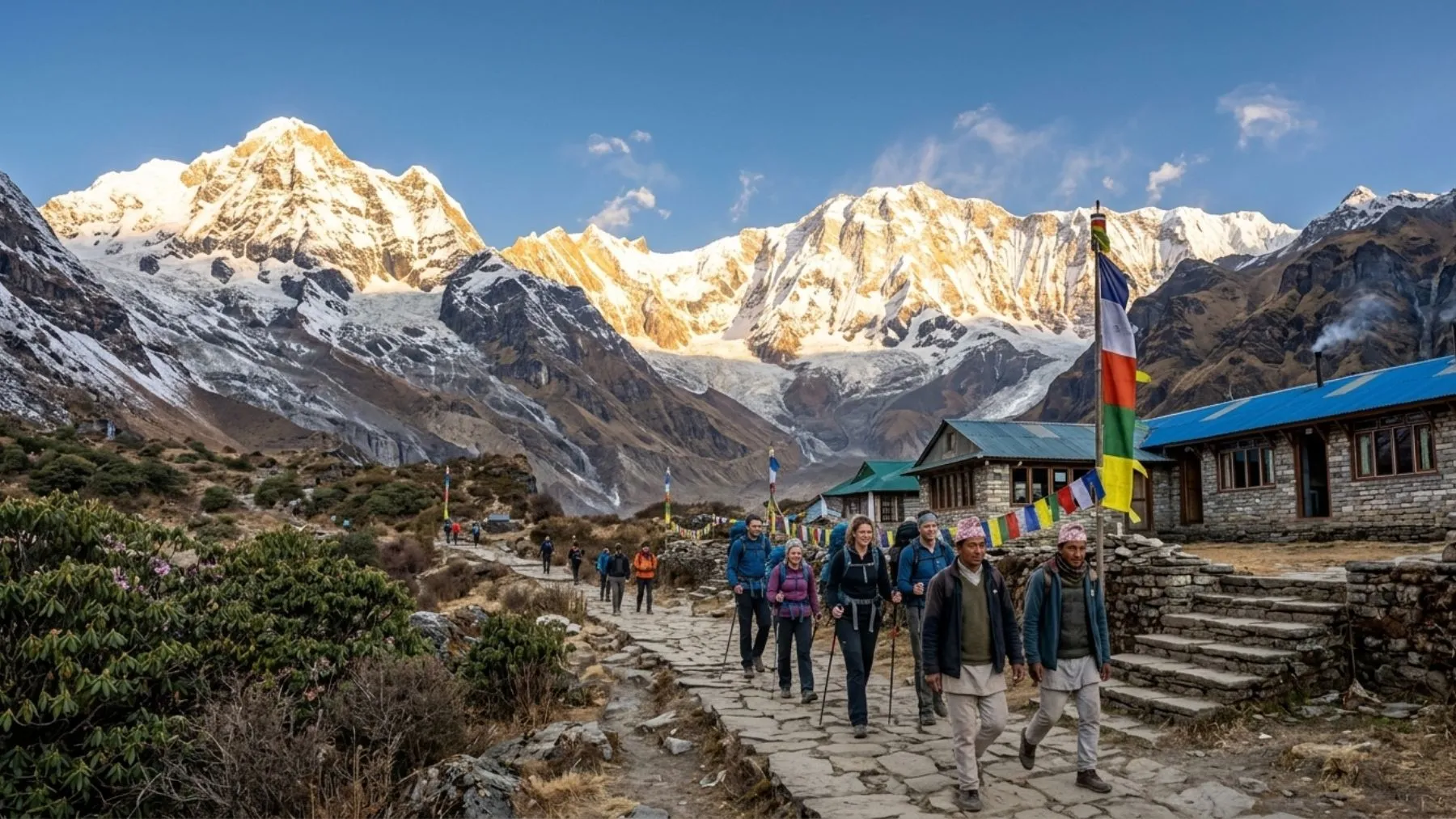
The Annapurna Base Camp Trek is one of Nepal’s most well-rounded trekking routes, reaching 4,130 meters while offering a complete Himalayan experience within a shorter 7–12 day itinerary. The trail begins in the Annapurna region and passes through terraced farmlands, dense rhododendron forests, and traditional Gurung villages like Ghandruk before entering the Annapurna Sanctuary, a natural amphitheater surrounded by peaks such as Annapurna I and Machapuchare. Compared to Everest, this trek is considered more accessible due to its lower altitude, reducing extreme altitude risks while still delivering dramatic mountain scenery.
The route is supported by well-established teahouses, and trekkers require ACAP (Annapurna Conservation Area Permit) and TIMS permits to enter the region.
Best Time to Visit Annapurna Base Camp Trek
The best time to trek to Annapurna Base Camp is during spring (February to May) and autumn (October to November). Spring is especially popular due to blooming rhododendron forests and moderate temperatures, while autumn offers the clearest skies and the best mountain visibility. Winter is quieter but colder, and monsoon season brings rain and limited views.
Highlights
- Annapurna Base Camp (4,130m)
- Annapurna Sanctuary (natural 360° mountain amphitheater)
- Machapuchare (Fishtail Mountain) close-up views
- Ghandruk village (Gurung culture and heritage)
- Rhododendron forests (especially vibrant in spring)
- Diverse landscapes from farmland to alpine terrain
- Moderate altitude (lower risk than Everest region)
- Well-developed teahouse trekking route
- Stunning sunrise and sunset mountain views
- Shorter duration with high scenic reward
Also read: Who is Annapurna Mata?
3. Manaslu Circuit Trek
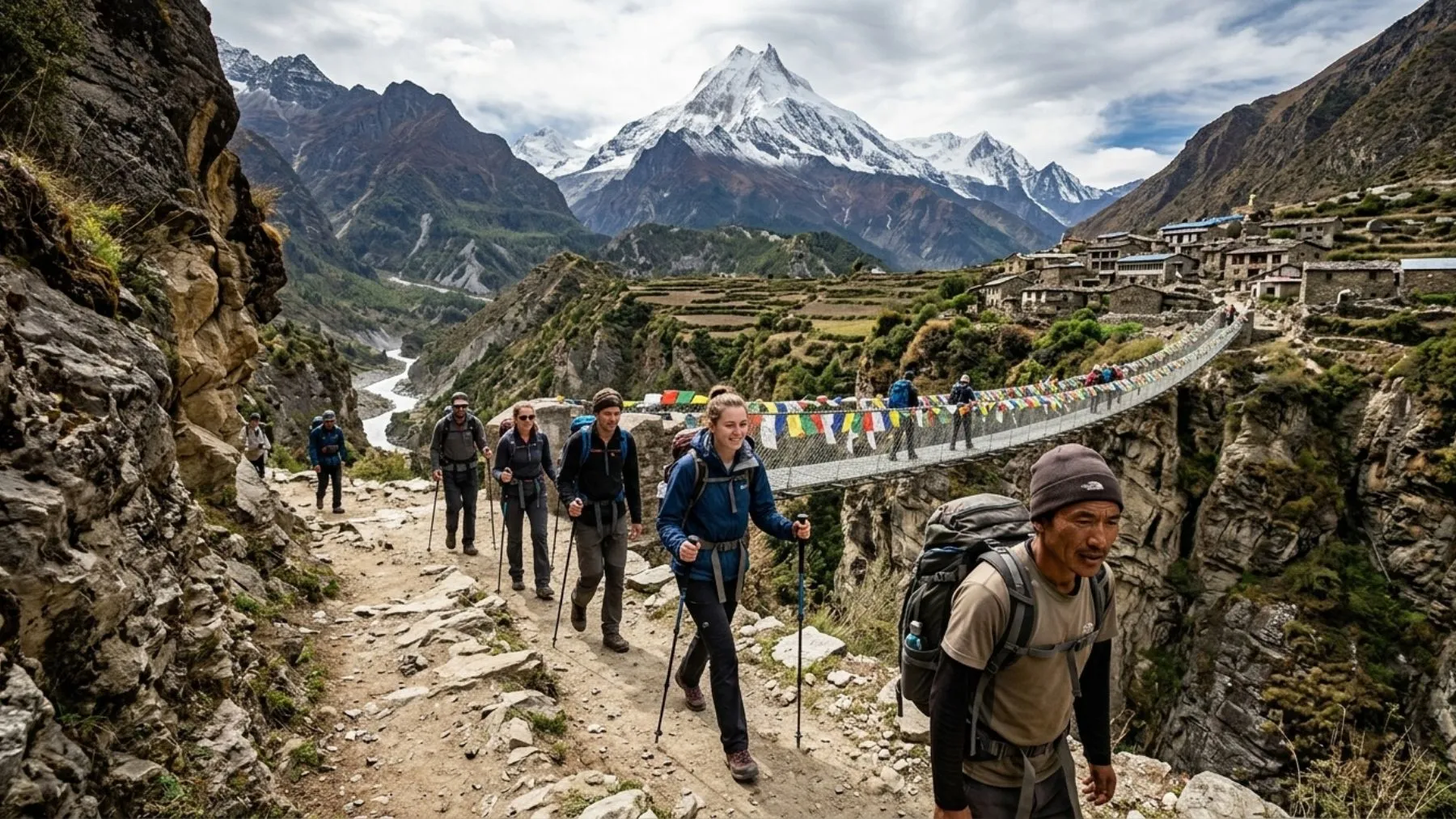
If you’re someone who wants to escape the crowds and experience a more untouched side of Nepal, the Manaslu Circuit Trek is one of the best choices you can make. This trek circles Mount Manaslu (8,163m), the eighth highest mountain in the world, and usually takes around 14 to 18 days to complete. The highest point is Larkya La Pass (5,160m), which is challenging but incredibly rewarding. What makes this trek special is how raw and remote it feels compared to Everest or Annapurna. You’ll walk through quiet villages, cross long suspension bridges, and slowly move into areas that feel closer to Tibetan culture than mainstream trekking routes.
Because it’s a restricted area, you’ll need special permits (around $30–$40 plus daily fees), and you must trek with a guide and at least one other person. This actually helps keep the region less crowded and more authentic. The trail itself changes a lot; you start in lower green hills and river valleys, and as you go higher, it becomes more rugged, alpine, and dramatic. It’s not just about the mountains here, it's about the feeling of being far away from everything.
Best Time to Visit Manaslu Circuit Trek
The best time to do the Manaslu Circuit Trek is during spring (March to May) and autumn (October to November). These months give you the safest conditions for crossing Larkya La Pass, along with clear skies and stable weather. Winter can be risky due to snow at the pass, and monsoon season makes trails slippery and less enjoyable.
Highlights
- Larkya La Pass (5,160m) one of the most rewarding high passes in Nepal
- Remote and less crowded trails compared to Everest and Annapurna
- Unique mix of Nepalese and Tibetan culture
- Traditional villages with strong Buddhist influence
- Suspension bridges over deep river gorges
- Views of Mount Manaslu (8,163m) and surrounding peaks
- Authentic off-the-beaten-path trekking experience
- Chance to spot wildlife like snow leopards and musk deer
- Peaceful trekking without heavy tourist traffic
- A true wilderness adventure with minimal modern distractions
Check out: How Difficult Is the Manaslu Circuit Trek?
4. Annapurna Circuit Trek
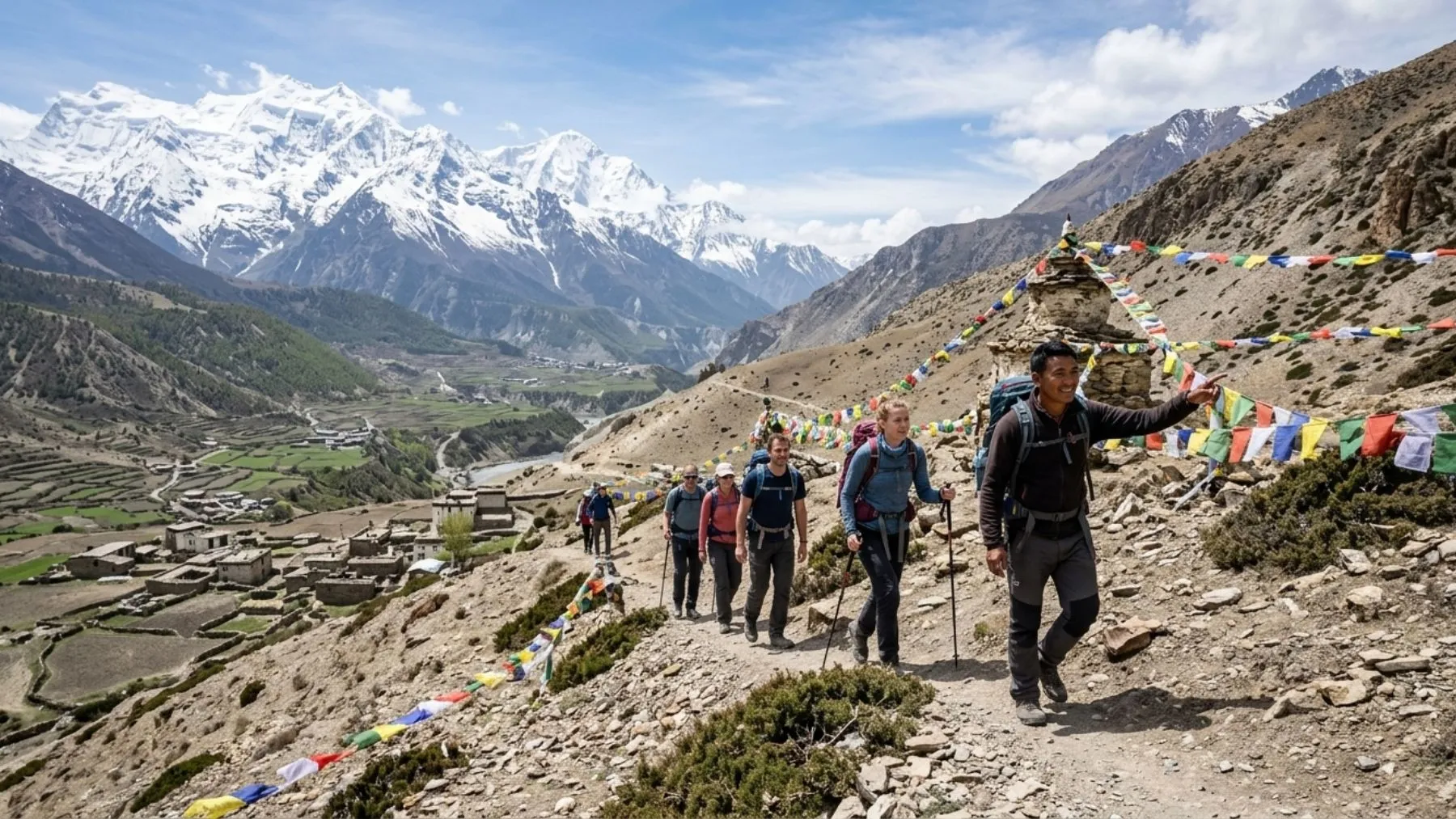
If you want to experience everything Nepal has to offer in one single trek, the Annapurna Circuit is the one. This trek usually takes around 12 to 18 days and is famous for its incredible variety; you'll go from green forests and rivers to dry, high-altitude desert landscapes. The biggest challenge (and highlight) of this trek is crossing Thorong La Pass (5,416m), one of the highest trekking passes in the world. It’s not just about altitude though what makes this trek special is how much the scenery keeps changing every few days. One moment you’re walking through lush villages, and the next you’re in a completely different, almost Tibetan-style landscape.
Over the years, roads have reached some parts of the trail, but don’t worry there are still plenty of beautiful trekking sections. You’ll also pass through different cultures, from Hindu villages in the lower region to Buddhist communities as you go higher. You’ll need ACAP and TIMS permits, and the trek is well-supported with teahouses along the way.
Best Time to Visit Annapurna Circuit Trek
The best time to do the Annapurna Circuit Trek is during spring (March to May) and autumn (October to November). These months offer the most stable weather and clear mountain views. Spring adds greenery and blooming forests, while autumn gives you crisp skies and the best visibility. Winter can be very cold at Thorong La Pass, and monsoon season brings rain and landslides.
Highlights
- Thorong La Pass (5,416m) one of the highest trekking passes
- Incredible variety of landscapes (forest → alpine → desert)
- Views of Annapurna, Dhaulagiri, and surrounding peaks
- Cultural shift from Hindu to Buddhist regions
- Traditional villages along the trail
- Mustang region’s dry, unique terrain
- Long-distance trekking experience across multiple regions
- Well-established teahouse trekking route
- Natural hot springs at Tatopani (optional route)
- One of Nepal’s classic and most complete treks
More on: Why is Annapurna 3 Unclimbed?
5. Langtang Valley Trek
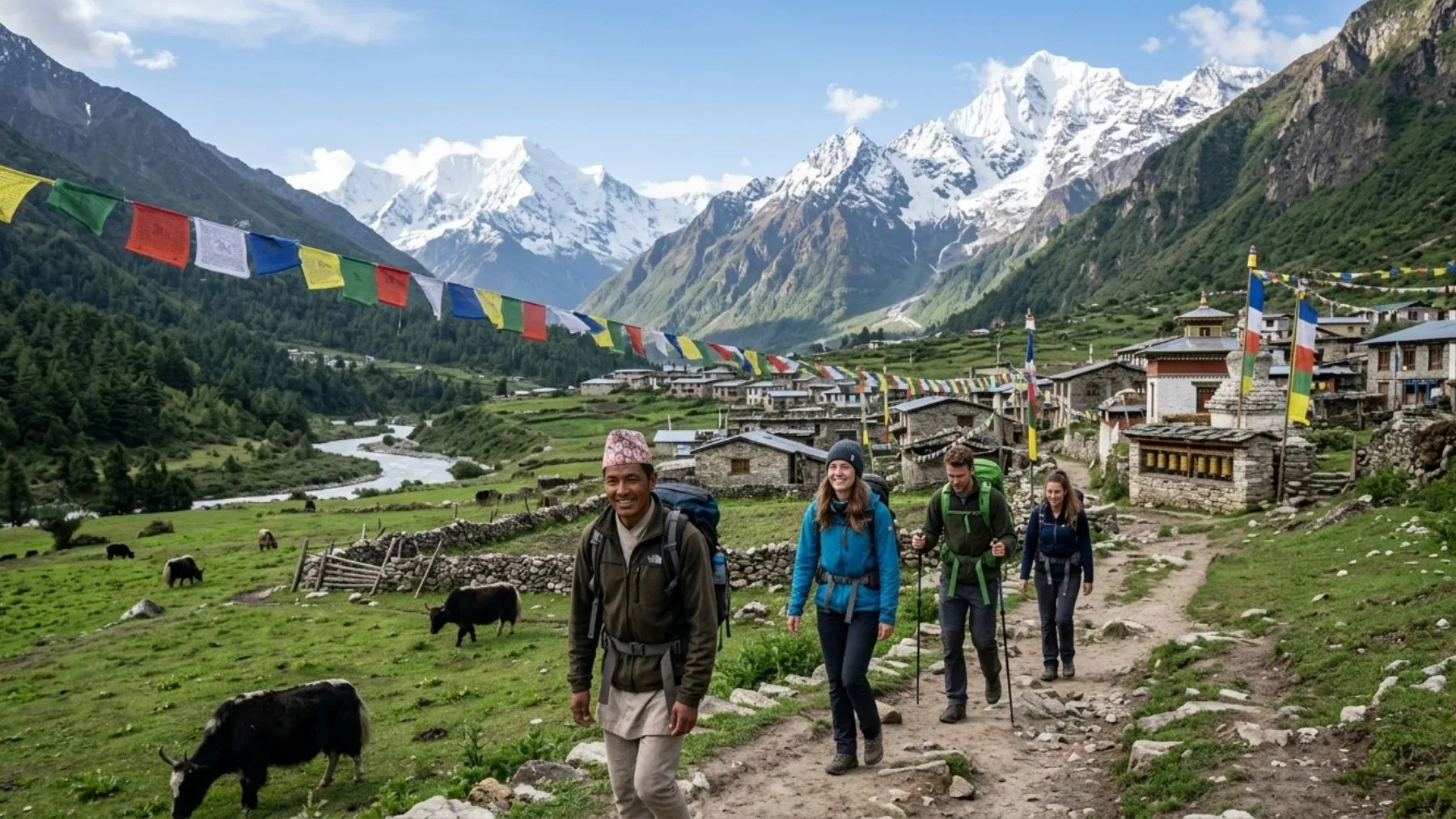
If you don’t have a lot of time but still want a real Himalayan trekking experience, the Langtang Valley Trek is one of the best options. It usually takes around 7 to 10 days and reaches about 4,773 meters, making it a moderate trek without going too extreme. One of the biggest advantages here is that you don’t need a flight the journey starts with a drive from Kathmandu, which makes it easier and more budget-friendly. As you walk, you’ll pass through forests, rivers, and traditional Tamang villages, slowly entering a wide alpine valley surrounded by mountains. This region also has a strong story of recovery after the 2015 earthquake, and trekking here directly supports local communities.
It’s quieter than Everest and Annapurna, so you get a more peaceful and personal experience. You’ll need a Langtang National Park permit and TIMS card, and teahouses are available along the route.
Best Time to Visit Langtang Valley Trek
The best time for the Langtang Valley Trek is during spring (March to May) and autumn (October to November). These seasons offer clear skies, comfortable temperatures, and the best mountain views. Spring also brings blooming forests, while autumn gives you crisp, stable weather. Winter is colder but still possible, and monsoon season brings rain and slippery trails.
Highlights
- Kyanjin Gompa (beautiful monastery at high altitude)
- Stunning views of Langtang Lirung and surrounding peaks
- Easy access from Kathmandu (no flight needed)
- Peaceful trails with fewer crowds
- Tamang culture and traditional mountain lifestyle
- Forest trails, rivers, and alpine landscapes
- Glacier views near Kyanjin Valley
- Short trekking duration (perfect for limited time)
- Cultural and emotional connection with local communities
- Great balance of nature, culture, and accessibility
6. Mardi Himal Trek
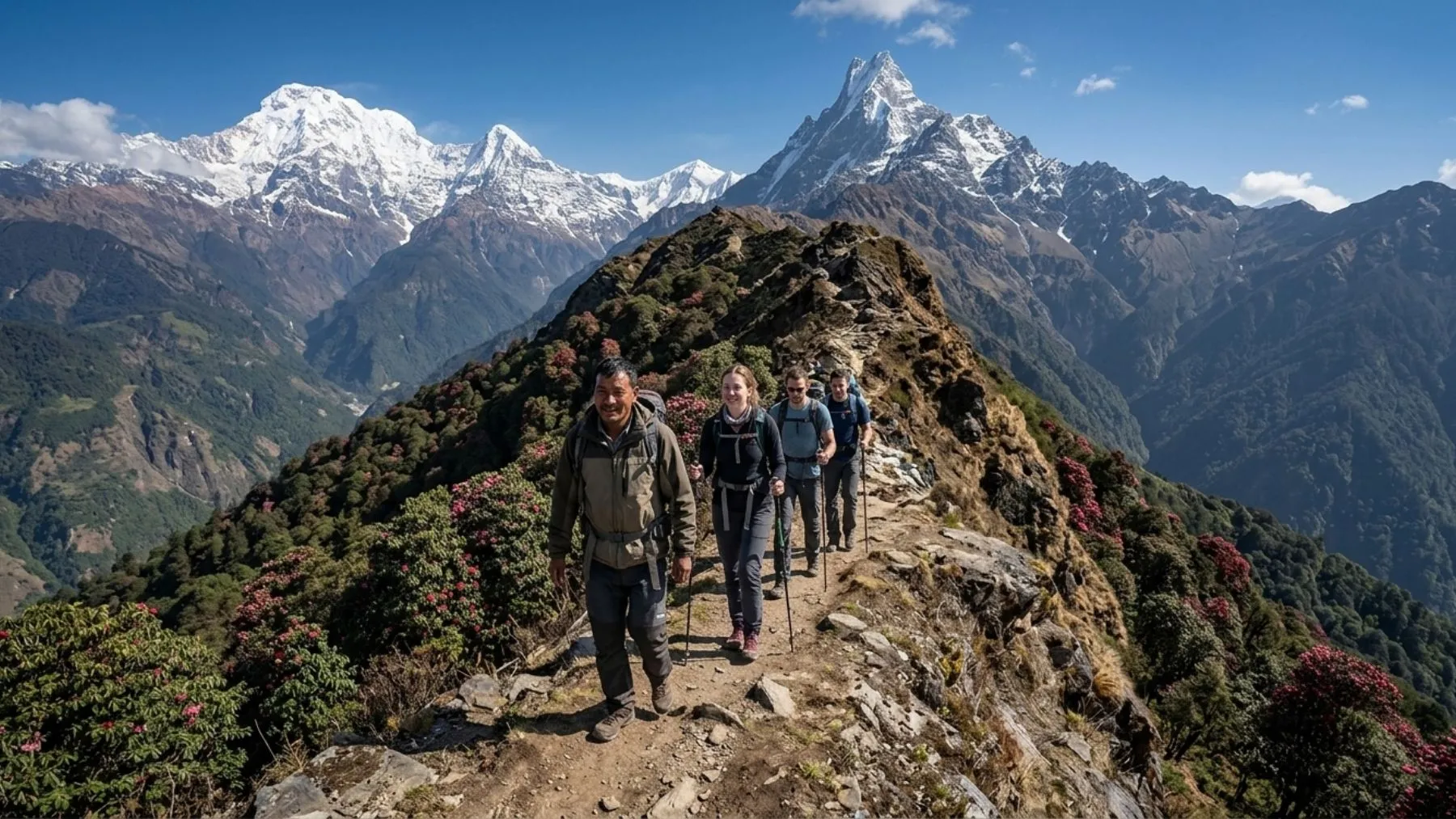
If you’re looking for a short trek that still feels magical and not too crowded, the Mardi Himal Trek is a perfect choice. This trek usually takes around 5 to 7 days and reaches about 4,500 meters, making it a great option for people who want a real Himalayan experience without committing to a long journey. What makes this trek special is how quiet and peaceful it is compared to popular routes like Everest or Annapurna Base Camp. The trail takes you through dense forests, ridge lines, and open viewpoints where you get incredibly close views of Machapuchare (Fishtail Mountain) , one of the most beautiful peaks in Nepal.
The route gradually climbs from forested paths into alpine terrain, and unlike busier treks, you often feel like you have the mountains all to yourself. It’s a teahouse trek, so you’ll find basic lodges along the way, and you’ll need ACAP and TIMS permits since it lies in the Annapurna region.
Best Time to Visit Mardi Himal Trek
The best time to do the Mardi Himal Trek is during spring (March to May) and autumn (October to November). These months offer clear skies, stable weather, and the best mountain views. Spring brings green hills and blooming rhododendrons, while autumn gives crisp air and excellent visibility. Winter is colder but still possible, while monsoon season can make trails muddy and slippery.
Highlights
- Close-up views of Machapuchare (Fishtail Mountain)
- Peaceful trails with fewer trekkers
- Ridge-line walking with panoramic views
- Short duration (5–7 days) perfect for tight schedules
- Forest trails with rhododendron blooms in spring
- Gradual transition from forest to alpine landscape
- Stunning sunrise and sunset viewpoints
- Authentic, less-commercial trekking experience
- Teahouse trekking with basic but comfortable stays
- Ideal balance of adventure and accessibility
7. Ghorepani Poon Hill Trek
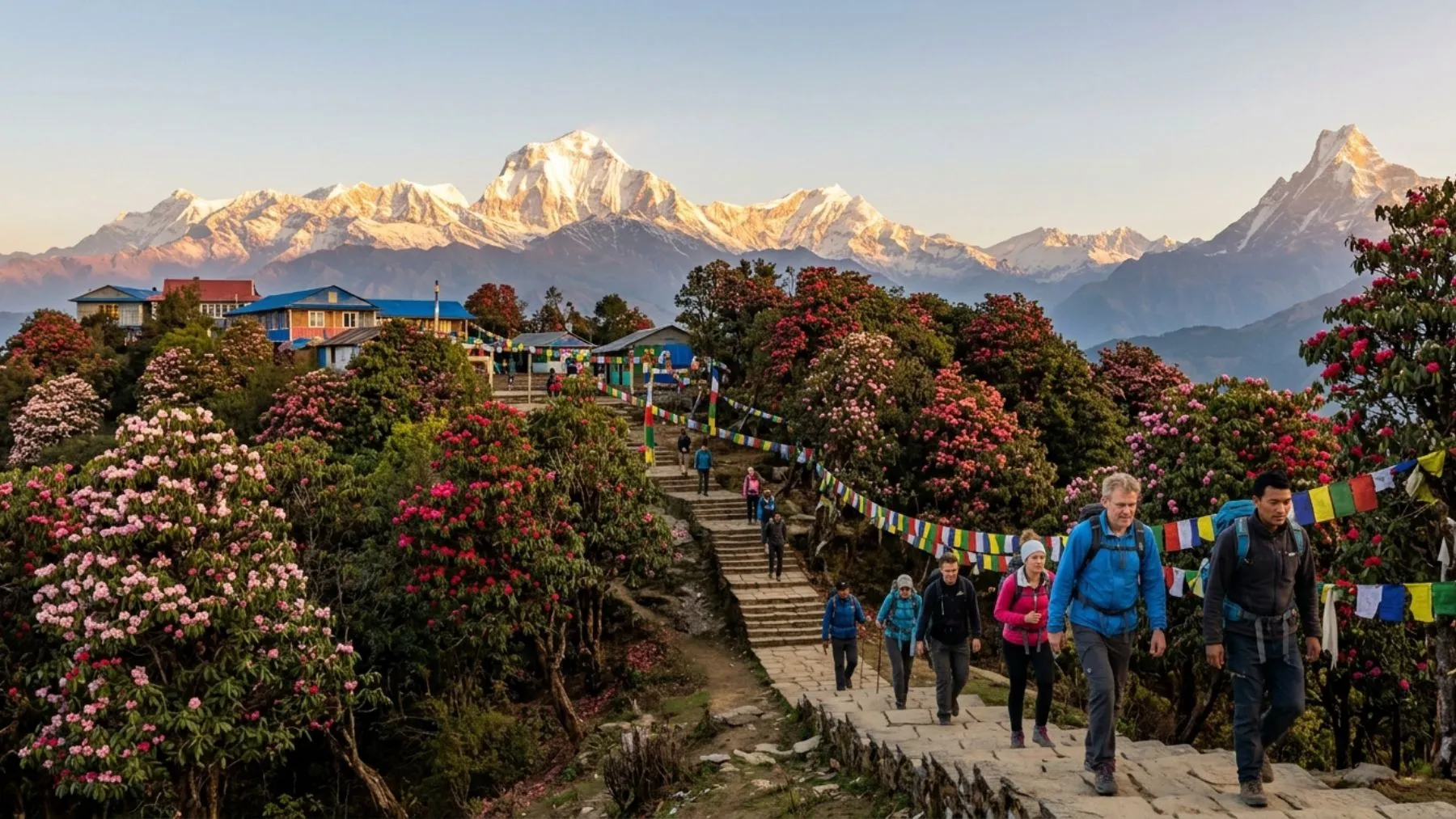
The Ghorepani Poon Hill Trek is one of the easiest and most popular short treks in Nepal, usually completed in just 3 to 5 days with a maximum altitude of 3,210 meters. It’s perfect for beginners, families, or anyone with limited time who still wants to enjoy Himalayan views without dealing with high-altitude risks. The trail passes through charming villages, stone steps, and beautiful rhododendron forests before reaching Poon Hill, one of the best viewpoints in Nepal. Since it stays below extreme altitude, it doesn’t require acclimatization and is considered a safe and accessible introduction to trekking. You’ll need ACAP and TIMS permits, and the route is well-developed with comfortable teahouses.
Best Time to Visit Ghorepani Poon Hill Trek
The best time to do the Poon Hill Trek is during spring (March to May) and autumn (October to November). Spring is especially beautiful with blooming rhododendron forests, while autumn offers clear skies and the best mountain views. Winter is quieter and still possible, while monsoon brings rain and cloudy conditions.
Highlights
- Poon Hill sunrise (one of the best viewpoints in Nepal)
- Panoramic views of Annapurna and Dhaulagiri ranges
- Short and easy 3–5 day itinerary
- Perfect trek for beginners and families
- Rhododendron forests (especially in spring)
- No need for acclimatization (low altitude)
- Well-developed trail with comfortable teahouses
- Beautiful village experience along the route
8. Gokyo Lakes Trek
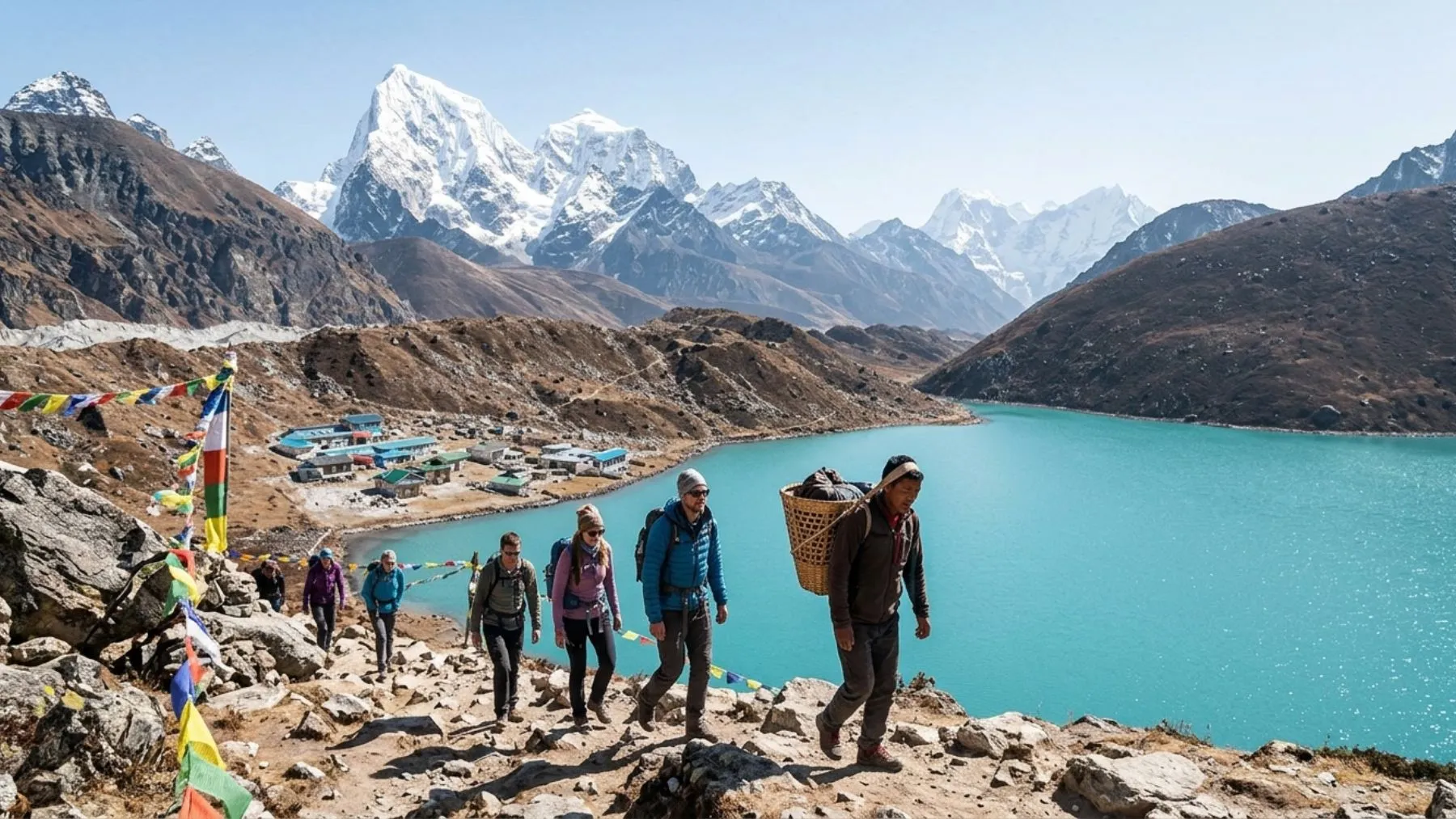
The Gokyo Lakes Trek is one of the most beautiful alternatives to the Everest Base Camp trek, offering a quieter experience with equally stunning views. This trek usually takes around 12 to 14 days and reaches a maximum altitude of about 5,357 meters at Gokyo Ri. Instead of going to Everest Base Camp, this route takes you to a series of turquoise glacial lakes, combined with incredible views of Everest and Cho Oyu (8,188m). The trail follows the same initial path as EBC up to Namche Bazaar, then branches off into a less crowded valley, making it perfect for those who want Everest views without heavy crowds.
Like the Everest region, you’ll need Sagarmatha National Park and Khumbu permits, and the trek is supported by teahouses along the route.
Best Time to Visit Gokyo Lakes Trek
The best time to do the Gokyo Lakes Trek is during spring (March to May) and autumn (October to November). These seasons offer clear skies, stable weather, and the best visibility of the lakes and surrounding peaks. Spring adds color to the lower trails, while autumn provides the clearest mountain views. Winter is possible but very cold, and monsoon brings clouds and limited visibility.
Highlights
- Gokyo Lakes (series of stunning turquoise glacial lakes)
- Gokyo Ri (5,357m) viewpoint with panoramic Everest views
- Views of Everest, Cho Oyu (8,188m), and surrounding peaks
- Less crowded alternative to Everest Base Camp trek
- Scenic trail branching from the main Everest route
- Beautiful high-altitude valley landscapes
- Peaceful and quieter trekking experience
- Glacier views and dramatic alpine terrain
9. Upper Mustang Trek
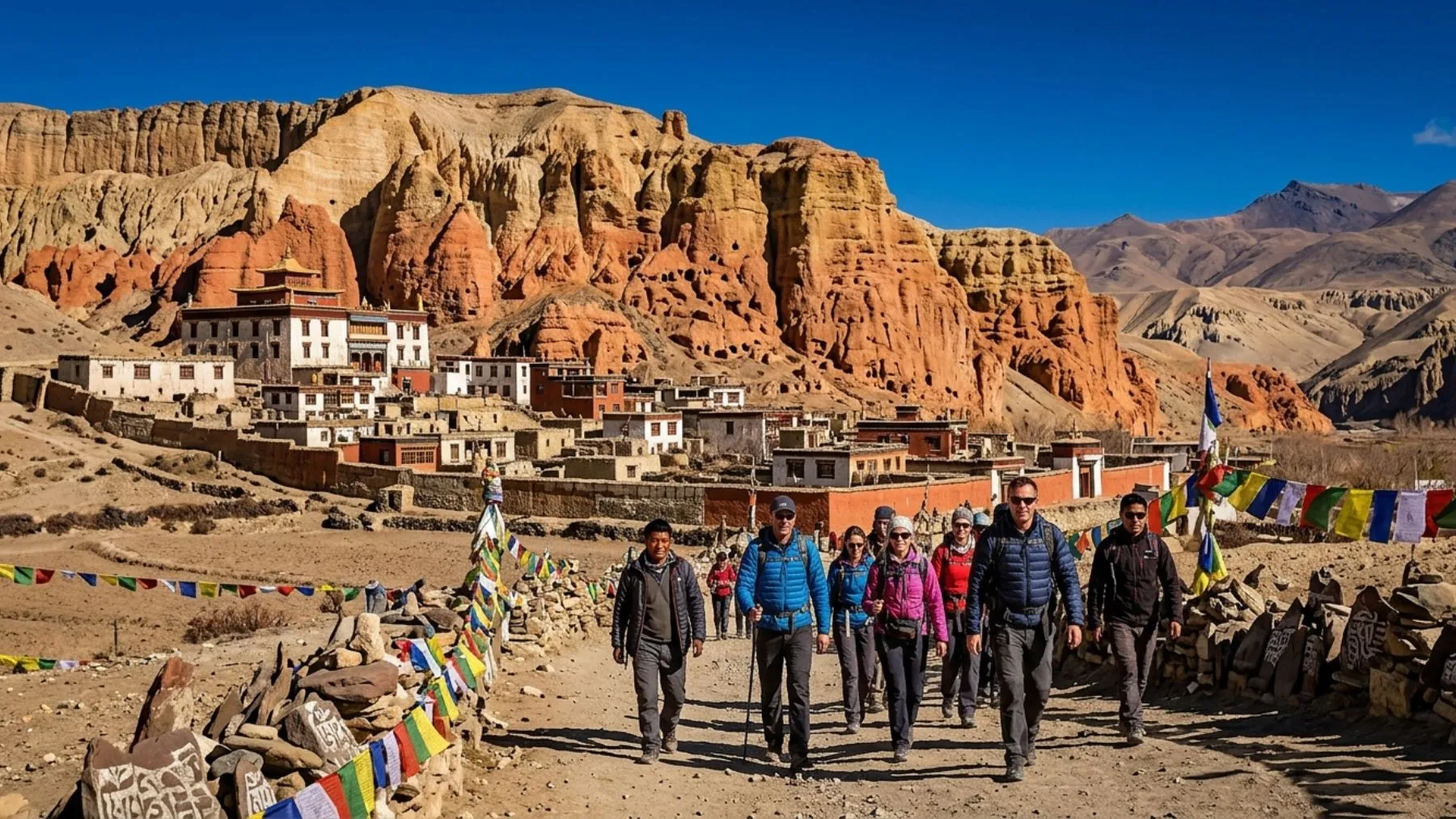
The Upper Mustang Trek is completely different from any other trek in Nepal, offering a rare journey into a dry, desert-like landscape that feels more like Tibet than the Himalayas. This trek usually takes around 12 to 14 days and reaches a maximum altitude of about 3,800 meters, making it less physically demanding in terms of altitude compared to Everest or Annapurna. What truly makes this trek special is its restricted status you need a special permit (around $500 plus additional daily fees), which helps preserve its unique culture and limits the number of trekkers.
The trail takes you through ancient villages, caves, and monasteries, leading to the historic walled city of Lo Manthang, the cultural heart of Mustang. Unlike other regions, Upper Mustang lies in a rain-shadow area, meaning it stays dry even during monsoon, making it one of the few treks possible during that season.
Best Time to Visit Upper Mustang Trek
The best time to do the Upper Mustang Trek is during spring (March to May) and autumn (October to November) for comfortable temperatures and clear views. However, one of its biggest advantages is that it can also be done during the monsoon season (June to September) since the region receives very little rainfall.
Highlights
- Lo Manthang (ancient walled city and cultural center)
- Unique desert-like landscape unlike other Nepal treks
- Strong Tibetan culture and traditions
- Restricted area experience (limited trekkers)
- Ancient monasteries and cave systems
- Tiji Festival (if timed during spring)
- Rain-shadow region (ideal for monsoon trekking)
- Scenic views of barren cliffs and dramatic terrain
10. Everest Three Passes Trek
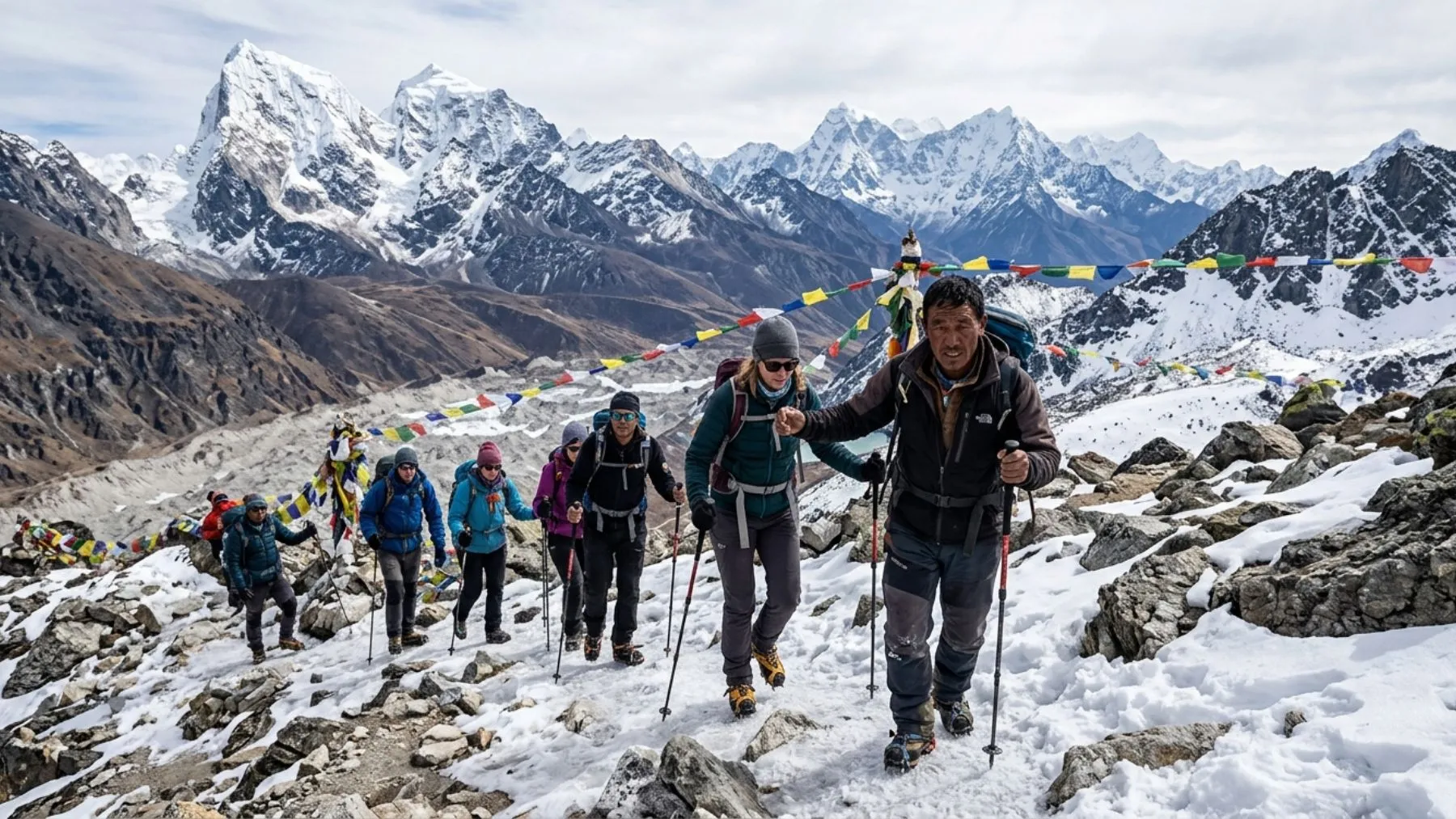
The Everest Three Passes Trek is the most challenging and complete trekking experience in the Everest region, designed for those who want to go beyond the standard Everest Base Camp route. This trek usually takes around 18 to 21 days and reaches extreme altitudes above 5,500 meters, crossing three major high passes Kongma La, Cho La, and Renjo La. What makes this trek truly special is that it combines everything: Everest Base Camp, Gokyo Lakes, and multiple high mountain passes into one epic journey. You’ll follow parts of the classic Everest route but also explore quieter and more remote sections of the Khumbu region.
The trek requires strong physical fitness, prior trekking experience, and proper acclimatization, as altitude plays a major role throughout. Like other Everest treks, you’ll need Sagarmatha National Park and Khumbu permits, and teahouses are available along the route, though conditions can be more basic in remote sections.
Best Time to Visit Everest Three Passes Trek
The best time to do the Everest Three Passes Trek is during spring (March to May) and autumn (October to November). These seasons provide the safest conditions for crossing high passes, with stable weather and clear mountain views. Due to extreme altitude, winter can be very harsh, and monsoon season brings poor visibility and difficult trail conditions.
Highlights
- Crossing three high passes: Kongma La, Cho La, and Renjo La
- Maximum altitude above 5,500 meters
- Everest Base Camp included in the route
- Gokyo Lakes and Gokyo Ri viewpoint
- Views of Everest, Lhotse, Makalu, and Cho Oyu
- Full Everest region circuit experience
- Less crowded sections compared to standard EBC route
- High-altitude adventure for experienced trekkers
Ready to explore Nepal’s best trekking routes? Find your perfect Himalayan adventure with Recreation Holidays and start planning today.
How To Choose The Right Trek In Nepal?
Choosing the right trek depends on your experience, time, and goal. Use the tables below to quickly find the best option for you.
1. Choose Based on Experience Level
| Experience Level | Best Treks | Why It Fits |
|---|---|---|
| Beginner | Poon Hill, Mardi Himal | Short duration, lower altitude, easy trails |
| Intermediate | Annapurna Base Camp, Langtang Valley | Moderate difficulty with good scenery |
| Advanced | Manaslu Circuit, Everest Three Passes | High altitude, longer duration, more challenging |
2. Choose Based on Time Available
| Time Available | Best Treks | What to Expect |
|---|---|---|
| 3–5 days | Poon Hill | Quick, easy trek with great views |
| 5–7 days | Mardi Himal | Short but scenic Himalayan experience |
| 10–14 days | Everest Base Camp, Annapurna Base Camp | Full trekking experience |
3. Choose Based on Your Goal
| Your Goal | Best Treks | Why Choose This |
|---|---|---|
| See Everest | Everest Base Camp, Gokyo Lakes | Best close-up Everest views |
| Remote adventure | Manaslu Circuit | Less crowded, raw experience |
| Cultural experience | Langtang Valley | Strong local culture & village life |
Conclusion
Nepal truly offers something for everyone from short and easy treks like Poon Hill, to classic adventures like Annapurna Base Camp, all the way to extreme challenges like the Everest Three Passes Trek. The key is not choosing the most popular trek, but choosing the one that matches your experience, time, and expectations.
If you’re trekking for the first time, start with something simple and enjoyable. If you want a complete Himalayan experience, go for a moderate trek like ABC or Langtang. And if you’re looking for something more remote or challenging, treks like Manaslu or Everest will give you that once-in-a-lifetime adventure.
No matter which trek you choose, proper planning makes all the difference. Going with a trusted company like Recreation Holidays ensures that everything from permits to guides is handled professionally, so you can focus on enjoying the journey.
Other Related Blogs You May Missed
Francys Arsentiev– The Tragic Story of Everest's Sleeping Beauty
Top 10 Places to Visit in Kathmandu
FAQs On Best Treks In Nepal
What is the best trek in Nepal for beginners?
The Ghorepani Poon Hill Trek is the best for beginners. It’s easy, short (3–5 days), and doesn’t require high-altitude experience. Mardi Himal is another good option.
What are the best short treks in Nepal?
Top short treks include Poon Hill (3–5 days), Mardi Himal (5–7 days), and Langtang Valley (7–10 days).
What is the best time for trekking in Nepal?
The best time is spring (March–May) and autumn (October–November) for clear weather and great mountain views.
Is there a good 5-day trek in Nepal?
Yes, the Poon Hill Trek is the best 5-day option, offering amazing sunrise views and easy trails.
Which are the best trekking companies in Nepal?
Recreation Holidays is a trusted trekking company known for experienced guides, organized trips, and reliable service.