September Quick Decision Dashboard
| Question |
September |
| Overall Recommendation |
⭐⭐⭐⭐☆ |
| Early September |
Variable |
| Mid September |
Good |
| Late September |
Excellent |
| Crowds |
Low–Moderate |
| Photography |
Excellent |
| Larkya La Pass |
Usually good (most reliable in late September) |
| Rain |
Decreasing throughout the month |
| Tea Houses |
Open |
| Beginners |
Best from mid to late September |
| Better than October? |
Depends on your trekking priorities |
Executive Summary
Yes, the Manaslu trek September is worth considering, but timing matters. September is a transition month, with conditions improving from week to week rather than remaining consistent throughout. Early September may still bring afternoon rain, muddy trails, leeches, and occasional landslide-related road delays in the lower Budhi Gandaki Valley. By the second half of the month, the retreating monsoon weakens, cloud cover decreases, trails dry, and visibility improves, often delivering near-October conditions with fewer trekkers.
For most hikers planning the Manaslu Circuit September 2026 or Manaslu Circuit September 2027, departures between September 16 and 30 provide the best balance of weather, scenery, and crowd levels.
Is September a Good Time for the Manaslu Circuit Trek?
Yes but September is not one season.
The biggest mistake trekkers make is treating the entire month the same. Although Nepal's southwest monsoon typically withdraws nationally around early October, the Manaslu Circuit begins improving throughout September. As rainfall decreases, the upper valleys around Samagaun, Samdo, and Dharamsala often stabilize before the lower Machha Khola–Jagat–Deng section because of elevation and the Himalayan rain-shadow effect, where much of the moisture is released on the southern slopes before reaching the northern valleys
- Week 1 (Sept 1–7): Lingering monsoon, muddy trails, active leeches, and higher landslide risk.
- Week 2 (Sept 8–15): Weather becomes more stable with decreasing rainfall and clearer mornings.
- Week 3 (Sept 16–23): The month's sweet spot, offering drier trails, excellent visibility, and fewer crowds.
- Week 4 (Sept 24–30): Near-October conditions with reliable Larkya La September crossings and outstanding mountain views.
September at a Glance
Weather and Manaslu trail conditions September improve steadily throughout the month. Early departures require greater flexibility for rain and transportation delays, while late September typically offers stable trekking conditions without October's peak-season crowds.
| Factor |
Early September |
Mid September |
Late September |
| Weather |
Unsettled |
Improving |
Mostly stable |
| Rain |
Frequent |
Decreasing |
Low |
| Visibility |
Fair |
Good |
Excellent |
| Trail Conditions |
Wet and muddy |
Drying out |
Mostly dry |
| Crowds |
Low |
Low–Moderate |
Moderate |
| Tea Houses |
Open |
Open |
Fully operational |
| Photography |
Good |
Very Good |
Excellent |
| Larkya La Pass |
Variable conditions |
Generally good |
Most reliable |
| Cost |
Slightly lower demand |
Peak season |
Peak season |
| Best For |
Experienced trekkers |
Most trekkers |
Best overall trekking experience |
Recommended: Manaslu Circuit Trek Itinerary 2026-2027
Early vs. Mid vs. Late September
The Manaslu Circuit Trek in September changes significantly from the first week to the last. While the national southwest monsoon usually remains active until early October, the Manaslu trekking corridor gradually becomes more stable as rainfall decreases. Higher elevations around Samagaun, Samdo, and Dharamsala often experience improving weather before the lower Budhi Gandaki Valley, making departure dates one of the biggest factors affecting your trekking experience.
| Period |
Rain |
Visibility |
Trail Conditions |
Crowds |
Tea Houses |
Best For |
| Week 1 (Sept 1–7) |
Frequent afternoon showers |
Fair |
Muddy, slippery trails with leeches |
Low |
Open |
Experienced trekkers |
| Week 2 (Sept 8–15) |
Decreasing |
Good morning visibility |
Trails gradually drying |
Low |
Open |
Flexible trekkers |
| Week 3 (Sept 16–23) |
Low |
Excellent |
Mostly dry |
Low–Moderate |
Fully operational |
Most trekkers |
| Week 4 (Sept 24–30) |
Minimal |
Excellent |
Dry and stable |
Moderate |
Fully operational |
Best overall trekking conditions |
For most travelers planning the Manaslu Circuit September 2026 or Manaslu Circuit September 2027, the third and fourth weeks offer the best combination of stable Manaslu September weather, reliable Larkya La September crossings, and fewer crowds than October.
Recommended: Manaslu Circuit Trek Map on Google Map
Week-by-Week September Planner
The first half of September still reflects lingering monsoon conditions, particularly on the access road to Machha Khola and the lower forested sections between Jagat and Deng, where mud, leeches, and occasional landslides remain possible. Road delays can occur, so adding a buffer day is highly recommended.
By the second week, rainfall usually becomes less frequent. Mornings are often clear before afternoon cloud cover develops, allowing better mountain views and more reliable trekking conditions.
From around September 16, the September Manaslu Circuit enters its best period. Trails continue drying, skies become clearer, and visibility improves across Namrung, Lho, Samagaun, and Samdo. The final week of September often delivers conditions comparable to early October while remaining noticeably quieter.
Guide recommendation: If your schedule allows, aim to cross Larkya La Pass during the last two weeks of September, when weather is generally more stable and the risk of heavy afternoon rain is much lower.
Understanding the Retreating Monsoon
One of the biggest misconceptions about September trekking in Nepal is that the monsoon ends at the beginning of the month. In reality, Nepal's southwest monsoon typically withdraws nationally around early October. What trekkers experience on the Manaslu Circuit Trek in September is a gradual improvement rather than an abrupt seasonal change.
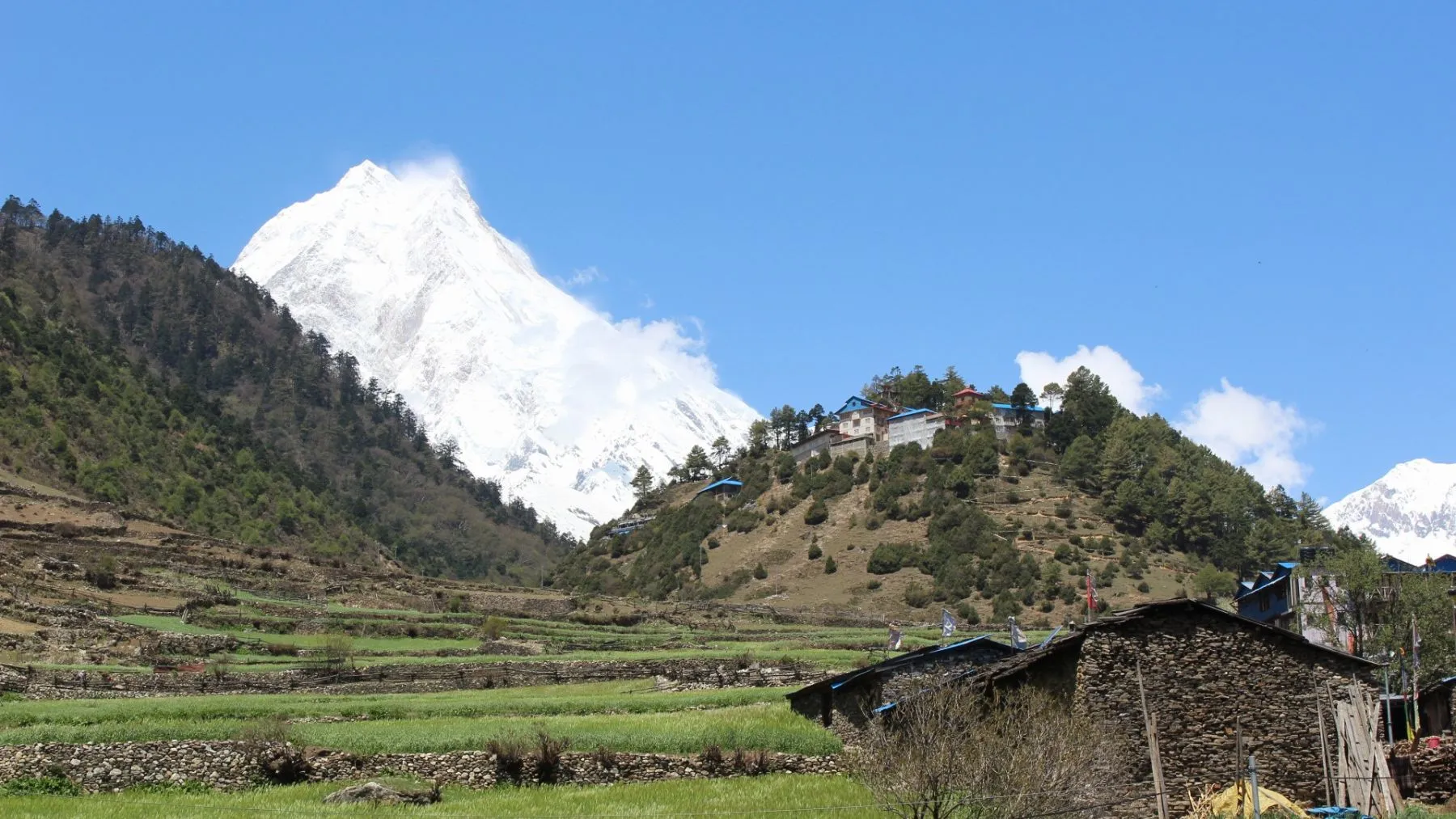
As moisture-laden air rises over the southern Himalaya, orographic rainfall causes most precipitation to fall on the windward slopes. The air becomes progressively drier as it moves north, creating a weaker rain-shadow effect near Samdo and Dharamsala. Combined with increasing elevation, this produces distinct Budhi Gandaki Valley microclimates, where upper villages often stabilize before lower sections around Machha Khola, Jagat, and Deng.
For trekkers, this means lower valleys may remain humid with occasional afternoon showers, while higher elevations frequently enjoy clearer mornings, improving visibility, and faster trail drying later in the month.
Know more: Best Waterfalls Near Kathmandu
September Weather Guide
Weather varies throughout the day, so dressing in layers is more effective than relying solely on waterproof clothing.
- Morning: Cool temperatures, the clearest mountain views, and the best time to begin trekking.
- Late Morning: Comfortable hiking conditions with improving visibility.
- Afternoon: The highest chance of cloud development, humidity, and isolated showers, particularly early in September.
- Evening: Temperatures fall quickly above Namrung, with increasing wind at higher elevations.
- Night: Cold conditions from Samagaun upward, with sub-zero temperatures possible around Dharamsala. Near Larkya La Pass, wind chill can make conditions feel significantly colder.
A moisture-wicking base layer, insulating mid-layer, and waterproof shell provide the most versatile clothing system throughout the month.
See also: Where Is Nepal Located in Asia?
Manaslu Circuit Trek Village-by-Village September Weather
As altitude increases, temperatures drop steadily while rainfall generally decreases. Higher villages often experience clearer mornings because they are less affected by lingering monsoon moisture than the lower Budhi Gandaki Valley.
| Village |
Elevation |
Day |
Night |
Rain |
Visibility |
Recommended Layers |
| Machha Khola |
930 m |
15–25°C |
Mild |
High (early month) |
Fair |
Base layer + rain shell |
| Jagat |
1,340 m |
15–24°C |
Cool |
Moderate |
Fair–Good |
Base layer + waterproof shell |
| Deng |
1,860 m |
12–22°C |
Cool |
Moderate |
Good |
Base layer + fleece |
| Namrung |
2,630 m |
10–18°C |
Cold |
Low–Moderate |
Good |
Fleece + waterproof shell |
| Lho |
3,180 m |
8–16°C |
Cold |
Low |
Very Good |
Insulated layers |
| Samagaun |
3,530 m |
5–15°C |
Near or below 0°C |
Low |
Excellent |
Down jacket |
| Samdo |
3,875 m |
3–13°C |
Below 0°C |
Low |
Excellent |
Down jacket + shell |
| Dharamsala |
4,460 m |
-2–10°C |
Sub-zero |
Very Low |
Excellent |
Full insulation system |
| Larkya La Pass |
5,106 m |
Cold |
Well below 0°C |
Low |
Excellent |
Expedition layering |
| Bimthang |
3,590 m |
5–15°C |
Cold |
Low |
Excellent |
Down jacket + shell |
Larkya La Pass in September
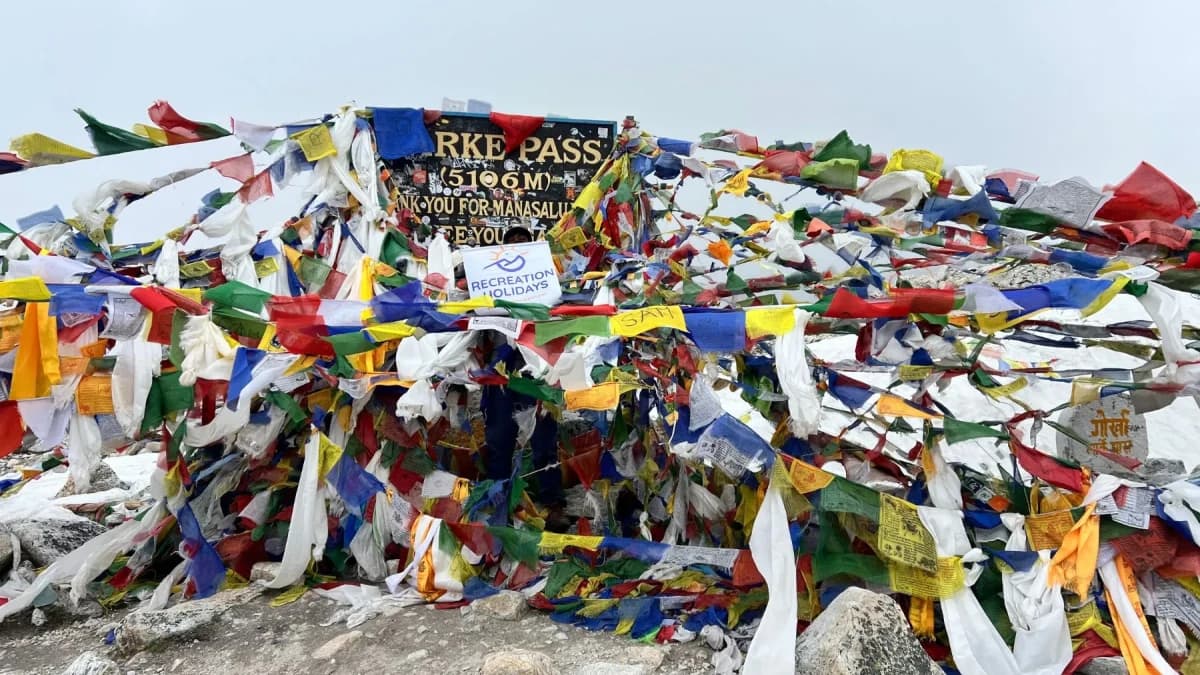
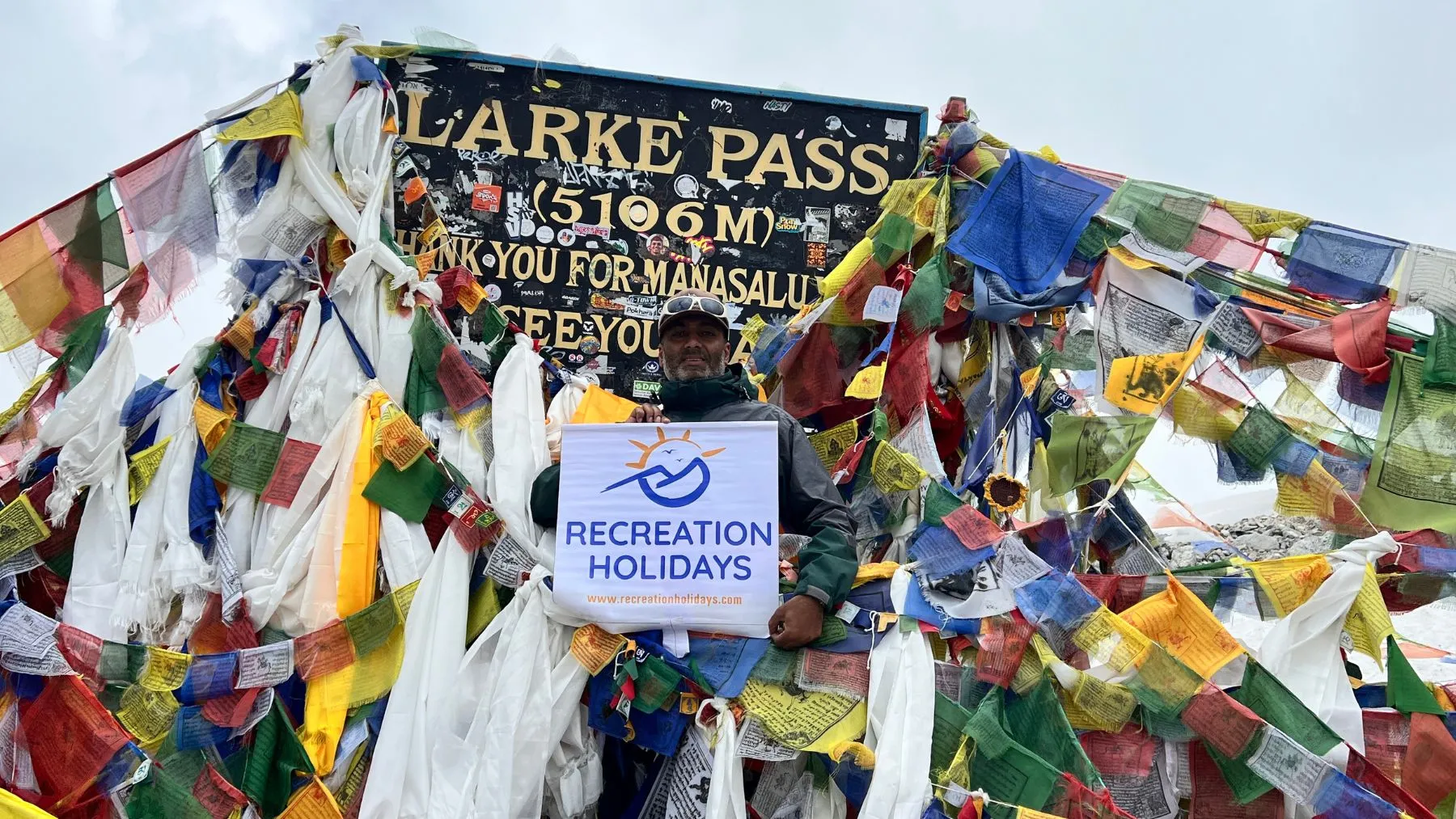
Crossing Larkya La Pass (5,106 m) is the highlight of the Manaslu Circuit Trek in September. Unlike late autumn or winter, significant snow accumulation is uncommon during a typical September, especially from mid to late month. The main challenge is not deep snow but rapidly changing mountain weather, wind chill, and residual moisture early in the month.
Overnight temperatures remain well below freezing around Dharamsala and the pass, creating daily freeze–thaw cycles that can leave short icy sections before sunrise. Most of the trail consists of rocky paths, moraine, and glacial debris, with isolated glacier remnants near the pass rather than extensive ice fields.
Guides normally leave Dharamsala between 3:00 and 5:00 AM, aiming to cross Larkya La Pass during the morning when visibility is best and winds are lighter. Before departure, guides assess overnight weather, cloud development, wind, trail conditions, and recent rainfall to determine whether crossing remains safe.
See details: How Long Is the Manaslu Circuit Trek?
Manaslu Circuit Trek Trail Conditions Throughout September
Manaslu trail conditions in September vary considerably with altitude. Lower sections from Machha Khola to Deng remain the wettest during early September, where forest trails, stone staircases, and river crossings can become muddy and slippery. Leeches are mainly confined to these humid lower forests.
Above Namrung, rainfall generally decreases as the retreating monsoon weakens. Alpine meadows, scree slopes, and moraine trails around Samagaun, Samdo, and the approach t Larkya La Pass dry progressively through the month, although occasional wet rocks and isolated snow patches remain possible after rainfall.
Suspension bridges are safe but may become slippery after rain, while landslide-prone sections are concentrated along the lower Budhi Gandaki Valley, particularly following prolonged precipitation.
Check out: Manaslu Circuit Trek For Seniors
Manaslu Circuit Trek September Road Conditions (Kathmandu–Machha Khola)
Road access is one of the biggest variables during September trekking Nepal. The route from Kathmandu to Machha Khola generally takes 8–10 hours, but heavy rain early in the month can trigger landslides and temporary road closures, particularly beyond Dhading Besi and Arughat.
A private jeep offers greater flexibility and is usually faster than a shared jeep or local bus on rough post-monsoon roads. Because weather-related delays remain possible, adding at least one buffer day before international flights is strongly recommended. By late September, road conditions usually improve as post-monsoon repairs continue and rainfall decreases.
Tea House Life in September
Most tea houses on the Manaslu Circuit are open throughout September. Occupancy is relatively low early in the month and gradually increases toward October, making late September busier but still less crowded than the peak autumn season.
| Village |
Occupancy |
Wi-Fi |
Charging |
Hot Shower |
Blankets |
Dining Room |
| Machha Khola |
Low |
Available |
Yes |
Yes |
Yes |
Yes |
| Jagat |
Low |
Available |
Yes |
Yes |
Yes |
Yes |
| Namrung |
Moderate |
Available |
Yes |
Yes |
Yes |
Heated |
| Lho |
Moderate |
Limited |
Yes |
Yes |
Yes |
Heated |
| Samagaun |
Moderate |
Available |
Yes |
Yes |
Yes |
Heated |
| Samdo |
Moderate |
Limited |
Yes |
Limited |
Yes |
Heated |
| Dharamsala |
Basic |
No |
Limited |
Limited |
Yes |
Shared |
Facilities become simpler with altitude, and charging, Wi-Fi, and hot showers often incur additional fees.
Manaslu Circuit Trek September Cost Breakdown (2026–2027)
The cost of the Manaslu Circuit Trek in September depends on your itinerary, group size, transportation, and level of service. September falls within the peak permit season, but package prices are often slightly more competitive than the busiest weeks of October due to lower trail traffic.
Recreation Holidays Manaslu Circuit Trek Prices
| Package |
Duration |
Price (Per Person) |
| Manaslu Circuit Trek |
11 Days |
From US$970 |
| Luxury Manaslu Circuit Trek |
16 Days |
From US$1,500 |
For group departures on our 11-Day Manaslu Circuit Trek, discounted rates are available: Also read: Manaslu Circuit Trek Cost for 11 Days
| Group Size |
Price Per Person |
| 2 Travelers |
US$970 |
| 3–6 Travelers |
US$910 |
| 7–9 Travelers |
US$890 |
| 10–14 Travelers |
US$870 |
Our packages include the required Restricted Area Permit (RAP), MCAP, ACAP, experienced licensed guides, accommodation, and transportation as outlined in the itinerary. Personal expenses such as drinks, Wi-Fi, charging, hot showers, porter services, tips, travel insurance, gear rental, and any emergency evacuation costs should be budgeted separately.
Permits Explained
All trekkers on the Manaslu Circuit Trek in September require three permits. A licensed guide is mandatory, and since the March 2026 rule change, solo trekkers may obtain permits through a registered trekking agency.
| Permit |
Cost |
Issuing Authority |
Required |
Validity |
Notes |
| Restricted Area Permit (RAP) |
US$100 (first 7 days) + US$15/day thereafter |
Nepal Immigration |
Yes |
Trek duration |
Agency-issued only |
| MCAP |
NPR 3,000 |
NTNC |
Yes |
One entry |
Manaslu Conservation Area Permit |
| ACAP |
NPR 3,000 |
NTNC |
Yes |
One entry |
Required after entering Dharapani |
Carry your passport, visa, passport-sized photos, and travel insurance details when applying. Permit processing usually takes 1–2 business days, so avoid leaving arrangements until the last minute.
Transportation
Most itineraries begin with a drive from Kathmandu through Arughat and Soti Khola to Machha Khola, while the return follows Dharapani–Besisahar–Kathmandu.
A private jeep is faster, more comfortable, and offers flexibility if post-monsoon road conditions change. Shared jeeps are more economical but operate on fixed schedules and may experience longer delays. Because early September can still bring landslides on the Kathmandu–Machha Khola road, keeping at least one buffer day before your international flight is recommended.
Manaslu Packing Matrix
Layering is more important than carrying extra clothing because temperatures range from warm valleys to sub-zero conditions near Larkya La Pass.
| Essential |
Recommended |
Optional |
| Waterproof shell (rain protection at all altitudes) |
Trekking poles (wet trails & descents) |
Gaiters (useful for early September mud) |
| Insulated jacket (from Samagaun upward) |
Waterproof backpack cover (lower valleys) |
Camp shoes (for tea houses) |
| Base & fleece layers (daily temperature changes) |
Microspikes (only if fresh snow) |
Power bank (limited charging availability) |
| Waterproof trekking boots (mud & river crossings) |
Dry bags (protect electronics) |
Camera tripod (for landscape photography) |
Explore More
Continue Your Nepal Adventure
From iconic Himalayan treks and scenic helicopter flights to cultural journeys and thrilling outdoor adventures, discover more unforgettable experiences with Recreation Holidays.
Typical September Trekking Day
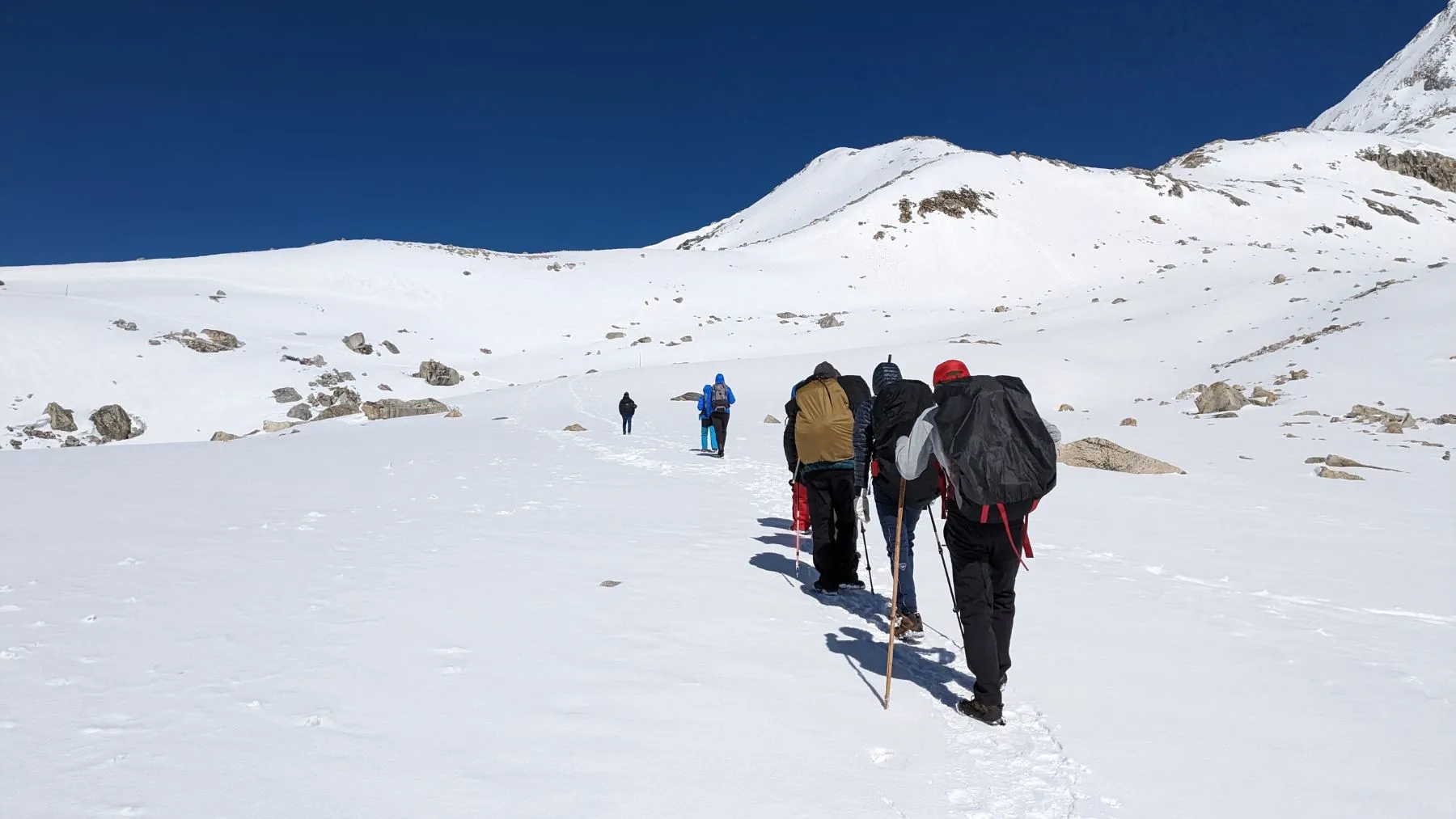
| Time |
Typical Conditions |
| 5:00 AM |
Cold start with clear skies; warm layers are recommended before beginning the day's trek. |
| 7:00 AM |
Best mountain visibility and ideal lighting for landscape photography. |
| 10:00 AM |
Comfortable trekking temperatures with light layers suitable at lower elevations. |
| 1:00 PM |
Cloud cover gradually increases, with isolated afternoon showers possible during early September. |
| 4:00 PM |
Recommended arrival at the tea house before evening weather changes. |
| 7:00 PM |
Cold nights above Samagaun; heated dining rooms become the main gathering and social space. |
Accommodation & Food
Tea houses on the Manaslu Circuit remain open throughout September, with availability improving over early monsoon months. Rooms are simple but comfortable, while Wi-Fi, charging, hot showers, and laundry usually require additional payment.
Meals focus on energy-rich trekking food, including dal bhat, noodles, fried rice, soups, potatoes, eggs, Tibetan bread, momos, and seasonal vegetables. Heated dining rooms and extra blankets are available in most higher villages, although facilities become more basic above Samdo.
Difficulty, Altitude & Acclimatization
The Manaslu trek September becomes progressively more demanding as altitude increases. The greatest challenges are the climb from Samagaun to Samdo, the overnight stay at Dharamsala (4,460 m), and the crossing of Larkya La Pass (5,106 m), where altitude, wind chill, and fatigue combine.
Most itineraries include an acclimatization day at Samagaun to reduce the risk of Acute Mountain Sickness (AMS). Stay well hydrated, avoid rapid ascents, sleep at planned elevations, and monitor symptoms such as persistent headache, nausea, dizziness, or unusual fatigue. A pulse oximeter can help track oxygen saturation but should never replace symptom-based assessment.
If AMS symptoms worsen despite rest, descend immediately and seek medical assistance. Comprehensive travel insurance covering high-altitude trekking and emergency evacuation is strongly recommended for every trekker.
Festivals & Culture
September offers a chance to experience Nepal's cultural traditions before the peak trekking season. Haritalika Teej is celebrated in Kathmandu with temple ceremonies and processions before many treks begin, while Indra Jatra may coincide with your return to the capital later in the month. If your trek extends into early October, you'll notice villages preparing for Dashain, Nepal's biggest festival. Festival dates follow lunar or regional calendars and vary each year. Although Yartung is sometimes mentioned, it is primarily associated with Manang and Mustang and should not be expected on the Manaslu route.
Who Should Trek in September?
| Trekker |
Suitability |
| First-time trekkers |
✓✓✓✓☆ (Mid–Late September) |
| Experienced trekkers |
✓✓✓✓✓ |
| Photographers |
✓✓✓✓✓ |
| Wildlife enthusiasts |
✓✓✓✓☆ |
| Budget travelers |
✓✓✓✓☆ |
| Families |
✓✓✓☆☆ |
| Solo trekkers (with licensed guide) |
✓✓✓✓☆ |
| Luxury trekkers |
✓✓✓✓☆ |
September is ideal for trekkers seeking lush landscapes, fewer crowds, and improving post-monsoon conditions. October or November may be a better choice if you need the most consistently dry weather or have little flexibility for possible transport delays.
Common September Mistakes
Avoid treating all of September the same. Early and late September offer very different trekking conditions. Pack a layering system instead of only rain gear, keep a buffer day for possible road delays, cross Larkya La Pass early in the morning, carry enough cash for higher villages, protect yourself from strong UV exposure, waterproof electronics separately from clothing, and never skip acclimatization.
Guide's Field Notes
Our guides consistently observe that trails between Jagat and Deng remain noticeably wetter during the first half of September, while mornings around Samagaun and Samdo often clear much earlier as the retreating monsoon weakens. For most trekkers, departures after the middle of September provide the best balance of stable weather and quieter trails.
Final Verdict: Is September the Best Time for the Manaslu Circuit Trek?
The Manaslu Circuit Trek in September rewards trekkers who understand the month's seasonal transition. While early September can still experience lingering monsoon conditions, late September often delivers near-October weather, excellent mountain visibility, reliable Larkya La Pass crossings, and fewer crowds. For most trekkers, September 16–30 is the best departure window, offering one of Nepal's finest post-monsoon trekking experiences
Read next: Everest Base Camp Trek in September (2026–2027)
Why Trek with Recreation Holidays?
At Recreation Holidays, we take care of every detail of your Manaslu Circuit Trek in September, from Restricted Area Permit (RAP) processing, MCAP, and ACAP permits to experienced licensed guides, transportation, tea house accommodation, and carefully planned acclimatization. Our local team monitors trail and weather conditions throughout the season to ensure a safe, well-organized, and rewarding trekking experience.
In addition to our 11-Day Manaslu Circuit Trek and 16-Day Luxury Manaslu Circuit Trek, we also offer many of Nepal's most popular adventures, including the Everest Base Camp Trek, Annapurna Circuit Trek, Annapurna Base Camp Trek, Langtang Valley Trek, Mardi Himal Trek, Ghorepani Poon Hill Trek, Upper Mustang Trek, Nar Phu Valley Trek, Kanchenjunga Circuit Trek, and Makalu Base Camp Trek.
Whether you're planning your Manaslu Circuit Trek in September 2026 or 2027 or exploring another Himalayan adventure, our experienced local team is committed to providing a safe, authentic, and unforgettable trekking experience from your arrival in Nepal until the end of your journey.
Popular Guides Our Readers Love 🔍
Best Casinos in Kathmandu
Truth About Dead Bodies on Mount Everest
Beauty of Lakuri Bhanjyang in Lalitpur
K2 Mountain Himalayas - Complete Guide
Nepal Visa Requirements 2026-2027
Where Is Mount Everest Located in Asia